
In This Article
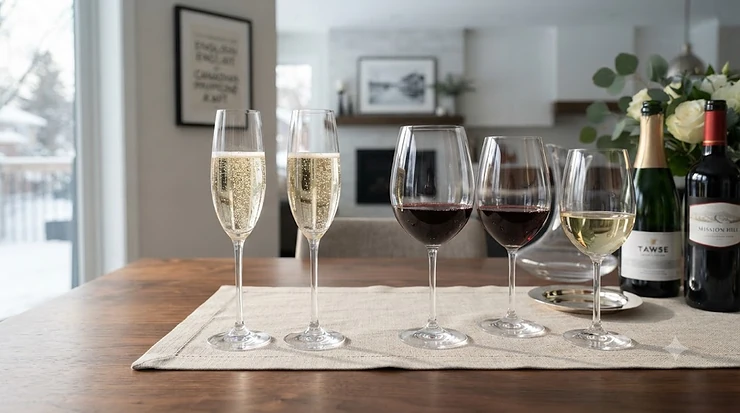
Here’s a scene you’ve probably lived through: a bottle gets popped, someone digs through the cupboard, and out comes a mismatched parade of glassware that has nothing to do with what’s actually in the bottle. The debate over crystal stem champagne glasses vs wine glasses isn’t just stemware snobbery — the shape of the glass genuinely changes how sparkling wine smells, tastes, and behaves in your hand. A narrow flute holds onto bubbles longer, while a tulip-shaped wine glass lets the aromas stretch out and actually reach your nose. Neither is “wrong,” but they solve different problems.

This guide breaks down real, Canadian-available options across budget, mid-range, and premium tiers, with honest analysis pulled from real specs and aggregated reviewer sentiment rather than marketing copy. Whether you’re building a wedding registry glassware list, hunting for proper champagne flutes for New Year’s Eve, or shopping for a set of toasting glasses for an anniversary, you’ll find grounded, practical guidance here — not just a list of prices. We’ll also get into why crystal (lead or lead-free) behaves differently from ordinary glass, what Health Canada actually says about crystal safety, and how to choose without overspending on features you’ll never use.
Quick Comparison: Champagne Flutes vs Wine Glasses at a Glance
Before diving into individual products, here’s how the major glass shapes stack up against each other for serving sparkling wine and champagne.
| Glass Style | Bubble Retention | Aroma Expression | Best Occasion | Best For |
|---|---|---|---|---|
| Classic Flute | Excellent | Limited | Toasts, weddings, quick pours | Celebratory toasts, large groups |
| Champagne Wine Glass (Tulip) | Good | Excellent | Sit-down tastings, vintage champagne | Savouring complex, aged sparkling wine |
| Standard White Wine Glass | Fair | Very Good | Everyday sparkling wine, prosecco | Casual, dual-purpose home bars |
| Coupe/Saucer | Poor | Fair | Retro cocktails, aesthetic photos | Style-first entertaining, cocktails |
Looking at the table above, the tension is really between show and substance: a flute is built to keep your prosecco fizzing through an entire wedding toast, while a champagne wine glass trades a bit of that fizz for a much bigger hit of aroma. If you’re mostly popping bottles for celebrations and photos, flutes still make sense; if you’re actually sitting down to taste a vintage bottle, the wine-glass shape is where the flavour lives. Neither shape is objectively “better” — it depends entirely on what you’re drinking and why.
💬 Just one click — help others make better buying decisions too!😊
Top 7 Crystal Stem Champagne Glasses and Wine Glasses: Expert Analysis
We researched real, currently available products across Amazon.ca’s glassware category, weighing specs against aggregated reviewer sentiment to find genuine standouts in every price bracket. Below, each pick includes honest commentary on who it actually suits — not generic praise.
1. Riedel Vinum Champagne Wine Glass — best for unlocking champagne’s aroma
The Riedel Vinum Champagne Wine Glass ditches the traditional flute shape entirely in favour of an egg-shaped, tulip-style bowl that looks more like a white wine glass than a typical champagne vessel — and that’s the entire point. Riedel’s own sensory research found that a wine-glass shape outperforms a flute for developing aroma, because the wider bowl gives volatile compounds room to unfold before they reach your nose, while the tapered rim still concentrates them on the way out. Machine-made from lead-free crystal with an etched “sparkling point” at the base of the bowl to sustain a steady stream of bubbles, it holds around 6 ounces per glass, which is modest but appropriate for a wine that’s meant to be savoured rather than gulped.
Based on the spec comparison, this is the pick for people who treat champagne like a fine wine rather than a party accessory — Blanc de Blancs, vintage cuvées, and anything with real complexity benefit from the extra surface area. Reviewers consistently note the glass feels notably lighter and more delicate than expected for the price, though a handful mention the bowl shape takes some getting used to if you’ve only ever drunk bubbly from a flute. What most buyers overlook is that this glass doubles nicely as a everyday white wine glass, which stretches its usefulness well beyond special occasions.
Pros:
- ✅ Wine-glass shape dramatically improves aroma over a flute
- ✅ Machine-made precision keeps every glass in the set consistent
- ✅ Doubles as a capable white wine glass for daily use
Cons:
- ❌ Retains bubbles less visibly than a classic flute
- ❌ Bowl shape feels unfamiliar if you’re used to flutes
At around C$70-C$90 for a pair at the time of research, the Riedel Vinum Champagne Wine Glass is a smart mid-to-premium investment for anyone who wants to actually taste what’s in the glass, not just watch it sparkle. Check current price and availability before buying, since Riedel adjusts allocation frequently.

2. Waterford Lismore Essence Champagne Flute — best heirloom crystal for wedding toasts
The Waterford Lismore Essence Champagne Flute takes Waterford’s 200-year-old Lismore diamond-and-wedge cut pattern and reworks it into a slimmer, more contemporary silhouette without losing the brand’s signature weight and sparkle. Each flute is fully cut crystal, meaning the diamond pattern is carved rather than moulded, which is why the light-catching brilliance is so much more pronounced than on pressed-glass flutes. Capacity sits around 7-7.5 ounces, with a flared, trumpet-like rim designed specifically to symbolize celebration — a detail that matters more than it sounds for wedding photography and toast moments.
Here’s what to weigh: this is heirloom-tier glassware, not an everyday flute, and the price reflects decades of brand equity as much as the crystal itself. Reviewers who bought these for weddings and anniversaries repeatedly describe them as “the glasses we’ll use for every big moment from now on,” and several mention receiving them as wedding gifts before buying a second set themselves years later. The trade-off is fragility — full-lead crystal with this level of detailing is not dishwasher-friendly in the long run, no matter what the box implies, and a few reviewers report chips forming after repeated dishwasher cycles.
Pros:
- ✅ Iconic cut-crystal pattern with genuine heirloom weight
- ✅ Flared rim design purpose-built for toasting moments
- ✅ Comes in classic Waterford gift packaging for registries
Cons:
- ❌ Premium price relative to functional champagne glasses
- ❌ Hand-washing strongly recommended despite “dishwasher-safe” claims
Expect to pay in the C$150-C$220 range for a set of two at the time of research, making the Waterford Lismore Essence Champagne Flute a splurge item best suited to wedding registries, anniversary gifts, or a couple’s very first toast.
3. Schott Zwiesel Pure Champagne Flute — best dishwasher-safe crystal for everyday use
German engineering shows up clearly in the Schott Zwiesel Pure Champagne Flute, made from the brand’s proprietary Tritan crystal — a lead-free formula that swaps titanium and zirconium oxide into the glass mix for brilliance and added strength. The dramatically angled bowl and moderate stem height give it a sharper, more geometric look than traditional flutes, and at roughly 7.1 ounces per glass it holds a standard pour comfortably. Schott Zwiesel backs this up with a genuinely dishwasher-safe claim, and unlike softer lead crystal, this material is engineered specifically to resist etching and clouding after repeated cycles.
The spec sheet won’t tell you this, but user reports suggest the added strength translates into real durability in households that actually use their good glassware weekly rather than saving it for special occasions. Reviewers frequently mention these have survived years of regular dishwasher use without the cloudy film that ruins cheaper crystal, and several note the rim thickness feels closer to a hand-blown glass than the price would suggest. On the flip side, a few buyers point out the geometric, angular design reads as more “modern bar” than “romantic celebration,” so it may not suit every aesthetic.
Pros:
- ✅ Titanium-zirconium crystal resists etching and clouding
- ✅ Genuinely dishwasher-safe, unlike most lead crystal
- ✅ Sharp, contemporary bowl shape stands out visually
Cons:
- ❌ Angular design may feel less “romantic” than classic flutes
- ❌ Sold in sets of 4 or 6 only, limiting flexibility for couples
Priced in the C$90-C$130 range for a set of six at the time of research, the Schott Zwiesel Pure Champagne Flute earns its spot as the practical, everyday-durable option for people who actually want to use their crystal, not just display it.
4. Spiegelau Style Champagne Flutes — best value for hosting a crowd
Owned by Riedel but positioned as the more accessible, entertaining-focused sister brand, Spiegelau Style Champagne Flutes deliver a classic tapered flute shape at roughly 8.5 ounces of capacity, with a built-in sparkling point etched into the base to keep effervescence flowing steadily throughout a long toast. Made in Germany from lead-free crystal, the set is explicitly built with dishwasher durability in mind rather than as an afterthought, which matters if you’re planning to use these for repeat parties rather than one-off events.
Reviewers consistently report these glasses as a workhorse for hosting, with several noting they’ve replaced more expensive stemware for everyday entertaining because breakage is less financially painful and the glasses still photograph beautifully at parties. What most buyers overlook about this tier is that “affordable” doesn’t mean flimsy here — the Spiegelau name still carries genuine European glassmaking pedigree, just without the pattern-cutting labour that drives up Waterford or Riedel Vinum pricing. The trade-off is a plainer, unadorned look; if you want an heirloom conversation piece, this isn’t it.
Pros:
- ✅ Classic flute shape with reliable sparkling point
- ✅ Genuinely dishwasher-durable for repeat entertaining
- ✅ Excellent price-to-quality ratio for the Spiegelau name
Cons:
- ❌ Plain design lacks the pattern detail of premium brands
- ❌ Standard flute shape sacrifices aroma versus a tulip glass
At around C$45-C$65 for a set of four at the time of research, Spiegelau Style Champagne Flutes are the pick for anyone who entertains often enough that breakage is a real, recurring cost consideration.
5. JoyJolt Layla Champagne Flutes — best budget starter set
For anyone assembling their first proper glassware collection, JoyJolt Layla Champagne Flutes offer a genuinely surprising amount of polish for the price. Crafted in the Czech Republic from lead-free crystal, each glass holds around 6.7-7.5 ounces and features a reinforced stem specifically engineered for stability — a detail aimed squarely at the wobbly-stem complaint that plagues cheap flutes. The ergonomic, uniform rim is designed for comfortable sipping rather than the razor-thin (and fragile) rims found on ultra-premium crystal.
Based on the spec comparison, this is squarely a starter-home or apartment pick: good enough to impress dinner guests, affordable enough that a broken glass doesn’t sting. Reviewers frequently mention being pleasantly surprised at the weight and clarity given the price point, with several noting they bought a second set after the first held up well through regular use. A common complaint in user reviews is that the reinforced stem, while sturdier, makes the glass feel slightly less delicate and elegant than true fine crystal — a reasonable trade-off for the durability gained.
Pros:
- ✅ Reinforced stem solves the wobbly-flute problem
- ✅ Genuinely dishwasher-safe for stress-free cleanup
- ✅ Excellent clarity and weight for an entry-level price
Cons:
- ❌ Reinforced stem sacrifices some delicate elegance
- ❌ Smaller capacity than premium tulip-style options
Expect around C$35-C$50 for a set of four at the time of research, making JoyJolt Layla Champagne Flutes the clear pick for anyone building a first glassware set without wedding-registry money to spend.
6. AW Bridal Mr and Mrs Toasting Glasses — best dedicated set for the first toast
Purpose-built rather than repurposed, AW Bridal Mr and Mrs Toasting Glasses are designed specifically as toasting glasses for a wedding’s very first celebratory pour, not as everyday drinkware. The set of two features hot-stamped “Mr” and “Mrs” lettering on lead-free, BPA-free crystal glass, presented in an engraved wooden keepsake box that’s explicitly designed to be reused afterward for photos, letters, or jewellery storage. Amazon listings note the glass is roughly 30% more impact-resistant than ordinary glass, which matters given how often toasting glasses get handled, clinked, and passed around during a reception.
Honest analysis here has to separate function from sentiment: these are not meant to compete with Riedel or Waterford on crystal quality, and reviewers understand that going in. What reviewers consistently praise is the presentation — the keepsake box repeatedly comes up as “worth it alone” in aggregated feedback, since it becomes a genuine memory box rather than packaging that gets thrown away. A common complaint is that hand-washing is recommended over dishwasher use, which can be an adjustment for couples used to tossing everything into the machine.
Pros:
- ✅ Purpose-built “Mr & Mrs” design for the first wedding toast
- ✅ Reusable keepsake box adds lasting sentimental value
- ✅ Genuinely popular, well-reviewed gift for engagements
Cons:
- ❌ Hand-wash recommended, less convenient long-term
- ❌ Set of 2 only — not practical as an everyday glassware set
Priced around C$35-C$50 at the time of research, AW Bridal Mr and Mrs Toasting Glasses are best understood as a keepsake gift rather than daily-use stemware — and they’re consistently one of the more gifted items in this exact niche.
7. BERKWARE Crystal Champagne Flutes — best everyday party workhorse
Rounding out the list, BERKWARE Crystal Champagne Flutes deliver a sleek, tall silhouette in lead-free crystal at around 5.5 ounces per glass, sold in sets of six — a practical quantity for hosting a full table without needing to supplement from a mismatched cupboard drawer. The tapered bowl shape is designed to maintain effervescence, and the brand markets itself explicitly around small-business craftsmanship rather than mass-produced volume, which shows up in slightly more consistent detailing than some of the ultra-cheap alternatives in the same price bracket.
What the spec sheet won’t tell you is that a set of six, rather than the more common four, is genuinely useful for anyone who regularly hosts more than a couple of guests — birthdays, holiday dinners, and casual celebrations all tend to need more than two or four flutes at once. Reviewers frequently mention the gift-box presentation exceeds expectations for the price, making this a popular pick for hostess gifts as much as personal purchases. A recurring theme in aggregated feedback is that the glass, while attractive, is on the thinner side and requires reasonably careful handling.
Pros:
- ✅ Set of 6 covers full-table hosting without gaps
- ✅ Attractive tapered design maintains effervescence
- ✅ Strong gift-box presentation for the price point
Cons:
- ❌ Thinner glass requires more careful handling
- ❌ Less brand recognition than Riedel or Schott Zwiesel
At roughly C$35-C$55 for a set of six at the time of research, BERKWARE Crystal Champagne Flutes are the practical choice for anyone who needs volume without sacrificing a polished look.
Top 7 Products: Full Comparison Table
| # | Product | Capacity | Price Range (CAD) | Best For |
|---|---|---|---|---|
| 1 | Riedel Vinum Champagne Wine Glass | ~6 oz | C$70-C$90 (pair) | Aroma-forward tasting |
| 2 | Waterford Lismore Essence Champagne Flute | ~7-7.5 oz | C$150-C$220 (pair) | Heirloom wedding toasts |
| 3 | Schott Zwiesel Pure Champagne Flute | ~7.1 oz | C$90-C$130 (set of 6) | Everyday dishwasher use |
| 4 | Spiegelau Style Champagne Flutes | ~8.5 oz | C$45-C$65 (set of 4) | Hosting large groups |
| 5 | JoyJolt Layla Champagne Flutes | ~6.7-7.5 oz | C$35-C$50 (set of 4) | Budget starter sets |
| 6 | AW Bridal Mr and Mrs Toasting Glasses | ~7-8 oz | C$35-C$50 (set of 2) | First wedding toast keepsake |
| 7 | BERKWARE Crystal Champagne Flutes | ~5.5 oz | C$35-C$55 (set of 6) | Full-table entertaining |
Scanning across the table, a clear pattern emerges: capacity and price don’t move together in a straight line, because you’re also paying for cut detailing, brand pedigree, and dishwasher engineering. The Schott Zwiesel Pure Champagne Flute arguably offers the best middle ground between durability and price, while the Waterford Lismore Essence Champagne Flute justifies its premium almost entirely through craftsmanship and sentimental weight rather than raw function. If your household actually uses champagne glasses often, prioritize the dishwasher-safe mid-range options over anything marketed purely on heritage
Benefits of Crystal Stemware vs Traditional Alternatives
| Feature | Crystal Stemware | Standard Soda-Lime Glass | Disposable Plastic |
|---|---|---|---|
| Clarity & Brilliance | Excellent | Good | Poor |
| Aroma/Bubble Performance | Excellent (shape-dependent) | Fair | Poor |
| Durability Over Time | Good to Very Good | Very Good | Single-use only |
| Occasion Suitability | Weddings, gifts, entertaining | Everyday casual use | Large outdoor parties |
| Long-Term Cost | Higher upfront, reusable | Low upfront, reusable | Ongoing repurchase cost |
The comparison makes the trade-offs obvious: crystal wins decisively on presentation and drinking experience, standard glass wins on sheer toughness for a shrinking budget, and plastic only makes sense when breakage risk is genuinely high, like an outdoor summer wedding. For most Canadian households, a small crystal set for special occasions paired with sturdier everyday glassware covers both bases without overspending on fragile stemware you’ll only use twice a year.
Practical Usage Guide: Getting the Most from Your Crystal Stemware
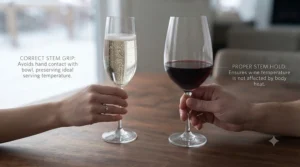
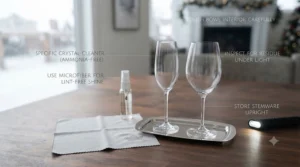
Buying good glassware is only half the equation — how you use and maintain it determines whether it lasts two years or twenty. Before first use, most manufacturers recommend hand-washing new crystal in warm water with a small amount of mild dish soap to remove any manufacturing residue, then air-drying upside down on a rack rather than towel-drying, which reduces the risk of lint transfer and helps preserve the etched “sparkling point” that many flutes rely on for consistent bubbles.
For ongoing care, even glasses marketed as dishwasher-safe benefit from a top-rack-only placement, a gentle cycle, and avoiding harsh detergents with bleach or citrus additives, which can dull crystal’s shine over repeated washes. One of the most common first-30-days mistakes is stacking or nesting stemware in a cabinet, which puts uneven pressure on delicate rims and stems; standing glasses upright with a few centimetres of breathing room prevents most chip-related breakage. If you’re storing crystal long-term between events, keep it somewhere with stable temperature — sudden shifts from a cold garage to a warm kitchen can stress the glass structure over time. Finally, resist the urge to over-polish with a cloth immediately before serving; a light towel buff can actually deposit lint fibres that seed extra, uneven bubbling in sparkling wine, according to the physics research on champagne effervescence.
Real-World Scenarios: Matching Glassware to How You Actually Live
The newly engaged couple building a registry: If you’re three months from a wedding and starting from scratch, prioritize a small set of dedicated toasting glasses like the AW Bridal Mr and Mrs Toasting Glasses for the ceremony itself, then register separately for a larger everyday set — something like the Schott Zwiesel Pure Champagne Flute — that will actually see regular use afterward. Trying to make one set do both jobs usually means the “special” glasses get relegated to a closet forever.
The frequent host on a moderate budget: If you’re the friend who always has people over, durability and quantity matter more than pedigree. The Spiegelau Style Champagne Flutes or BERKWARE Crystal Champagne Flutes cover a full table without the anxiety of breaking a C$40 individual stem, and both hold up to repeated dishwasher cycles better than delicate full-lead crystal.
The wine enthusiast who wants to actually taste the champagne: If you’re the type who reads tasting notes and wants your glassware to reflect that, the Riedel Vinum Champagne Wine Glass is worth the investment. Its tulip shape genuinely changes what you perceive in a glass of vintage Champagne compared to a flute, and it doubles as solid everyday white wine glassware, so it earns its keep beyond special occasions alone.
✨ Don’t Miss These Exclusive Deals!
🔍 Take your glassware collection to the next level with these carefully selected picks. Click on any highlighted item to check current pricing and availability. These glasses will help you create authentic, memorable toasts your family and friends will love!

How to Choose Between Crystal Stem Champagne Glasses and Wine Glasses
- Decide what you’re actually drinking most often. If it’s mostly prosecco and everyday sparkling wine for casual toasts, a flute preserves bubbles longer and looks the part. If it’s aged, complex Champagne you want to actually savour, a tulip-shaped wine glass expresses aroma far better.
- Match capacity to your pour habits. Smaller 5-7 oz flutes suit quick celebratory pours, while 8+ oz tulip glasses give sparkling wine room to breathe if you plan to swirl and sniff before sipping.
- Factor in your dishwasher habits honestly. If you know you won’t hand-wash delicate stemware after every party, prioritize glasses explicitly engineered for dishwasher durability, like Tritan-based crystal, over traditional lead crystal.
- Consider your storage space. Tall, narrow flutes need taller cabinet clearance than shorter tulip-style glasses — measure before you buy a full set of eight or twelve.
- Set a realistic budget tier. Decide upfront whether you want an heirloom investment piece or a durable workhorse set, since mixing expectations across those categories leads to disappointment either way.
- Think about occasion frequency. A household that pops champagne twice a year has very different needs than one that hosts monthly — buy accordingly rather than defaulting to the most expensive option available.
- Check the return and warranty policy. Crystal stemware breaks in transit more often than most glassware categories, so confirm the seller’s replacement policy before committing to a full set.
Champagne Flutes vs Toasting Glasses vs Wine Glasses: What’s the Real Difference?
These three terms get used almost interchangeably in casual conversation, but they describe genuinely different tools. Champagne flutes are the tall, narrow glasses most people picture by default — engineered specifically to slow the loss of carbonation, which is why they remain the standard at weddings and receptions where a toast needs to hold its fizz through a long speech. Toasting glasses overlap heavily with flutes in shape, but the term usually refers specifically to a dedicated pair used for a ceremonial first toast — often personalized, boxed, or engraved, like the AW Bridal Mr and Mrs Toasting Glasses — rather than a full everyday set.
Wine glasses, including the increasingly popular champagne-specific tulip style like the Riedel Vinum Champagne Wine Glass, prioritize aroma over bubble longevity. The wider bowl lets volatile aromatic compounds develop and rise before narrowing near the rim to concentrate them, which is why wine critics and sommeliers increasingly recommend this shape for genuinely tasting sparkling wine rather than just celebrating with it. Reviewers consistently note that switching from a flute to a wine glass for the same bottle of Champagne noticeably changes the perceived aroma, even if the bubble show is less dramatic. The honest takeaway: flutes are about ceremony and bubble retention, toasting glasses are about the moment, and wine glasses are about the flavour — and a well-rounded household bar genuinely benefits from having more than one type on hand.
Common Mistakes When Buying Crystal Stemware
One of the most frequent mistakes buyers make is assuming “crystal” automatically means “fragile and impractical,” which leads them to default to cheap soda-lime glass even for special occasions — when in reality, many modern crystal formulas like Tritan are specifically engineered to be dishwasher-durable. The opposite mistake is just as common: buying delicate, full-lead crystal for everyday use and then being disappointed when it chips after a few months of regular dishwasher cycles, when it was really designed for occasional, careful use.
Another recurring error is buying based on brand name alone without checking capacity — a beautiful 5-ounce flute might look elegant in photos but feel stingy when you’re actually pouring for guests. Buyers also frequently underestimate how many glasses they’ll need; registering for a set of four often means scrambling to buy more the first time you host more than two couples. Finally, many people skip checking whether a set is genuinely dishwasher-safe versus merely “dishwasher-safe with hand-wash recommended” fine print, which sets up unrealistic maintenance expectations from day one.
Long-Term Cost & Maintenance: What Crystal Stemware Really Costs Over Time
The sticker price of a champagne glass is only part of the real cost equation. Full-lead crystal, like the Waterford Lismore Essence Champagne Flute, tends to require replacement of individual broken pieces more often over a five-year period than durable Tritan-based crystal, simply because the material is inherently softer and more prone to chipping under repeated handling and dishwasher stress. On paper this means a lower-priced but more durable set, like the Schott Zwiesel Pure Champagne Flute, can actually work out cheaper per pour over several years of regular entertaining, even though the upfront cost per glass is comparable to some premium options.
Budget sets like JoyJolt Layla Champagne Flutes or BERKWARE Crystal Champagne Flutes flip this equation again: individual replacement glasses are inexpensive enough that breakage barely registers as a cost, making them genuinely economical for high-frequency, casual use despite a lower initial price tag. The real long-term cost driver isn’t the glass itself, though — it’s how the household actually treats the stemware day to day, since careless stacking and aggressive dishwasher detergents shorten the lifespan of even the most durable crystal formulas.
Safety, Lead Content & Regulations: What Canadian Buyers Should Know
Crystal glassware has traditionally used lead oxide to achieve its signature clarity, weight, and light-refracting sparkle, and it’s a fair question whether that poses any health risk during regular use. According to Health Canada’s guidance on lead crystalware, lead can migrate into food or drinks that sit in contact with lead crystal for extended periods, particularly acidic beverages, which is why the department recommends using lead crystal for serving rather than for long-term storage of wine, spirits, or juice. For a quick celebratory pour of champagne, exposure time is minimal, but Health Canada specifically advises against serving pregnant women or children from lead crystal glassware as an added precaution.
The good news for buyers today is that most modern crystal stemware, including several products on this list, uses lead-free formulas — Tritan crystal (used in Schott Zwiesel and Spiegelau products) replaces lead with titanium and zirconium oxide entirely, while brands like JoyJolt and BERKWARE market explicitly lead-free crystal as a selling point. If you’re specifically shopping for lead-free options, check product descriptions carefully, since “crystal” and “lead crystal” aren’t automatically synonymous, and Canadian regulations under the Hazardous Products (Glazed Ceramics and Glassware) Regulations already limit how much lead or cadmium can migrate from any decorative rim on glassware sold domestically.
Building Your Wedding Registry Glassware Wish List
Wedding registry glassware decisions tend to spark more debate than almost any other registry category, largely because couples have to guess how they’ll actually entertain years down the line. A reasonable starting framework, echoed across Canadian wedding planning resources like Weddingbells’ wedding registry guide, is to register for glassware in sets of eight to twelve if you regularly host dinner parties, or four to six if your entertaining style skews more casual and intimate.
For champagne specifically, most Canadian couples benefit from splitting the request into two categories: a small, sentimental set of dedicated toasting glasses for the wedding day itself — something like the AW Bridal Mr and Mrs Toasting Glasses — and a separate, larger everyday set that will actually see regular use at anniversaries, holidays, and casual celebrations for years afterward. Registering for a single premium set to cover both jobs often backfires, since couples end up either overusing (and eventually breaking) sentimental glassware or never using their “good” glasses at all out of fear of damaging them. If storage space or budget is limited, prioritize the everyday set first; keepsake toasting glasses can always be added later as an anniversary gift to yourselves.
Features That Actually Matter (And Those That Don’t)
Marketing copy for champagne glasses loves to highlight things that sound impressive but rarely change the drinking experience. A “sparkling point” etched into the base genuinely matters — it’s a real, physics-backed feature that gives CO2 a consistent nucleation site, producing that steady, photogenic bubble stream. Dishwasher-safe engineering matters enormously for anyone who actually plans to use their glassware regularly rather than storing it for display. Bowl shape matters more than almost anything else on this list, since it directly determines whether you’re optimizing for bubble retention or aroma.
On the other hand, elaborate cut patterns, while beautiful, don’t meaningfully change how the drink tastes or performs — they’re a purely aesthetic and sentimental investment, which is completely valid, but shouldn’t be confused with functional performance. Extremely thin, “wafer-rim” glass is often marketed as a luxury signal, but reviewers across price points consistently report that ultra-thin rims chip more easily and don’t measurably improve the tasting experience compared to a moderately thin rim. Gold rims and decorative bands look striking but typically make a glass hand-wash-only, which is worth weighing honestly against how often you’ll realistically hand-wash anything.
Buyer’s Decision Framework: A Quick Priority Checklist
If you’re still torn, run through this simple framework: if you host large groups regularly, choose a durable, mid-range flute set like Spiegelau or BERKWARE, because volume and dishwasher resilience matter more than pattern detail. If you’re buying for a wedding or major milestone gift, choose heirloom crystal like Waterford, because sentimental and gift value outweigh daily practicality. If you genuinely care about tasting complex Champagne rather than just celebrating with it, choose a tulip-shaped wine glass like Riedel Vinum, because aroma development is the entire value proposition. If budget is the primary constraint, choose JoyJolt or a similarly priced set, because modern lead-free crystal at low price points has genuinely improved in recent years. And if you need a dedicated ceremonial pair rather than a full set, choose purpose-built toasting glasses, because they solve a specific, one-time need that a general flute set doesn’t address as elegantly.
Frequently Asked Questions
❓ What is the difference between a champagne flute and a champagne wine glass?
❓ Are crystal champagne glasses safe to drink from?
❓ How many champagne glasses should I register for on my wedding registry?
❓ Can crystal champagne flutes go in the dishwasher?
❓ What's the difference between toasting glasses and regular champagne flutes?
Conclusion
The crystal stem champagne glasses vs wine glasses debate really comes down to matching the glass to the moment rather than picking one “correct” answer. Flutes and dedicated toasting glasses still make sense for celebratory pours, weddings, and anywhere bubble retention and ceremony matter more than nosing a wine’s bouquet, while tulip-shaped champagne wine glasses genuinely reward anyone who wants to taste — not just toast — what’s in the bottle. Across the seven options covered here, from the aroma-forward Riedel Vinum Champagne Wine Glass to the budget-friendly JoyJolt Layla Champagne Flutes, the right choice depends far more on how you actually entertain than on chasing the most expensive name on the shelf.
Whether you’re filling out a wedding registry, replacing glasses that didn’t survive last year’s holiday party, or finally treating yourself to proper crystal, prioritize honest fit over hype: think about your real dishwasher habits, your typical guest count, and whether you’re drinking champagne to celebrate or to genuinely savour it. Get that match right, and even a modestly priced set will feel like the perfect glass every single time you raise it.
✨ Ready to raise a glass? Check current prices on today’s picks and pour with confidence at your next celebration! 🥂
Recommended for You
- Short Stem Wine Glasses for Small Hands: 7 Best Picks (2026)
- Long Stem Wine Glasses for Red Wine: 7 Stunning 2026 Picks
- Stemmed Wine Glasses: 7 Best Sets Canadians Trust in 2026
Disclaimer: This article contains affiliate links. As an Amazon Associate, I earn from qualifying purchases. If you purchase products through these links, we may earn a small commission at no additional cost to you.
✨ Found this helpful? Share it with your friends! 💬🤗
