
In This Article
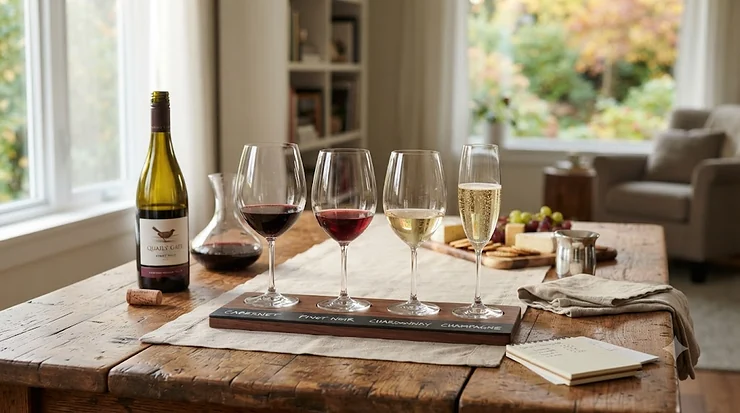
A wine tasting glasses set is a matched collection of stemware built to a consistent bowl, rim, and stem shape so every wine gets the same fair shot at showing its colour, aroma, and structure. Most serious sets follow the ISO 3591 tasting shape or something close to it — the same silhouette wine schools, competitions, and sommelier exams have leaned on for decades. If you’ve ever poured the same bottle into two different glasses and sworn one tasted better, you weren’t imagining it. The glass really is doing work.
That’s the whole appeal of buying a proper wine tasting glasses set instead of grabbing whatever stemware happens to be on the shelf at the grocery store. A dedicated set turns a casual pour into something closer to how professionals evaluate wine — narrower rim to hold the aromatics in, a bowl shaped to concentrate the bouquet toward your nose, and a stem long enough that your palm never warms the glass. For anyone hosting a tasting night, studying for a WSET certificate, or just tired of being handed a tumbler at a friend’s dinner party, a wine tasting glasses set is one of the cheapest upgrades in the entire hobby.
Below, we’ve pulled together seven real, currently available options spanning budget bulk packs to premium varietal-specific crystal, with honest analysis of who each one actually suits — not just a list of specs copied from a product page. The reference glass for this format is the INAO wine glass, defined under French AFNOR standards before it was adopted into the ISO 3591 international specification. If you want the science behind why shape matters so much, Wikipedia’s overview of wine glass design is a solid starting point.
Quick Comparison Table
| Set | Price Range (CAD) | Best For |
|---|---|---|
| Final Touch ISO INAO Wine Tasting Glasses (Set of 6) | around C$45-55 | first-time buyers wanting a true ISO shape cheap |
| Stölzle Lausitz INAO Wine Tasting Glasses (Set of 6) | around C$60-75 | durable, everyday tasting use |
| Ravenscroft Crystal INAO Wine Tasting Glasses (Set of 12) | in the C$140-170 range | hosting larger group tastings |
| Riedel Veritas Red Wine Tasting Set (Set of 3) | in the C$110-140 range | serious red wine drinkers wanting varietal specificity |
Looking at the spread above, the price gap between a basic ISO-shaped set and a premium varietal-specific one is less about how “correct” the shape is and more about material refinement, breakage resistance, and whether the set covers one universal shape or several grape-specific bowls. Budget sets from Final Touch and RONA hit the same ISO dimensions as pricier options, so buyers on a tight budget aren’t sacrificing tasting accuracy — they’re sacrificing some polish and long-term durability. Anyone building a home tasting habit that will actually get used weekly should weigh cost-per-glass over a few years, not just the sticker price at checkout.
💬 Just one click — help others make better buying decisions too!😊
Top 7 Wine Tasting Glasses Set Picks: Expert Analysis
1. Final Touch ISO INAO Wine Tasting Glasses (Set of 6) — most budget-friendly true ISO shape
The Final Touch ISO INAO Wine Tasting Glasses stick tightly to the classic elongated-egg profile, and that fidelity to the standard is the whole selling point at this price. Each glass holds up to 7¼ oz (215 ml), sized for 1-2 oz (30-60 ml) tasting pours, and is crafted from lead-free crystal for clarity and durability. In practice, that narrow rim genuinely does funnel aromatics toward your nose rather than letting them scatter, which matters more than most casual buyers expect the first time they do a side-by-side pour against a regular glass. Based on the spec comparison with pricier crystal sets, the wall thickness here is a touch heavier, which is a fair trade for a set that costs a fraction of European crystal. This is a smart entry point for beginners, wine-club hosts, or anyone testing whether they even like blind tasting before investing more. Aggregated buyer sentiment across major retail listings consistently praises the dishwasher-safe convenience and true-to-standard shape, while a recurring complaint concerns occasional shipping breakage given the thin stems.
Pros:
- ✅ True ISO 3591 shape at an entry-level price
- ✅ Dishwasher safe for easy weekly use
- ✅ Lead-free crystal construction
Cons:
- ❌ Thinner stems more prone to shipping damage
- ❌ Less refined rim thinness than European crystal
Priced around C$45-55 for the set of six, this is the easiest low-risk way to get real ISO-shaped stemware into rotation.
2. RONA INAO/ISO Tasting Glass (Pack of 12) — best value for hosting large tastings
RONA’s INAO/ISO tasting glass uses a long bowl design that directs wine to the tip of the tongue for better detection of flavours, manufactured with pulled-stem technology for lasting strength. What that pulled-stem detail means in practice: the stem is drawn from the same piece of glass as the bowl rather than fused on afterward, which is a genuine durability advantage over cheaper glued-stem sets that tend to snap at the joint. For anyone running a 20-person blind tasting or a wine club that meets monthly, buying a dozen matched glasses in one box solves the “does everyone have the same glass” problem that throws off comparative tastings. What most buyers overlook about bulk tasting-glass packs is that consistency across all twelve pieces matters more than any single glass’s individual quality — and that’s exactly where a single manufacturing run of a dozen wins over mixing brands. Reviewers consistently note that RONA‘s glasses hold up well through repeated dishwasher cycles, with occasional feedback that the classic shape reads as slightly plain next to designer sets.
Pros:
- ✅ Twelve matched glasses in one purchase
- ✅ Pulled-stem construction resists snapping
- ✅ Versatile enough for wine or spirits tasting
Cons:
- ❌ Plainer aesthetic than boutique crystal brands
- ❌ Bulkier box takes more storage space
Expect a price in the C$70-90 range for the full dozen, which works out to some of the lowest cost-per-glass numbers on this list.
3. Luigi Bormioli ISO Wine Tasting Glasses (Set of 6) — lightest rim for smooth sipping
This set delivers six ISO wine tasting glasses in clear glass with a 21.5 cl capacity, and it’s built using Luigi Bormioli’s proprietary glass-strengthening process rather than traditional lead crystal. Here’s what to weigh: the rim on this set is noticeably thinner to the lip than most bulk ISO sets, and rim thinness is one of the most underrated variables in how “premium” a glass feels during actual tasting — a thick rim can dull the sensation of a wine’s texture on your lips before you’ve even registered the flavour. This makes the Bormioli set a strong middle ground for someone who wants a more refined sipping experience without paying full crystal prices. On paper this means Italian manufacturing precision at a mid-tier cost, and aggregated review sentiment backs that up, with frequent mentions of the glass feeling “surprisingly delicate” while still surviving regular dishwasher use; a smaller number of reviewers note the glass is easier to chip on stovetop-adjacent counters than sturdier crystal.
Pros:
- ✅ Notably thin rim for smoother sipping
- ✅ Full ISO-standard 21.5 cl capacity
- ✅ Strong resistance to dishwasher wear
Cons:
- ❌ More chip-prone against hard countertops
- ❌ No decorative gift packaging included
Typically priced in the C$50-65 range, this set rewards buyers who care about rim feel as much as bowl shape.
4. Stölzle Lausitz INAO Wine Tasting Glasses (Set of 6) — sturdiest stem for everyday handling
This is a durable red or white wine glass set with a 6.75 fl oz capacity, built to the I.N.A.O. shape and dishwasher safe. Stölzle Lausitz has manufactured commercial glassware for restaurants and hospitality for generations, and that background shows in the stem’s thickness — noticeably sturdier than the entry-level Final Touch set, which matters if the glasses are getting picked up and set down repeatedly during a multi-flight tasting. What most buyers overlook here is that “commercial-grade” glassware is engineered first for surviving hundreds of wash cycles in a restaurant dish pit, so a home buyer inherits that same longevity almost by accident. This is a smart pick for anyone who tastes often enough that breakage adds up, like a home sommelier-in-training or a small wine club that meets weekly rather than occasionally. Reviewers consistently report that the glasses “feel restaurant-grade” and survive years of regular use, with a smaller number wishing the set included a dedicated storage rack.
Pros:
- ✅ Commercial-grade stem durability
- ✅ True INAO tasting shape and capacity
- ✅ Withstands frequent dishwasher cycles
Cons:
- ❌ No included storage case or rack
- ❌ Heavier feel than ultra-light crystal sets
Priced around C$60-75, this is the pick for people who taste wine often enough that longevity beats delicacy.
5. Ravenscroft Crystal INAO Wine Tasting Glasses (Set of 12) — award-winning clarity for serious tasters
Ravenscroft’s International Tasting glass is currently used in many winery tasting rooms and multi-wine tasting events, and it’s made from 100% lead-free crystal in Europe, holding 7.5 fl oz per glass. The fact that actual working tasting rooms rely on this exact glass tells you something specs alone can’t: it holds up to constant handling by staff pouring dozens of flights a day, which is a harder test than any home buyer will put it through. Based on the spec comparison against the budget sets above, Ravenscroft’s crystal has noticeably better optical clarity for judging a wine’s true colour and legs, a detail that matters enormously for anyone doing structured visual assessment rather than just sniffing and sipping. This set suits wine educators, serious hobbyists hosting comparative tastings, or anyone who wants twelve identical, professional-grade glasses without buying two separate six-packs. Aggregated review sentiment repeatedly cites the “restaurant-quality clarity” and confirms the set was recognized by Architectural Digest, while some buyers note the box packaging could better protect against transit breakage.
Pros:
- ✅ Used in real winery tasting rooms
- ✅ Superior optical clarity for colour assessment
- ✅ Twelve glasses for full group tastings
Cons:
- ❌ Higher price point than bulk basic sets
- ❌ Packaging could better cushion shipping
Expect to pay in the C$140-170 range for the dozen, which still lands under C$15 per glass for genuine European crystal.
6. Gabriel-Glas StandArt Crystal Wine Glasses (Set of 2) — best all-in-one glass for small collections
The Gabriel-Glas StandArt is a universal 16 oz crystal glass designed to handle both red and white wine in a single shape, arriving as a set of two in a gift box — a deliberate departure from the multi-glass philosophy of brands like Riedel. What most buyers overlook about “one glass does everything” designs is that they’re not a compromise so much as a different bet: instead of optimizing six shapes for six grape varieties, the bowl geometry is tuned to work reasonably well across the board, which is genuinely useful for anyone with limited cabinet space. Here’s what to weigh — a dedicated taster who owns eight varietal-specific Riedel shapes will still notice subtle differences a universal glass smooths over, but casual entertainers rarely will. This is the right call for apartment dwellers, gift buyers, or anyone starting a collection who doesn’t yet know which varietal-specific shapes they’ll actually reach for. Reviewers consistently describe the StandArt as “shockingly light for crystal,” with a smaller number noting the larger 16 oz size feels oversized for strict 1-2 oz tasting pours.
Pros:
- ✅ One shape handles red and white confidently
- ✅ Genuinely lightweight lead-free crystal build
- ✅ Comes gift-boxed, ready to give
Cons:
- ❌ Larger capacity than strict ISO tasting pours
- ❌ Set of two limits group tasting use
Priced around C$70-90 for the pair, this is less a bulk tasting tool and more a premium everyday-to-tasting hybrid glass.
7. Riedel Veritas Red Wine Tasting Set (Set of 3) — best varietal-specific upgrade for reds
This set contains one Riedel Veritas Cabernet/Merlot glass, one New World Pinot Noir/Nebbiolo/Rosé Champagne glass, and one Old World Syrah glass, letting a taster feel the difference glass shape makes across three distinct red styles in one sitting. Veritas is fine-blown and lightweight, executed in sparkling crystal, combining the charm of a handmade glass with the consistent accuracy only machine-made production can achieve. What the spec sheet won’t tell you, but wine educators consistently point out, is that the varietal-specific bowl differences are most obvious in exactly the wines Riedel targets here — a Cabernet in the wider Syrah bowl really does taste flatter, and that’s the entire pedagogical point of a tasting set like this. This is the pick for red wine enthusiasts who’ve outgrown a single universal glass and want to understand, hands-on, why sommeliers argue over bowl shape at all. Reviewers consistently praise the surprising durability for such thin, machine-blown crystal, with the most common criticism being that a three-glass set doesn’t cover whites or sparkling at all.
Pros:
- ✅ Three distinct bowls for red wine styles
- ✅ Machine-made precision at lighter weight
- ✅ Genuinely educational side-by-side comparison
Cons:
- ❌ Reds-only, no white or sparkling shape
- ❌ Pricier per glass than universal sets
Typically found in the C$110-140 range, this set earns its premium price for anyone specifically focused on comparative red wine tasting.
How to Choose a Wine Tasting Glasses Set
What is the best wine tasting glasses set to buy? The short answer: pick a set built to the ISO 3591 tasting shape if your priority is accurate sensory evaluation, and only step up to varietal-specific crystal once you know which styles you taste most often. Here’s a practical framework for narrowing it down:
- Confirm the shape first. Look for the elongated-egg bowl with a narrower rim — this is the actual ISO 3591 profile, not just marketing language calling something a “tasting glass.”
- Match set size to your habits. A set of 6 suits solo practice or small dinners; a set of 12 makes more sense for club nights or classes.
- Decide universal vs. varietal-specific. A universal shape like Gabriel-Glas covers more ground for less cabinet space; varietal sets like Riedel Veritas teach you the differences directly.
- Weigh crystal against everyday glass. Crystal offers thinner walls and better clarity, but everyday lead-free glass survives careless handling better.
- Check the capacity against your pour size. True tasting glasses hold around 7-7.5 oz because tastings use small 1-2 oz pours, not full servings.
- Factor in dishwasher safety. Hand-washing crystal repeatedly is a real time cost; confirm the set is actually dishwasher-rated before assuming.
- Budget per glass, not per set. A twelve-pack that costs more upfront can still be cheaper per glass than two six-packs from a pricier brand.
Sommelier Wine Glasses Home Setup: Building a Personal Tasting Collection
Wanting sommelier wine glasses at home doesn’t mean replicating a professional cellar overnight — it means building outward from one solid, versatile set. Most working sommeliers actually keep their personal home collection simpler than people assume: a set of true ISO-shaped tasting glasses for blind practice, plus one or two varietal-specific upgrades for the styles they drink most. If you’re just starting, the smartest first purchase is a six-glass ISO set like the Final Touch or Stölzle Lausitz options above, since that shape underlies almost every serious tasting exercise, from casual comparison nights to WSET coursework.
From there, the natural second purchase is a varietal-focused set like the Riedel Veritas, added once you know whether you gravitate toward bold reds, delicate whites, or sparkling wines. What most home tasters get wrong is buying eight different varietal shapes before they’ve ever done a proper blind comparison — building a home sommelier setup works better in this order: standard shape first, then targeted upgrades based on what you actually drink. Storage matters too: keep glasses stem-up in a dedicated rack rather than stacked in a cupboard, since rim chips from careless stacking are the single most common way a home tasting collection gets shortened prematurely.
Professional Wine Tasting Stemware vs Everyday Wine Glasses
Professional wine tasting stemware and the everyday wine glasses most households already own solve genuinely different problems, and understanding the gap explains why sommeliers won’t drink out of a standard glass during evaluation. Everyday glasses are shaped for comfortable, generous drinking — wider bowls, wider rims, and often a shorter stem for casual handling. Tasting stemware sacrifices that casual comfort for concentration: a narrower rim traps aromatics instead of letting them dissipate, and the taller stem keeps hand warmth away from the bowl so the wine’s temperature stays stable through a full evaluation.
| Feature | Professional Tasting Stemware | Everyday Wine Glass |
|---|---|---|
| Rim width | Narrow, concentrates aroma | Wide, easier for casual sipping |
| Typical capacity | 7-7.5 oz (tasting pours) | 12-20 oz (full servings) |
| Stem length | Long, keeps hand off bowl | Often shorter |
| Best For | Blind tastings, comparative analysis | Dinner parties, casual drinking |
The practical upshot: everyday glasses aren’t “wrong,” they’re just optimized for a different goal. If you’ve ever noticed a wine tastes more muted at a casual dinner than it did at a formal tasting, the glass shape is a real contributor, not just atmosphere or expectation. Buyers who want both should keep an everyday set for entertaining and a dedicated tasting set on hand for anything more analytical.
ISO Wine Tasting Glasses: The Standard Explained
What is an ISO wine tasting glass? It’s stemware built to ISO 3591:1977, an international specification defining the exact shape, size, and material used for sensory analysis of wine, adopted so professionals worldwide evaluate wine using the same physical tool. The specification calls for an “elongated egg” cup on a stem and base, with a capacity of approximately 215 ml intended for a 50 ml pour.
This standardization exists for a reason that goes beyond aesthetics: the international standard gives wine experts a common tool, so that when they assess a wine’s quality, they’re using the same fundamental glass, leading to more reliable and comparable evaluations. That consistency is exactly why wine competitions, certification exams, and professional cuppings all specify this shape by name rather than leaving it up to whatever stemware happens to be on hand. For home buyers, the practical takeaway is simple: if a product genuinely follows this shape — narrow rim, egg-shaped bowl, roughly 7-7.5 oz capacity — you’re getting the same fundamental tool professionals rely on, regardless of whether it’s a C$45 budget set or a C$150 crystal one.
Blind Tasting Glassware: A Practical Usage Guide
Getting real value out of blind tasting glassware is less about the glass itself and more about how you use it, so here’s a setup guide that avoids the common first-month mistakes.
Before the tasting: Rinse each glass with a small splash of the wine being poured rather than water alone — residual dish soap or dust can distort delicate aromatics, and a quick wine rinse eliminates that variable entirely. Number the glasses on masking tape at the base, never on the bowl, so labels don’t interfere with visual assessment.
During the tasting: Pour consistent 1-2 oz servings across every glass — inconsistent pour sizes are one of the most common amateur mistakes, since a fuller glass concentrates aroma differently than a shallow one. Hold the glass by the stem, not the bowl, to keep body heat from warming the wine mid-evaluation.
After the tasting: Hand-wash crystal sets in warm water with minimal detergent rather than relying purely on the dishwasher, even if the manufacturer rates it as dishwasher-safe, since harsh detergents can dull crystal’s clarity over dozens of cycles. Store glasses upright or in a dedicated stemware rack rather than upside down on a shelf liner, which can trap moisture and cause a musty smell that lingers into the next tasting.
Common first-month mistake: New buyers frequently mix glass shapes within the same tasting flight, unintentionally introducing a variable that has nothing to do with the wine itself. Keep every glass in a single flight matched, and save shape comparisons for a dedicated side-by-side exercise instead.

Standardized Wine Glasses in Real-World Scenarios
Different tasters need different sets depending on how and how often they actually taste, so here are three realistic profiles matched to specific picks from the list above.
The weekend hobbyist hosting a monthly wine night for six friends on a modest budget should lean toward the Final Touch ISO INAO set — it delivers the correct tasting shape without the investment a once-a-month habit doesn’t justify, and dishwasher safety keeps cleanup painless after a casual gathering.
The wine club organizer running biweekly comparative tastings for a dozen members needs consistency across every glass in the room, making the RONA INAO/ISO pack of 12 or Ravenscroft Crystal Set of 12 the practical choice — a full dozen from one manufacturing run avoids the shape inconsistencies that creep in when mixing brands to reach a headcount.
The dedicated home sommelier studying for a certification or tasting several bottles a week benefits most from combining a Stölzle Lausitz everyday-durable ISO set for practice sessions with a Riedel Veritas Red Wine Tasting Set for structured varietal comparison — durability for frequent use, plus specificity for serious study.
Wine Judging Stems: Long-Term Cost and Maintenance
The sticker price on a wine tasting glasses set tells only part of the value story — long-term cost of ownership depends heavily on breakage rate and how the set holds up to repeated washing. A budget six-pack replaced every year or two due to chips or stem snaps can quietly cost more over five years than a single sturdier set bought once. Reviewers consistently note that commercial-grade brands like Stölzle Lausitz and Ravenscroft survive years of regular dishwasher cycling, while ultra-thin crystal sets demand hand-washing to avoid clouding.
Maintenance habits matter as much as the glass itself: hand-washing with a soft cloth, avoiding stacking glasses inside one another, and storing them stem-up in a rack all measurably extend a set’s working life regardless of brand. For buyers replacing a broken glass from a matched set, most manufacturers sell individual replacement pieces rather than forcing a full new set purchase — worth checking before assuming a single chip means starting over.
Common Mistakes When Buying Wine Tasting Glasses
The most common mistake is assuming any stemmed glass labeled “wine glass” performs the same job as a true tasting shape — a wide-bowled everyday glass and an ISO-shaped tasting glass are built for genuinely different goals, and using one for the other’s purpose leads to disappointing comparisons. A second frequent error is buying varietal-specific sets like Riedel Veritas before ever using a universal ISO shape, which means new tasters can’t isolate whether a perceived flavour difference comes from the wine or from switching glass shapes mid-comparison.
Buyers also commonly underestimate breakage during shipping — thin crystal stems are genuinely fragile in transit, so checking a seller’s return policy before ordering premium crystal is worth the extra minute. Finally, many buyers overlook capacity mismatches: a glass sized for full dinner-party pours won’t behave the same as a true 7-7.5 oz tasting glass sized for small analytical servings, so double-check capacity specs rather than assuming “wine glass” automatically means tasting-appropriate size.
Features That Actually Matter (And Those That Don’t)
Rim thinness genuinely matters — a thinner rim measurably changes how a wine feels on first contact with your lips, and it’s one of the clearest differences between budget and premium sets. Bowl shape matters enormously too, since the narrow-rim, wide-bowl profile is the entire mechanical reason ISO glasses concentrate aroma better than straight-sided glassware.
What matters less than marketing suggests: elaborate stem etching or decorative cuts add nothing to sensory performance and exist purely for aesthetics. Similarly, oversized capacity beyond what a real tasting pour requires doesn’t improve evaluation — it just means more wine sitting in the glass warming up before you get to it. Brand prestige alone is a weak signal too; a correctly shaped C$50 set will outperform an incorrectly shaped C$150 set for actual tasting accuracy every time, even if the pricier option looks more impressive on a shelf.
Safety, Materials, and Canadian Regulations Guide
Lead crystal has a long association with premium stemware, but Canadian buyers should understand what that actually means for safety. Lead crystalware is made by combining molten quartz with lead compounds, and some lead may transfer into food or drinks placed in it, with more lead transferred to highly acidic drinks such as wine, especially during longer storage. That’s why virtually every set featured above markets itself specifically as lead-free crystal — brands have shifted materials in direct response to this exact concern, using alternatives like barium or zinc oxide to achieve similar clarity and resonance without the lead content.
Canada also regulates decorated glass and ceramic foodware directly. Under the Glazed Ceramics and Glassware Regulations, any drinking vessel with a distinctive exterior decorative pattern near the rim must not release lead in excess of 4 mg/L or cadmium in excess of 0.4 mg/L when tested. Practically, this means plain, undecorated tasting glasses — which is what nearly every set on this list is — fall outside the riskiest category entirely, since the regulation specifically targets decorative glazes rather than clear glass itself. For full details on the science and precautions, Health Canada’s guidance on lead crystalware is worth a read before storing any beverage in crystal long-term. If you want to go deeper on the sensory science behind why glass shape affects perception at all, Brock University’s Cool Climate Oenology and Viticulture Institute runs Canada’s leading sensory evaluation research on exactly this topic.
Buyer’s Decision Framework
If you’re tasting wine casually a few times a year, choose a budget ISO six-pack like Final Touch, because the correct shape matters more than material refinement at low usage frequency. If you’re hosting group tastings regularly, choose a twelve-glass set like RONA or Ravenscroft, because matched dozens solve the consistency problem mixed brands create. If you’re focused specifically on red wine study, choose a varietal set like Riedel Veritas, because bowl-shape differences are most educational within a single wine category. If cabinet space or gifting is the priority, choose a universal set like Gabriel-Glas, because one adaptable shape beats several specialized ones for limited storage. And if durability under frequent handling is the deciding factor, choose a commercial-grade set like Stölzle Lausitz, because restaurant-tested stems simply survive longer than delicate showpiece crystal.
✨ Ready to Build Your Tasting Collection? Check current pricing on any of the sets above and see which shape fits your next pour.
FAQ
❓ What is the difference between a wine glass and a wine tasting glass?
❓ How many glasses come in a typical wine tasting glasses set?
❓ Are lead-free crystal wine glasses safe?
❓ Can I use tasting glasses for everyday wine drinking?
❓ Do wine tasting glasses actually change how wine tastes?
Conclusion
A wine tasting glasses set is one of the few upgrades in the wine world that delivers a genuinely noticeable difference for a modest price. Whether you land on the budget-friendly Final Touch six-pack, the bulk-value RONA dozen, or the varietal-specific Riedel Veritas set, the underlying principle stays the same: the ISO tasting shape exists because it works, and matching your set to how often and how seriously you actually taste wine matters more than chasing the priciest crystal on the shelf. Start with a true ISO-shaped set if you’re building a collection from scratch, then add varietal-specific glasses once you know which styles you gravitate toward.
However you build your collection, remember that price ranges above reflect research at time of writing and may vary — always check current pricing before buying, since exact figures shift often.
🔍 Take your home tasting setup to the next level with the sets above. Click through to check current pricing and availability, and find the shape that matches how you actually taste.
Recommended for You
- Zalto Wine Glasses: 7 Honest Picks, Real Verdict (2026)
- 7 Best Schott Zwiesel Wine Glasses in 2026 (Tested Picks)
- Riedel Wine Glasses 2026: 7 Top Picks Canadians Actually Love
Disclaimer: This article contains affiliate links. As an Amazon Associate, I earn from qualifying purchases. If you purchase products through these links, we may earn a small commission at no additional cost to you.
✨ Found this helpful? Share it with your friends! 💬🤗
