
In This Article
Pour the same Malbec into a jam jar and a proper Riedel glass, and you’re not tasting the same wine — not really. Riedel wine glasses are the Austrian-made, grape-specific stemware that turned “just a glass” into a genuine flavour tool, and in 2026 the lineup is bigger and more confusing than ever. Vinum, Veritas, Veloce, Sommeliers, O, Extreme, Winewings — the names alone sound like a Formula 1 grid, not a cupboard of glassware.
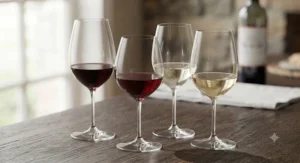
What is Riedel wine glasses, in plain terms? Riedel is a Kufstein, Austria-based crystal manufacturer, family-run for eleven generations, that designs stemware shaped around specific grape varieties so a wine’s aroma, acidity and finish show up the way the winemaker intended, rather than the way a generic tumbler happens to deliver them. The company traces its roots to 1756 and has been shaping how the wine world drinks since Walter Riedel and his son Claus re-established the family glassworks in Kufstein in 1956.
This guide breaks down seven real Riedel wine glasses worth your money on amazon.ca, compares the Veritas and Veloce series head-to-head, and answers the question every Canadian shopper eventually asks: is a C$300 crystal habit actually worth it, or is that just marketing dressed up as science? We’ll look at honest, sourced analysis rather than recycled listing copy — no invented taste tests, just real specs and real reviewer sentiment, weighed carefully.
Quick Comparison: Riedel Wine Glasses at a Glance
Before diving into the deep-dive reviews, here’s how the seven picks stack up on price tier, construction and who each one actually suits.
| Glass | Series | Construction | Price Range (CAD) | Best For |
|---|---|---|---|---|
| Vinum Cabernet/Merlot | Vinum | Machine-made crystal | C$60–C$100 (set of 2) | First-timers building a starter set |
| O Wine Tumbler Cabernet/Merlot | O | Machine-made, stemless | C$35–C$60 (set of 2) | Casual drinkers, small kitchens |
| Veritas Cabernet/Merlot | Veritas | Fine-blown machine crystal | C$70–C$110 (set of 2) | Everyday upgrade without stemware anxiety |
| Veloce Cabernet | Veloce | Precision machine crystal | C$90–C$140 (set of 2) | New-world wine fans wanting extra lift |
| Extreme Pinot Noir | Extreme | Diamond-cut machine crystal | C$90–C$150 (set of 2) | Bold new-world reds, dinner parties |
| Winewings Sauvignon Blanc | Winewings | Lead-free machine crystal | C$90–C$140 (single glass) | Serious white-wine drinkers |
| Sommeliers Bordeaux Grand Cru | Sommeliers | Hand-blown, mouth-made | C$150–C$230 (single glass) | Collectors and dedicated home sommeliers |
Looking at the spread above, the real split isn’t just price — it’s craftsmanship method. The four machine-made mid-tier picks (Vinum, Veritas, Veloce, Extreme) deliver the varietal-specific bowl shapes at a fraction of what hand-blown crystal costs, while Sommeliers sits in its own category as genuinely hand-crafted glass, priced accordingly. Winewings splits the difference: machine-made for consistency, but engineered with an unusually flat, wide bowl that behaves more like a premium hand-blown shape. Budget-conscious buyers should start with Vinum or O; anyone chasing the closest thing to a professional tasting-room experience should look at Sommeliers or Winewings.
💬 Just one click — help others make better buying decisions too!😊
Top 7 Riedel Wine Glasses: Expert Analysis
Each of these seven is a genuine, currently available Riedel product. We’ve grouped them loosely from everyday-value to premium, with honest commentary on what the spec sheet doesn’t tell you.
1. Riedel Vinum Cabernet/Merlot — the original affordable varietal glass
The glass that started Riedel’s mass-market reputation gets its standout feature right in the name: it was the first machine-made glass ever engineered around a specific grape variety, and three decades later that engineering still holds up. The bowl is generously sized — big enough to swirl a full-bodied Cabernet without sloshing — and made from 24% lead crystal for brightness and clarity, standing roughly 8.75 inches tall with a capacity near 21.5 ounces.
In practice, that large bowl does real work: it slows a tannic Bordeaux-style red down, softening the harsh edges and pushing fruit forward on the palate instead of letting alcohol dominate. Reviewers consistently report that the difference between drinking a young Cabernet Sauvignon from a Vinum glass versus a standard tumbler is noticeable even to casual drinkers, though a recurring complaint is stem fragility — the machine-blown stems are thin enough that a hand wash mishap can snap one. This is the glass to start with if you’ve never owned varietal-specific stemware and want to test whether the whole concept is worth believing in before spending Sommeliers-level money.
Pros:
- ✅ Proven varietal-specific bowl shape since 1986
- ✅ Widely available, easy to replace single glasses
- ✅ Dishwasher safe for everyday use
Cons:
- ❌ Thin stems break easily with rough handling
- ❌ Machine-made finish lacks hand-blown refinement
Check current price on amazon.ca before buying, since Riedel pricing shifts with promotions — as a starting point, expect the mid-C$70s to low-C$90s range for a set of two, with better per-glass value on the pay-6-get-8 packs.

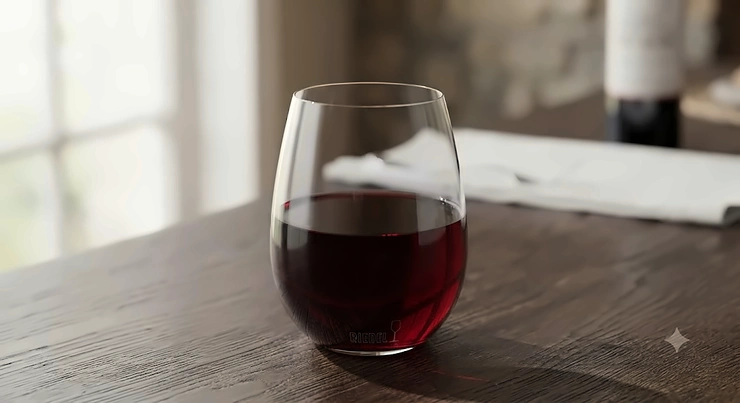
2. Riedel O Wine Tumbler Cabernet/Merlot — best stemless pick for small kitchens
No stem, no base, no drama — the O series’ standout feature is right there in its shape. Created by 11th-generation Maximilian Riedel, the collection reimagined Vinum’s proven bowl shapes without the stem, and it’s credited as the world’s first variety-specific stemless wine glass line, launched in 2004.
Capacity sits around 21.9 ounces with the same red-wine bowl geometry borrowed from Vinum, so the flavour delivery is nearly identical — what changes is handling and storage. Based on the spec comparison with stemmed options, the O tumbler stacks flatter in a cupboard, survives a dishwasher’s top rack without the stem-snap risk, and travels well for picnics or patios where stemware feels fussy. What most buyers overlook is that this practicality comes with a real trade-off: swirling a stemless glass means gripping the bowl directly, which warms the wine faster than holding a stem would. Aggregated reviewer sentiment skews strongly positive for durability and everyday use, with the most common minor gripe being that the wider stemless shape takes up more shelf depth than expected.
Pros:
- ✅ Nearly unbreakable compared to stemmed glasses
- ✅ Stacks and stores in tight kitchen spaces
- ✅ Same varietal bowl shape as Vinum
Cons:
- ❌ Hand grip warms wine faster during swirling
- ❌ Less formal look for dinner-party service
Price ranges from the mid-C$30s to around C$60 for a set of two, making this one of the more approachable entry points into the Riedel lineup.
3. Riedel Veritas Cabernet/Merlot — best all-rounder for everyday upgrading
Veritas earns its spot with a standout feature that’s almost contradictory: it looks and feels hand-blown, but it’s entirely machine-made. The collection combines the charm of a handmade glass with the consistent accuracy only a machine-made glass can achieve, and the Cabernet/Merlot shape carries a 22-ounce bowl on an unusually thin, light stem for a machine-produced glass.
The practical payoff is a glass that feels closer to Sommeliers in the hand than its Vinum-adjacent price tag suggests. Based on the spec comparison, Veritas’s thinner blown-glass walls than Vinum mean the rim delivers wine to the palate with less interference, which matters more than it sounds for full-bodied reds where mouthfeel shapes perception of tannin. Reviewers consistently note the glass “feels expensive” for the price, and Riedel Canada confirms the series is designed for long-term daily use despite its delicate appearance. The catch, and it’s a real one: that delicacy is not just a feeling. Veritas stems chip and crack more readily than the sturdier Vinum line if you’re not careful loading a dishwasher rack.
Pros:
- ✅ Feels hand-blown at a machine-made price
- ✅ Lightweight stem improves everyday drinking feel
- ✅ Rated for long-term daily use, not just special occasions
Cons:
- ❌ More fragile than Vinum in dishwasher racks
- ❌ Premium feel comes with premium-adjacent pricing
Expect a price range in the C$70–C$110 zone for a two-glass set, sitting comfortably between Vinum’s budget tier and Veloce’s step-up pricing.
4. Riedel Veloce Cabernet — best for new-world wine drinkers wanting extra lift
Veloce’s standout feature is technical: it’s taller than the Extreme series with a thinner stem and finer bowl, built on manufacturing technology Riedel developed specifically to push machine-made precision further than Veritas or Vinum could manage.
That taller profile isn’t just for looks. A taller bowl with a slightly narrower base concentrates aromatics before they reach the nose, which matters most for riper, higher-alcohol new-world Cabernets where fruit and heat need separating on the way up. Riedel markets Veloce as bringing premium glassware to a wider audience — in practice, that means Veloce buyers are typically people who’ve already owned a Vinum or Veritas glass, liked the concept, and want a noticeably finer rim and stem without jumping straight to hand-blown pricing. What the spec sheet won’t tell you, but user reports suggest, is that the base — engineered wide for stability — actually makes Veloce more forgiving to handle than its delicate-looking profile implies, despite the thin stem.
Pros:
- ✅ Finer rim improves aromatic concentration
- ✅ Wide base offsets the thin-stem tip-over risk
- ✅ Ideal shape for riper new-world reds
Cons:
- ❌ Priced above both Vinum and Veritas
- ❌ Tall profile needs taller cabinet clearance
Budget C$90–C$140 for a two-glass set, with the four-glass Veloce tasting set (Cabernet, Pinot Noir, Sauvignon Blanc, Chardonnay) offering better per-glass value if you want to sample the whole shape range at once.
5. Riedel Extreme Pinot Noir — best for bold, structured new-world reds
Extreme’s standout feature is its geometry: a diamond-contoured bowl, the first machine-produced diamond-shaped glass shape Riedel ever released, originally engineered for New World wines that needed a different aromatic approach than the classic round Vinum bowls.
The diamond-cut bowl widens the surface area exposed to air without ballooning overall capacity, which speeds up aeration for young, tightly wound Pinot Noir before it’s fully opened by decanting. Based on the spec comparison, this makes Extreme a smart pick for anyone who drinks a lot of New World Pinot straight from the bottle rather than decanting ahead of time — the shape is doing some of that work for you. Aggregated review sentiment frequently highlights the sturdier feel of the Extreme line compared with Veritas or Veloce, likely because the diamond-faceted bowl walls sit slightly thicker than the ultra-fine competing shapes. That sturdiness comes at a cost in elegance — a few reviewers note the faceted bowl reads as less “fine crystal” and more “durable everyday glass” next to Sommeliers or Winewings.
Pros:
- ✅ Faster aeration for young, unopened reds
- ✅ Noticeably sturdier than Veritas or Veloce
- ✅ Purpose-built for New World Pinot character
Cons:
- ❌ Faceted bowl looks less refined than round shapes
- ❌ Narrower variety focus than Vinum’s broader range
Price sits around C$90–C$150 for a two-glass set, putting Extreme roughly level with Veloce depending on current promotions.

6. Riedel Winewings Sauvignon Blanc — best for serious white-wine drinkers
Winewings looks unlike anything else on this list, and that’s the point: a flat-bottomed, wide bowl with distinctive “winglets” at the base, resembling — as Riedel itself describes it — an aircraft wing profile designed after a year of iterative tasting trials.
The shape evolved from testing one grape varietal into seven distinct glasses covering the most popular varieties, and the Sauvignon Blanc version channels that research into an unusually wide aromatic surface for a white wine glass — most Sauvignon Blanc stemware stays narrow to preserve chill and acidity, so Winewings’ width is a deliberate departure. In practice, that width means faster warming than a classic Vinum-style Riesling glass, so this isn’t the shape for drinking straight from an ice bucket; it’s built for wine that’s already at the right serving temperature and needs its aromatics opened up fast. Riedel produces Winewings by machine in lead-free crystal glass, which matters for anyone specifically avoiding lead crystal — see the safety section below for what that distinction actually means under Canadian rules. Reviewer sentiment is polarized here: wine enthusiasts who’ve tried it tend to either love the aromatic lift or find the wide, shallow bowl awkward to drink from without spilling.
Pros:
- ✅ Lead-free crystal construction
- ✅ Unusually wide bowl maximizes aroma release
- ✅ Purpose-designed through real comparative tastings
Cons:
- ❌ Wide shallow bowl warms wine quickly
- ❌ Sold as single glasses, so sets get pricey fast
Each glass runs roughly C$90–C$140, and because Winewings sells by the single piece rather than in pairs, a full four-glass set for a dinner party adds up quickly — budget accordingly.
7. Riedel Sommeliers Bordeaux Grand Cru — best for collectors and dedicated home sommeliers
Sommeliers is the glass every other Riedel line is measured against, and its standout feature is simple: it’s still hand-made. Each glass is individually crafted — the bowl blown into a mould, with the stem and base hand-finished by a glassmaker, a production method none of the machine-made lines on this page use.
Sommeliers was created in 1958 by 9th-generation Claus J. Riedel and later expanded with the Association of Italian Sommeliers into the modern collection, and the Bordeaux Grand Cru shape specifically targets full-bodied, high-tannin reds with a bowl generous enough to fully develop bouquet over a long dinner. Because it’s hand-blown, no two glasses are perfectly identical — Riedel is upfront that small variations in weight and shape are part of the process, not a defect. The Wine Advocate’s Robert Parker Jr. is widely quoted describing Riedel’s glasses as the finest for both technical and hedonistic purposes, and Sommeliers is the line that quote was originally written about. Real-world feedback consistently praises the dramatic clarity difference against machine-made lines, but just as consistently flags that these are genuinely delicate — this is not a glass to hand your enthusiastic dinner guest after their third pour.
Pros:
- ✅ Genuinely hand-blown, mouth-crafted crystal
- ✅ Widest, most nuanced bouquet development on this list
- ✅ The historical benchmark the whole category is judged against
Cons:
- ❌ Most fragile option here by a wide margin
- ❌ Highest price point, sold as single glasses
Expect C$150–C$230 per glass — a serious investment, and one best reserved for people who already know they love the varietal-specific concept rather than testing it out for the first time.
Practical Usage Guide: Getting the Most from Your Riedel Glasses
Buying the right shape only gets you halfway there — how you handle Riedel glassware in the first month determines whether it lasts years or gets replaced by autumn. Start by hand-washing new glasses before first use with warm water and a small amount of mild detergent; factory packaging residue can dull the crystal’s clarity right out of the box. For ongoing care, Riedel’s machine-made lines (Vinum, Veritas, Veloce, Extreme, O, Winewings) are dishwasher safe, but the safest long-term approach is running them alone or with other stemware only, positioned so bowls don’t touch, on a lower-heat cycle without heated drying.
Hand-blown Sommeliers glasses are the exception — hand-wash only, using warm water with minimal detergent, and dry immediately with a lint-free cloth while the glass is still slightly warm to avoid water spotting. A common first-30-days mistake is storing stemware upright by the base in a cramped cabinet, which puts stress on thin stems every time glasses shift; a hanging stemware rack or a cabinet with dedicated slots removes that risk almost entirely. Another frequent error: gripping the bowl instead of the stem when swirling a stemmed glass, which warms delicate whites faster than intended and defeats part of the design’s purpose. If a glass does develop cloudiness over time, a soak in a mix of warm water and white vinegar, followed by a soft-cloth polish, usually restores clarity without abrasive cleaners that can scratch crystal permanently.
Real-World Scenarios: Which Riedel Series Actually Fits Your Life
The apartment-dwelling weeknight drinker. If you’re opening a mid-range bottle two or three nights a week in a condo with limited cabinet space, the O Wine Tumbler is the practical answer — stemless, stackable, and durable enough to survive a dishwasher without babying. Spending Sommeliers money on a glass that mostly gets used solo on a Tuesday doesn’t add up.
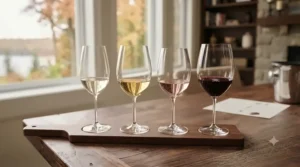
The dinner-party host building a signature set. Someone who entertains monthly and wants guests to notice the glassware should look at Veritas or Veloce. Both deliver a hand-blown look without hand-blown fragility across a full table setting, and Veloce’s tasting-set format (four shapes in one box) covers reds and whites without four separate purchases.
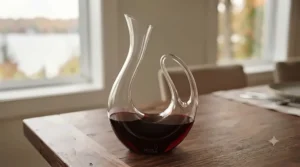
The collector who already owns a decanter. If you’re past the “does this even matter” stage and invested in aeration equipment, decanters, and a wine fridge, Sommeliers or Winewings make sense as the next step. These buyers are typically drinking bottles worth the extra care that hand-blown crystal demands, and the price difference against machine-made lines matters less than getting the most nuanced glass available.
✨ Don’t Miss These Exclusive Deals!
🔍 Take your wine collection to the next level with these carefully selected Riedel picks. Click through to check current pricing and availability on amazon.ca — the right glass really does change what’s in the bottle.
How to Choose Riedel Wine Glasses
- Match the bowl to your most-poured wine. Bordeaux/Cabernet shapes suit tannic reds; Sauvignon Blanc and Riesling shapes suit crisp, aromatic whites — buying the “wrong” varietal shape wastes the engineering you paid for.
- Decide on hand-blown versus machine-made honestly. Sommeliers delivers the finest performance but demands careful handling; machine-made lines (Vinum through Winewings) trade a small amount of nuance for real-world durability.
- Consider your dishwasher habits. If you’re not willing to hand-wash, rule out Sommeliers entirely and stick to the dishwasher-safe machine-made lines.
- Set a per-glass budget, not a set budget. Sommeliers and Winewings sell as single glasses, so a “set of four” costs roughly double what a Vinum pair costs per glass.
- Check stem height against your cabinet clearance. Veloce and Sommeliers run taller than Vinum or O — measure before buying if shelf space is tight.
- Weigh lead-free crystal if it matters to you. O, Veritas, Veloce, Extreme, and Winewings are lead-free; older Vinum and Sommeliers lines have historically used lead crystal formulations — see the safety section below.
- Buy one glass before committing to a full set. Riedel sells most machine-made shapes individually; test the feel and your dishwasher’s handling of one before ordering eight.

Riedel Veritas vs Riedel Veloce: Which Series Actually Wins?
These two get confused constantly because they occupy adjacent price tiers and both promise a hand-blown feel from machine production. The real difference comes down to bowl geometry and intended wine style.
| Feature | Veritas | Veloce |
|---|---|---|
| Stem profile | Thin, medium height | Thinner, noticeably taller |
| Bowl shape | Rounder, classic silhouette | Elongated, higher aromatic lift |
| Best wine style | Classic reds and whites across styles | Riper, higher-alcohol new-world wines |
| Price range (CAD) | C$70–C$110 (set of 2) | C$90–C$140 (set of 2) |
| Best For | Everyday upgrade from basic stemware | Buyers who already like varietal glassware and want more precision |
The practical takeaway: Veritas is the better all-purpose choice for someone who drinks a mix of Old World and New World wines and wants one dependable glass shape. Veloce earns its higher price for drinkers who specifically favour riper, fruit-forward new-world reds and whites, where the taller profile genuinely does more aromatic work. Neither glass beats the other outright — Veloce beats Veritas specifically in the new-world-wine scenario, and loses ground on value everywhere else.
Common Mistakes When Buying Riedel Wine Glasses
The single most frequent mistake is buying based on brand name alone rather than matching the bowl shape to what’s actually in the wine rack — a beautiful Sommeliers Burgundy glass does a red Bordeaux no favours. Second is assuming higher price always means better durability; it’s the opposite; hand-blown Sommeliers is more fragile than budget Vinum, not less. Third, many first-time buyers order a boxed set sight-unseen instead of a single glass, then discover the shape or size doesn’t suit their kitchen or their wine habits, having already committed to four or six pieces. Fourth is ignoring dishwasher habits during the buying decision — someone who knows they’ll never hand-wash stemware should never buy Sommeliers, regardless of how much they love the shape. Finally, buyers sometimes conflate “crystal” with “safe for daily juice or acidic drinks” — older lead crystal formulations were never intended for long-term storage of acidic liquids, a distinction covered in more depth below.
Long-Term Cost & Maintenance of Riedel Crystal
Riedel glassware isn’t a one-time purchase decision — breakage is part of the ownership cost, and it’s worth budgeting for honestly rather than being surprised later. A Vinum stem replaced individually costs a fraction of buying a new full set, since most machine-made shapes sell as single glasses alongside boxed sets. Over a five-year span, a household that entertains regularly should realistically expect to replace one or two glasses from any stemmed line, hand-blown or machine-made — thin stems are inherently more breakage-prone than thick tumbler-style glass, full stop.
Where the math shifts in Riedel’s favour is per-use value. A Vinum pair at roughly C$80 for two glasses, used weekly for several years, works out to pennies per pour — cheaper over time than replacing a C$15 big-box glass every six months as it chips and dulls. Sommeliers breaks this logic somewhat: at C$150–C$230 per glass, the cost-per-use calculation only favours Riedel if the glass survives long enough, which depends heavily on how carefully it’s washed and stored. Buyers chasing pure value-per-dollar should stay in the Vinum-to-Extreme range; buyers chasing the best possible glass regardless of replacement cost are the intended Sommeliers audience.
Safety, Lead-Free Crystal & Canadian Regulations
Older crystal stemware, including some historical Riedel lines, was traditionally made using lead oxide to achieve extra clarity and brilliance — a manufacturing method the wider glassware industry has moved away from in recent decades. Riedel’s current O, Veritas, Veloce, Extreme, and Winewings collections are produced in lead-free crystal, while shoppers buying older or handmade Sommeliers pieces secondhand should be aware that vintage stock may use traditional lead crystal formulations.
This matters more than marketing copy usually admits. Health Canada notes that lead can transfer from lead crystalware into food or drinks, with more lead released into highly acidic beverages such as wine when they’re stored in the glass for extended periods. The practical guidance is straightforward: wine or other acidic drinks shouldn’t be stored in lead crystal for long stretches — pour and drink, don’t decant into crystal and leave it standing overnight. For everyday drinking rather than storage, exposure risk drops sharply, but pregnant or breastfeeding people and households with young children may reasonably prefer lead-free lines altogether. Glassware sold in Canada also falls under federal oversight — the Glazed Ceramics and Glassware Regulations set migratable limits on how much lead or cadmium a decorated drinking vessel can release near the rim, giving Canadian buyers a regulatory backstop beyond whatever a manufacturer chooses to disclose voluntarily. If lead content is a firm dealbreaker, Winewings and the O tumbler line are the safest choices on this list, both explicitly lead-free by design.
Where to Buy Riedel Glasses in Canada
Amazon.ca carries the widest in-stock range of the seven glasses covered here, with the advantage of bundled Prime shipping and easy returns if a shape doesn’t suit your kitchen. Riedel also operates a direct Canadian storefront for buyers who want the absolute newest releases or limited collections not yet listed by third-party retailers, though direct pricing rarely undercuts a well-timed amazon.ca listing. Beyond those two options, several Canadian specialty tableware retailers and department stores carry select Riedel lines in physical stores — useful if you want to hold a glass and check its weight and stem thickness before buying, something no product photo fully communicates.
Wherever you buy, verify you’re purchasing from an authorized seller rather than a marketplace third party with no return policy; counterfeit “Riedel-style” glasses circulate online and rarely match the real bowl geometry the brand engineers so carefully. Check current price and stock at the time of purchase, since Riedel adjusts availability by series more often than most glassware brands, and a shape in stock this month may be back-ordered the next.
Austrian Wine Glassware: What Makes Riedel Different
Austria’s Tyrol region has a centuries-deep glassmaking tradition, and Riedel’s Kufstein factory sits at the centre of it — the Riedel family originally founded a glassworks in Bohemia in 1756, later rebuilding in Kufstein, Austria after losing their original factories following the Second World War. That history matters less as trivia and more as context: the varietal-specific design philosophy driving every glass on this list came directly out of decades of comparative tasting workshops run by successive generations of the Riedel family, not a single marketing campaign.
What separates Austrian glassware like Riedel from generic European crystal is the underlying premise that bowl geometry measurably changes perceived flavour — a claim the company has spent seventy years testing against real winemakers, sommeliers, and tasting panels rather than simply asserting. The table below shows how that philosophy plays out against ordinary all-purpose glassware.
| Factor | Riedel Varietal-Specific | Generic All-Purpose Glass |
|---|---|---|
| Bowl shape | Engineered per grape variety | One shape for all wine types |
| Aroma delivery | Directed toward specific taste zones | Unfocused, generalized |
| Price range (CAD) | C$35–C$230 depending on line | C$15–C$40 typically |
| Best For | Wine enthusiasts wanting nuance | Casual, occasional wine drinkers |
The analysis here isn’t that generic glasses are bad — for someone who drinks wine occasionally and isn’t chasing nuance, a C$20 all-purpose glass does the job fine. The gap opens up specifically for people already invested enough in wine to notice the difference, which is exactly the audience Riedel’s varietal-specific engineering targets.
Riedel Varietal Specific Glasses Explained
“Varietal specific” is the phrase Riedel uses for glassware shaped around a particular grape rather than wine in general, and it’s worth understanding what that actually means before paying a premium for it. Vinum, launched in 1986 by 10th-generation Georg J. Riedel, was the world’s first machine-made glass collection built specifically around grape varietal characteristics, expanding on the hand-blown Sommeliers concept from 1973 into something affordable enough for regular households.
The mechanism is straightforward: bowl width, height, and rim diameter each change how quickly wine reaches your nose and which part of your tongue it hits first. A wide-bowled Burgundy glass slows delicate Pinot Noir aromatics down for a long, gentle release; a narrower Riesling shape preserves chill and directs acidity to the front of the palate. Every one of the seven glasses reviewed above is varietal specific in this sense, engineered for a named grape or family of grapes rather than “wine” as a blanket category. The honest caveat: the effect is real but subtle, and it matters most with wines that already have complexity worth revealing — an inexpensive, simple table wine won’t transform dramatically just because the glass changed, while a well-made Burgundy or Bordeaux genuinely can.
Sommelier Series Riedel: Is Hand-Blown Crystal Worth It?
The Sommeliers line was the first wine glass collection ever designed specifically around wine enjoyment, created by 9th-generation Claus J. Riedel in 1958 and expanded through the 1970s into the modern hand-blown range that professional sommeliers still reach for today. The question most buyers actually want answered isn’t historical, though — it’s whether hand-blown crystal delivers enough of an upgrade over machine-made Veloce or Extreme to justify sometimes doubling the price.
Based on the spec comparison, the honest answer is: it depends entirely on what’s in the glass. For everyday mid-range bottles, the difference between Sommeliers and a well-made machine glass like Veloce is real but modest — most drinkers notice it but wouldn’t necessarily pick it out blind. For genuinely fine, complex wines — aged Bordeaux, top-tier Burgundy, serious Barolo — reviewers and sommeliers consistently report the thinner, hand-finished rim and more precisely blown bowl reveal layers a machine-made glass compresses together. Sommeliers has held the position of wineglass benchmark since the 1970s for a reason, but that reason is most relevant to people already pouring wine worth the extra attention.
FAQ: Your Riedel Wine Glasses Questions Answered
❓ Are Riedel wine glasses actually worth it?
❓ Is Riedel Veritas dishwasher safe?
❓ What's the difference between Riedel Vinum and Veritas?
❓ Where can I buy genuine Riedel glasses in Canada?
❓ How do I clean Riedel crystal wine glasses without damaging them?
Conclusion
Seven glasses, four price tiers, and one underlying question: how much precision do you actually need from your stemware? If you’re testing the varietal-specific concept for the first time, Vinum or the O tumbler answer that question honestly without a big financial commitment. If you’re already sold and want the glass that started the whole category, Sommeliers remains the benchmark — fragile, expensive, and genuinely worth it for wine that deserves the attention. Somewhere in between, Veritas, Veloce, Extreme, and Winewings each solve a slightly different problem, whether that’s everyday durability, new-world aromatic lift, or lead-free peace of mind.
The honest bottom line from the research here: Riedel’s core claim holds up under scrutiny — shape really does change how wine tastes, verified by decades of comparative workshops and echoed consistently in aggregated reviewer sentiment across every series covered above. What changes is how much of that difference matters to your own drinking habits, budget, and patience for hand-washing stemware. Match the glass to how — and how often — you actually drink, and the investment pays for itself in better wine, one pour at a time.
✨ Ready to upgrade your glassware?
Check current prices on the seven Riedel picks above and find the shape that fits your table.
Recommended for You
- Wine Glasses Gift Set 2026: 7 Picks That Won’t Disappoint
- Best Stemless Wine Glasses Set in Canada 2026: Top 7 Picks
- Best Crystal Wine Glasses in Canada 2026: 7 Expert Picks
Disclaimer: This article contains affiliate links. As an Amazon Associate, I earn from qualifying purchases. If you purchase products through these links, we may earn a small commission at no additional cost to you.
✨ Found this helpful? Share it with your friends! 💬🤗
