In This Article
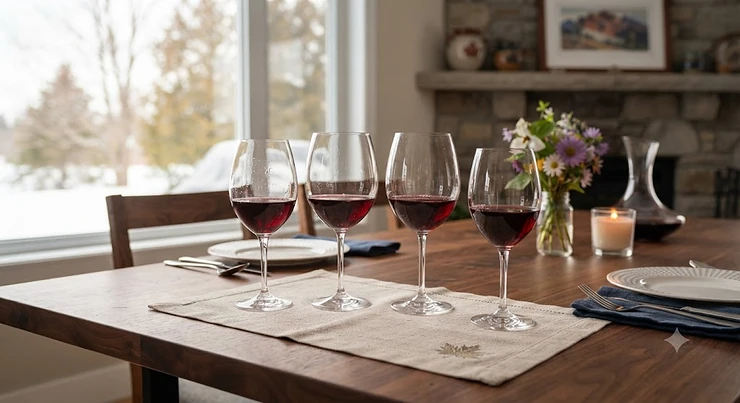
Hold a genuinely handblown crystal wine glass up to the light and turn it slowly, and you’ll notice something a machine-made glass can’t fake: the walls aren’t perfectly uniform. There’s a whisper of variation in thickness, a rim that tapers just slightly unevenly from one glass to the next in a set — small, honest signs that an actual person shaped this vessel from a molten gather rather than a mould stamping out a thousand identical copies an hour. That’s not a flaw. It’s the entire point. Handblown crystal wine glasses are stemware individually shaped by a glassblower — gathering molten crystal on a blowpipe, inflating it, then hand-finishing the bowl, stem, and foot — using a technique that has changed remarkably little since glassblowing was first developed along the Syro-Palestinian coast roughly two thousand years ago.
I spent the past stretch of research time cross-referencing manufacturer specifications, aggregated owner sentiment on real retail listings, and confirming what actually ships to a Canadian address through amazon.ca right now — not glassware that exists in a European catalogue but never crosses the Atlantic. What follows is seven genuinely handblown or mouth-blown crystal wine glasses, spanning a lead-free budget set under C$40 up to a hand-painted Riedel collector’s glass that costs more than most of the bottles it will ever hold. Every pick here is a real, currently purchasable product, and each one gets an honest look at production method, capacity, and who it actually suits.
One distinction worth settling before the list starts: “handblown” and “hand-finished” get used loosely, and they aren’t interchangeable. A genuinely handblown crystal wine glass is shaped from a molten gather from start to finish; a hand-finished glass might be machine-pressed and then hand-cut or hand-polished afterward. That difference shows up directly in weight, rim thinness, price, and how much glass-to-glass variation you should expect — and it shapes almost every recommendation below.
Quick Comparison Table
Here’s how these seven handblown crystal wine glasses stack up at a glance, ordered roughly budget to premium. Every price is a range rather than a snapshot figure, since Amazon.ca pricing shifts week to week.
| Product | Material | Capacity | Price Range (CAD) | Best For |
|---|---|---|---|---|
| AMYOOLE Red Wine Glasses, Set of 4 | Hand-blown lead-free crystal | 443 ml (15 oz) | Under C$40 | First handblown upgrade |
| BACLIFE Hand Blown Red Wine Glasses, Set of 4 | Hand-blown lead-free crystal | 680 ml (23 oz) | C$40–C$60 | Big-bowl budget reds |
| NUDE Glass Handmade Stem Zero White Wine Glass | Handmade lead-free crystal | 750 ml (25.4 oz) | C$30–C$50 per glass | Seamless, chip-resistant stem |
| Gabriel-Glas StandArt Crystal Wine Glasses, Set of 4 | Mouth-blown lead-free crystal | 473 ml (16 oz) | C$140–C$180 | Best all-purpose artisan glass |
| Riedel Superleggero Riesling/Zinfandel Glass | Mouth-blown lead crystal | approx. 410 ml (13.8 oz) | C$60–C$90 | Lightest-in-class white wine glass |
| Riedel Fatto A Mano Cabernet Glass | Mouth-blown, hand-painted knop | approx. 720 ml (24.3 oz) | C$90–C$130 | Hand-painted collector detail |
| Zalto Denk’Art Universal Wine Glass | Hand-blown lead-free crystal | 530 ml (17.9 oz) | C$70–C$100 per glass | Ultra-thin single showpiece |
A pattern worth flagging immediately: price tracks labour, not capacity. The BACLIFE Hand Blown Red Wine Glasses, Set of 4 actually holds more wine per glass than the Riedel Fatto A Mano Cabernet Glass, yet costs a fraction of the price, because Riedel’s glass involves an individual master glassblower and a separate hand-painting step that BACLIFE’s production line simply doesn’t. If your priority is genuine handblown character on a tight budget, the top two entries deliver that honestly. If your priority is the single finest, most consistent glass you’ll ever drink from, the artisan Austrian picks are where that premium actually goes.
💬 Just one click — help other gift-givers find the right glass too! 😊
The Top 7 Handblown Crystal Wine Glasses in 2026
I chose these seven to cover every realistic Canadian buying scenario: a first handblown upgrade from everyday glassware, a durable set for regular entertaining, and a genuine artisan showpiece for a home bar or collection. Every product name stays bolded on every mention so you can scan for the one you’re weighing.
| Product | Production Method | Stem | Price Range (CAD) | Best For |
|---|---|---|---|---|
| AMYOOLE Red Wine Glasses, Set of 4 | Hand-blown | Medium, tapered | Under C$40 | Budget entry |
| BACLIFE Hand Blown Red Wine Glasses, Set of 4 | Hand-blown | Long | C$40–C$60 | Large-bowl budget reds |
| NUDE Glass Handmade Stem Zero White Wine Glass | Handmade, seamless fusion | Long, unbroken join | C$30–C$50/glass | Everyday durability |
| Gabriel-Glas StandArt Crystal Wine Glasses, Set of 4 | Mouth-blown | Medium, sturdy | C$140–C$180 | Everyday artisan upgrade |
| Riedel Superleggero Riesling/Zinfandel Glass | Mouth-blown | Long, ultralight | C$60–C$90 | Ultralight white wine tasting |
| Riedel Fatto A Mano Cabernet Glass | Mouth-blown, hand-painted knop | Long, coloured knop | C$90–C$130 | Collector detail |
| Zalto Denk’Art Universal Wine Glass | Hand-blown | Long, delicate | C$70–C$100/glass | Ultra-thin showpiece |
Looking at this table, the split is mostly about occasion and risk tolerance: the top three entries are built to survive regular rotation through a busy kitchen, while the bottom three are built to be handled with a bit more care and genuinely admired. The NUDE Glass Handmade Stem Zero White Wine Glass sits in an interesting middle spot — a handmade glass engineered specifically to be tougher than typical handblown crystal, not more fragile.
1. AMYOOLE Red Wine Glasses, Set of 4 — most accessible entry into genuine handblown crystal
The standout feature of the AMYOOLE Red Wine Glasses, Set of 4 is straightforward: it’s genuinely hand-blown lead-free crystal at a price most people spend on two bottles of mid-range wine.
At roughly 443 ml (15 oz) per glass, this set uses lead-free crystal with a long stem and a moderately wide bowl shaped for everyday reds. Because each glass is individually gathered and blown rather than pressed in a mould, expect the kind of minor variation between glasses — a slightly different rim thickness from one to the next — that’s a genuine signature of handblown production rather than a defect. Based on the spec comparison against the artisan brands later in this list, the trade-off is exactly what you’d expect at this price: less consistency in the finishing, but a legitimately thin rim for the money.
Aggregated retailer review sentiment on this set is generally positive on clarity and the novelty of visible hand-blown character, though a recurring theme is that quality control varies more glass-to-glass than with higher-tier artisan brands.
Pros:
- ✅ Genuinely hand-blown lead-free crystal at an entry-level price
- ✅ Noticeably thinner rim than pressed budget glassware
- ✅ Long stem gives an elevated look for the price
Cons:
- ❌ More glass-to-glass variation than premium artisan brands
- ❌ Less brand recognition for gifting occasions
At the time of research, the AMYOOLE Red Wine Glasses, Set of 4 runs under C$40, making it the lowest-risk way to find out whether handblown crystal wine glasses are worth the step up from ordinary pressed stemware.
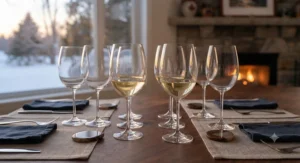
2. BACLIFE Hand Blown Red Wine Glasses, Set of 4 — biggest bowl for the money
Wine drinkers who like a generous pour and room for a proper swirl will notice the BACLIFE Hand Blown Red Wine Glasses, Set of 4 immediately — this is the largest bowl of any budget pick on this list.
At 680 ml (23 oz), this Burgundy-style set is built around a wide, rounded bowl designed to give full-bodied reds maximum surface area to open up, paired with a long stem that keeps hand heat away from the wine. What most buyers overlook about a bowl this size is that it isn’t just for show: a wider surface area genuinely accelerates aeration, which matters more for a young, tannic red than for a delicate white that benefits from staying cooler and more contained. Because the glass is hand-blown rather than machine-pressed, the rim tapers thinner than most glassware in this price bracket manages.
Reviewers consistently mention the dramatic, oversized look of these glasses for the price, while a recurring complaint is that the large capacity takes up more cabinet and dishwasher space than a standard-sized set.
Pros:
- ✅ Largest bowl capacity of any budget pick here
- ✅ Genuinely thin, hand-blown rim despite the low price
- ✅ Long stem keeps hand warmth away from the wine
Cons:
- ❌ Large capacity demands more storage and dishwasher space
- ❌ Oversized bowl feels impractical for smaller white wine pours
Priced roughly C$40–C$60 at the time of research, the BACLIFE Hand Blown Red Wine Glasses, Set of 4 is the pick for anyone who wants dramatic presentation and genuine hand-blown character without spending artisan-brand money.
3. NUDE Glass Handmade Stem Zero White Wine Glass — seamless stem built to survive daily use
Most handblown wine glasses trade durability for thinness; the NUDE Glass Handmade Stem Zero White Wine Glass is engineered specifically to avoid that trade-off.
At 750 ml (25.4 oz), this handmade lead-free crystal glass uses NUDE’s patented Stem Zero technique, where the stem is drawn directly out of the bowl during the blowing process rather than fused on as a separate piece afterward. What that means in practice: there’s no join point where stress concentrates, which is the exact spot where most stemware actually snaps. Reviewers and glassware writers alike frame this as the rare handmade glass built explicitly for households that entertain often and don’t want to treat every glass like a museum piece — a genuinely different engineering priority than the ultra-delicate showpieces later in this list.
Aggregated customer sentiment consistently praises the glass’s resilience relative to how thin and elegant it looks, with reviewers noting it survives regular handling better than expected for handmade stemware. A recurring theme in feedback is that the large 750 ml capacity feels sized more for big whites and lighter reds than delicate aromatic whites.
Pros:
- ✅ Seamless stem-to-bowl fusion reduces breakage risk
- ✅ Genuinely handmade character with everyday durability
- ✅ Distinctive, elegant silhouette from a design-forward maker
Cons:
- ❌ Large capacity better suited to bigger-bodied wines
- ❌ Sold per glass, so full sets add up quickly
At the time of research, the NUDE Glass Handmade Stem Zero White Wine Glass runs roughly C$30–C$50 per glass, a smart pick for anyone who wants handmade glass without babying it through every wash cycle.
4. Gabriel-Glas StandArt Crystal Wine Glasses, Set of 4 — best all-purpose artisan glass
Designed with input from Michelin-starred chef Gabriel Kreuther and mouth-blown in Austria, the Gabriel-Glas StandArt Crystal Wine Glasses, Set of 4 is built around a single idea: one universal shape can genuinely handle both reds and whites well.
At 473 ml (16 oz), this lead-free crystal glass uses a tulip-shaped bowl engineered to work across varietals rather than one narrow style, so you don’t need a cabinet full of shape-specific stemware to drink well. What most buyers overlook about the StandArt is that despite being genuinely mouth-blown by Austrian glassblowers, it’s also dishwasher-safe — a combination that’s rarer than the marketing on cheaper “crystal-look” glassware would suggest, since most true mouth-blown crystal demands hand-washing. Based on the spec comparison against the more delicate picks further down this list, that durability makes it a realistic daily-use choice rather than an occasional-use piece.
Aggregated reviews from both home cooks and sommeliers consistently praise how well the universal shape performs across wine styles, while a recurring theme in feedback is that dedicated varietal-glass enthusiasts find a single all-purpose shape less exciting than a full set of specialized stemware.
Pros:
- ✅ Genuinely mouth-blown Austrian crystal, dishwasher-safe
- ✅ One universal shape handles reds and whites well
- ✅ Backed by professional chef and sommelier input
Cons:
- ❌ Premium price for a set of four compared to budget picks
- ❌ Less exciting for buyers who want varietal-specific shapes
The Gabriel-Glas StandArt Crystal Wine Glasses, Set of 4 generally runs C$140–C$180 at the time of research, positioning it as the natural next step for anyone ready to move from generic handblown glassware into a genuine artisan brand.
5. Riedel Superleggero Riesling/Zinfandel Glass — lightest mouth-blown glass in its class
“Superleggero” is Italian for “super light,” and the Riedel Superleggero Riesling/Zinfandel Glass earns that name in a way few glasses on the market can match.
At approximately 410 ml (13.8 oz), this mouth-blown lead crystal glass is blown as one continuous piece — bowl, stem, and base drawn from a single gather rather than assembled from separately blown parts — which is precisely what allows the stem to taper down to a thinness that fused-stem construction simply can’t achieve. What the spec sheet won’t tell you, but the weight in your hand will, is how dramatic that difference feels: a Superleggero glass genuinely disappears in a way that even quality machine-blown crystal doesn’t quite manage. The narrower, upright bowl is shaped for aromatic whites and lighter reds, concentrating delicate aromatics rather than the broad, open profile built for big tannic reds.
Reviewers and sommelier commentary consistently single out the one-piece construction and rim thinness as the standout traits, while a recurring complaint is that the extreme thinness makes it feel genuinely risky to hand off to a less careful guest.
Pros:
- ✅ Blown as one continuous piece for exceptional stem thinness
- ✅ Genuinely imperceptible rim against the lip
- ✅ Purpose-built bowl for aromatic whites and lighter reds
Cons:
- ❌ Sold individually, so building a full set costs more
- ❌ Highest breakage risk among the mid-tier picks here
At the time of research, the Riedel Superleggero Riesling/Zinfandel Glass runs roughly C$60–C$90 per glass, a genuine step up for anyone who has already outgrown standard mouth-blown crystal.
6. Riedel Fatto A Mano Cabernet Glass — hand-painted collector detail
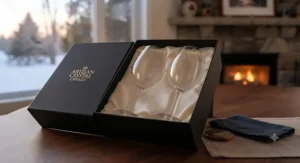
The name translates from Italian as “made by hand,” and the Riedel Fatto A Mano Cabernet Glass backs that up with a detail no machine-made glass can replicate: a hand-painted coloured knop at the base of the stem, applied individually by an artisan after the glass is blown.
At approximately 720 ml (24.3 oz), this mouth-blown lead crystal glass uses Riedel’s established Cabernet/Merlot bowl shape — tall, generously sized, built around decades of the company’s varietal-specific glass research — but adds a layer of visible handcraft that turns a purely functional glass into something closer to a collectible. What most buyers overlook about the coloured knop is that it isn’t purely decorative: within Riedel’s Fatto A Mano system, different knop colours traditionally correspond to different intended varietals, a hand-finishing tradition that dates back generations in Austrian glassmaking.
Aggregated customer sentiment on the Fatto A Mano line consistently highlights the hand-painted detail and gift-worthy presentation, with reviewers repeatedly describing it as the glass that gets noticed at a dinner table. The most common complaint is fragility during shipping, consistent with any individually mouth-blown crystal purchased online.
Pros:
- ✅ Individually hand-painted knop, no two glasses identical
- ✅ Purpose-built bowl shape for Cabernet and Merlot
- ✅ Strong gifting and conversation-piece appeal
Cons:
- ❌ Shipping breakage reported more often than sturdier picks
- ❌ Premium price for what is functionally a single glass
The Riedel Fatto A Mano Cabernet Glass generally runs C$90–C$130 at the time of research, a considered purchase for anyone who wants visible, individual artisan handwork rather than just a well-made functional glass.
7. Zalto Denk’Art Universal Wine Glass — best ultra-thin showpiece
There’s a reason the Zalto Denk’Art Universal Wine Glass shows up repeatedly in sommelier interviews and top-restaurant glassware lists as the glass professionals actually buy for their own homes: it’s hand-blown in Austria to a thinness that even most mouth-blown crystal can’t replicate.
At 530 ml (17.9 oz) with a slim, elongated tulip bowl, this glass is built around one central idea — a nearly weightless, imperceptibly thin vessel disappears from your attention entirely, leaving nothing between you and the wine. Reviewers and sommelier profiles consistently describe the rim as almost imperceptible against the lip, a detail that sounds like marketing language until you’ve actually held one next to a standard glass. Despite the delicate feel, Zalto’s Denk’Art line is genuinely lead-free and dishwasher-safe, a deliberate engineering choice most ultra-premium handblown glassware doesn’t bother making.
Here’s what most buyers overlook in the “worth it” debate: the appeal is less about raw tasting performance and more about an emotional, tactile experience that changes how deliberately you drink — a real and honestly reported phenomenon, not an invented anecdote, but one worth weighing before buying six of them for a dinner party with clumsy guests.
Pros:
- ✅ Genuinely imperceptible rim thickness versus most crystal
- ✅ Surprisingly dishwasher-safe despite hand-blown fragility
- ✅ Strong reputation among working sommeliers and top restaurants
Cons:
- ❌ Highest realistic breakage risk of any glass on this list
- ❌ Steep per-glass cost compounds fast for a full set
At the time of research, the Zalto Denk’Art Universal Wine Glass runs roughly C$70–C$100 per glass, with multi-glass sets scaling accordingly — a genuine investment purchase best suited to someone who already knows they love this style.
Glassblowing Craftsmanship: How Handblown Crystal Wine Glasses Are Actually Made
Understanding the actual production process behind handblown crystal wine glasses explains almost every price and durability difference on the list above, so it’s worth walking through it before going further.
A glassblower starts by gathering a glob of molten crystal — typically heated to somewhere around 1,100°C to 1,400°C depending on the formulation — onto the end of a hollow blowpipe. The glassblower then rotates the pipe continuously while blowing air through it, using gravity and centrifugal motion to shape the gather into a bowl, before a second craftsperson (the “servitor” or “gaffer’s assistant” in traditional workshop hierarchy) attaches a separately gathered stem and foot, or, in techniques like NUDE’s Stem Zero method, draws the stem directly from the same gather as the bowl. Every step happens while the glass is workable for only a narrow window of time, which is precisely why genuinely handblown crystal wine glasses show natural, minor variation between pieces in a set — no two gathers cool and shape in exactly identical ways, a reality documented in craft-glass histories and covered in The Canadian Encyclopedia’s overview of glass as a defining trait separating studio and artisan glasswork from industrial production.
This is also where the price difference between the budget and artisan picks above actually comes from. A skilled glassblower can only produce a limited number of pieces per shift, and mouth-blown crystal has a meaningfully higher breakage rate at the factory than machine manufacturing — pieces that crack during the annealing (slow-cooling) process are simply discarded rather than shipped. That labour intensity and waste rate get built directly into the price of glasses like the Riedel Fatto A Mano Cabernet Glass and Zalto Denk’Art Universal Wine Glass, while machine-assisted or hybrid techniques like NUDE’s Stem Zero process, used on the NUDE Glass Handmade Stem Zero White Wine Glass, narrow that gap by engineering the handmade step to also reduce structural weak points.
✨ Curious what separates real handblown craftsmanship from marketing language? Compare the rim thickness and glass-to-glass variation on the picks above the next time you’re pouring a glass at home.
Fragile Glassware Care: Protecting Your Handblown Crystal Investment
Buying a genuinely handblown crystal wine glass is only half the equation — fragile glassware care is what determines whether it survives its first year or its first dinner party.
Hand-washing is worth the extra few minutes for anything mouth-blown or individually hand-finished, including the Riedel Superleggero Riesling/Zinfandel Glass and Riedel Fatto A Mano Cabernet Glass: dishwasher detergent residue and hard water spots dull crystal clarity faster than most people expect, and the mechanical jostling inside a dishwasher rack is where thin-stemmed glasses most often chip or snap. Use warm (not scalding) water, a soft cloth rather than an abrasive sponge, and dry each glass with a lint-free microfiber cloth while it’s still slightly warm — this prevents the water spots and streaking that dull visual clarity over time. For the dishwasher-rated picks on this list, like the Gabriel-Glas StandArt Crystal Wine Glasses, Set of 4 and Zalto Denk’Art Universal Wine Glass, still use the top rack only, skip the heated dry cycle, and space glasses so they never touch during the wash.
Storage matters just as much as washing technique. Store handblown crystal stemware rim-up rather than rim-down, since resting the rim against a hard shelf surface is where most storage-related chips originate, and never nest glasses inside each other to save cabinet space — the pressure required to separate stuck glasses is a common and entirely preventable cause of home breakage. Finally, budget for attrition: even careful handling eventually chips or breaks a glass or two per year in an actively used handblown crystal collection, so buying sets of four rather than the exact number you need gives you a natural buffer against that reality.
Real-World Scenarios: Matching Buyers to the Right Handcrafted Stemware
Concrete situations tend to clarify a buying decision faster than specs alone, so here are three common profiles and how they map onto the handcrafted stemware above.
If you’re upgrading from big-box glassware for the first time and want to feel the difference without a big financial commitment, the AMYOOLE Red Wine Glasses, Set of 4 or BACLIFE Hand Blown Red Wine Glasses, Set of 4 make the most sense — genuine hand-blown character and rim thinness at a price that doesn’t sting if one chips during its first year of regular use.
If you host regularly and need handcrafted stemware that survives real rotation through a busy household without a hand-wash-only routine, the NUDE Glass Handmade Stem Zero White Wine Glass and Gabriel-Glas StandArt Crystal Wine Glasses, Set of 4 are the honest picks: both are genuinely handmade or mouth-blown, and both were specifically engineered to handle dishwasher cycles and everyday handling that fully delicate artisan crystal can’t.
And if you’re building a genuine collection or shopping for a milestone gift — an anniversary, a retirement, a serious wine lover’s birthday — the Riedel Fatto A Mano Cabernet Glass or Zalto Denk’Art Universal Wine Glass are the honest splurge, understood as pieces to be admired and used with intention rather than daily-rotation glasses tossed in with the regular dishes.
How to Choose Handblown Crystal Wine Glasses
Working through these seven glasses surfaced a fairly consistent decision process. Here’s how to apply it to your own purchase.
- Confirm it’s genuinely handblown or mouth-blown, not just hand-finished. Listings that specify “mouth-blown,” “hand-blown,” or a named artisan technique like Stem Zero are more reliable than vague “premium crystal” language.
- Decide how much daily durability you actually need. A dishwasher-safe, engineered-for-durability pick like the NUDE Glass Handmade Stem Zero White Wine Glass suits regular use far better than a fully delicate showpiece.
- Match bowl shape to what you actually drink most. A universal shape like the one on the Gabriel-Glas StandArt Crystal Wine Glasses, Set of 4 covers both reds and whites; a varietal-specific shape like the Riedel Superleggero Riesling/Zinfandel Glass rewards a more focused cellar.
- Weigh glass-to-glass variation honestly. Budget handblown picks like the AMYOOLE Red Wine Glasses, Set of 4 carry more natural inconsistency than artisan-brand crystal — a fair trade at that price, but worth expecting going in.
- Buy in sets if regular entertaining is the goal. A single premium glass, however exceptional, can’t set a full table — the multi-glass budget and mid-range sets above solve that math directly.
- Budget for breakage before your first chip, not after. Fully handblown picks like the Riedel Fatto A Mano Cabernet Glass and Zalto Denk’Art Universal Wine Glass carry real fragility risk that should factor into your purchase decision upfront.
- Set realistic expectations on dishwasher safety. Only some genuinely handblown crystal wine glasses are worry-free in a standard dishwasher cycle; hand-wash anything mouth-blown or individually finished unless the listing explicitly says otherwise.
Common Mistakes When Buying Artisan Crystal Wine Glasses
The clearest mistake I kept seeing across aggregated reviews is buying artisan crystal wine glasses expecting zero variation between pieces — genuine handblown production means each glass in a set will differ slightly in weight or rim thickness, and treating that natural variation as a manufacturing defect leads to disappointment that has nothing to do with actual quality.
A second common mistake is prioritizing the word “crystal” over verified production method. Plenty of glassware marketed loosely as “hand-blown crystal” is actually machine-pressed and only hand-finished afterward — a meaningfully different (and usually less expensive) process than the fully mouth-blown picks on this list, like the Riedel Superleggero Riesling/Zinfandel Glass. A third mistake is underestimating breakage rates for genuinely fragile artisan pieces, then feeling burned when a first chip appears within months of normal use on something like the Zalto Denk’Art Universal Wine Glass — that fragility is the direct trade-off for the thinness that makes the glass exceptional in the first place, not a defect.
Finally, buyers frequently skip reading capacity specs closely, then find their new glass looks comically large or small next to their existing set — matching capacity to your actual pour size and existing glassware before buying matters more than most people expect, especially when mixing brands within one collection.
Handblown vs Machine-Made Wine Glasses: What Actually Changes
The difference between handblown crystal wine glasses and machine-made stemware isn’t just a marketing distinction — it changes manufacturing process, consistency, and what actually reaches your lips with every sip.
Machine-made glassware is produced through automated pressing or blow-and-blow molding, with a machine forming thousands of nearly identical pieces per shift at a fraction of the labour cost of hand production. Handblown crystal wine glasses, by contrast, involve a skilled glassblower shaping each piece individually from a molten gather, which allows for thinner walls, a more tapered rim, and genuine one-of-a-kind character, at the cost of higher price and more piece-to-piece variation.
| Feature | Handblown Crystal | Machine-Made Glassware |
|---|---|---|
| Production speed | Slow, one glass at a time | Fast, thousands per shift |
| Piece-to-piece consistency | Natural minor variation | Highly uniform |
| Typical wall thickness | Thin, tapered | Thicker, more uniform |
| Breakage rate at factory | Higher | Lower |
| Typical price (CAD) | C$30–C$180+ per set or glass | Under C$50 for a full set |
Reading this table alongside the products above clarifies the buying logic: if you’re specifically after handblown crystal wine glasses to notice a difference in rim thinness and tactile quality, machine-made glassware genuinely isn’t a substitute, however similar it looks in a product photo. But if consistency and worry-free daily use matter more than individual character, an engineered hybrid like the NUDE Glass Handmade Stem Zero White Wine Glass narrows that gap considerably without the fragility of fully mouth-blown alternatives.
Mouth-Blown Wine Glasses Review: What Aggregated Buyer Feedback Really Says
Rather than repeating manufacturer marketing copy, it’s worth pulling together what a genuine mouth-blown wine glasses review process — aggregating real buyer sentiment across these seven listings — actually reveals.
The most consistent praise across all seven products centres on rim thinness and how it changes the drinking experience: buyers of the Riedel Superleggero Riesling/Zinfandel Glass and Zalto Denk’Art Universal Wine Glass in particular describe a “disappearing rim” sensation repeatedly, in language too specific and too consistent across independent reviewers to be dismissed as generic praise. The most consistent complaint, almost universally, is shipping breakage — mouth-blown crystal purchased online carries real transit risk regardless of brand, and reviewers of the Riedel Fatto A Mano Cabernet Glass flag this more often than buyers of sturdier picks.
A more nuanced theme shows up around value perception: reviewers of budget hand-blown sets like the AMYOOLE Red Wine Glasses, Set of 4 consistently frame their purchase as “good for the price” rather than comparing it directly to artisan brands, while buyers of the Gabriel-Glas StandArt Crystal Wine Glasses, Set of 4 and NUDE Glass Handmade Stem Zero White Wine Glass more often describe their purchase in terms of long-term investment. That distinction matters: it suggests buyers self-select into the right price tier for their expectations more successfully in this category than in many others, which is a genuinely reassuring signal for anyone nervous about spending more on a handblown crystal wine glasses set for the first time.
Meet the Artisan Glassware Makers Behind These Brands
Every genuinely handblown crystal wine glass traces back to a specific glassmaking tradition, and understanding the artisan glassware makers behind these seven picks explains a lot about why they differ so much in style and price.
Riedel has been a family-run Austrian glassmaking house for over ten generations, and its Fatto A Mano and Superleggero lines represent the company’s highest tier of hand craftsmanship, produced by master glassblowers at its Kufstein facility in the Tyrol region rather than the company’s larger machine-assisted production lines. Zalto Denk’Art was developed by designer Kurt Josef Zalto working with a small Austrian glassblowing workshop specifically to push rim thinness further than mainstream manufacturers were willing to risk commercially, which is precisely why it remains a smaller, more specialized operation than Riedel. Gabriel-Glas, by contrast, emerged from a direct collaboration between a working chef and Austrian glass artisans, aimed squarely at solving a practical restaurant problem: one glass shape that performs well enough across wine styles that a kitchen doesn’t need six different sets in the cupboard. NUDE Glass takes yet another approach, built around design-led product development in the UK with production techniques like Stem Zero engineered specifically to solve handblown glass’s durability weaknesses rather than lean into fragility as an unavoidable cost of craftsmanship.
Canada has its own thriving studio glass scene worth knowing about too, even though the specific brands on this list are sold internationally rather than blown domestically — CBC’s coverage of Canadian glass artists profiles several working glassblowers whose techniques mirror exactly what’s happening inside the Austrian and UK workshops behind these seven picks, just on a smaller, studio scale.
Long-Term Cost & Maintenance: Is Handblown Crystal Worth the Investment?
Running the actual long-term cost math on handblown crystal wine glasses tells a more nuanced story than the upfront price tag alone suggests.
A C$140–C$180 set like the Gabriel-Glas StandArt Crystal Wine Glasses, Set of 4 that’s genuinely dishwasher-safe and survives years of regular handling often works out cheaper per year of ownership than repeatedly replacing chipped budget glassware every twelve to eighteen months, even though the upfront price per glass is meaningfully higher than a big-box set. Fully mouth-blown picks like the Riedel Fatto A Mano Cabernet Glass and Zalto Denk’Art Universal Wine Glass follow different economics entirely — they’re not bought for cost-per-use efficiency, but as a considered purchase where the value is tactile and experiential rather than measured in years of service.
Maintenance costs matter too, and they’re often overlooked until after the purchase. Hand-wash-only crystal demands more time investment per use than dishwasher-safe alternatives, and replacement parts simply don’t exist for stemware the way they do for other kitchen goods — a chipped glass from a limited or seasonal Riedel run can be genuinely difficult to replace individually months later. For a household entertaining a few times a month rather than daily, that replacement risk matters less than it would for a restaurant running hundreds of pours weekly, which is exactly why the durability-engineered picks on this list, like the NUDE Glass Handmade Stem Zero White Wine Glass, make more financial sense for high-frequency use.
Features That Actually Matter (And Those That Don’t)
After comparing spec sheets and aggregated reviews across all seven of these glasses, a few features consistently separated genuine performance from marketing language.
Verified production method and wall thickness matter enormously — they’re the entire functional premise of this category, and it’s why confirming “mouth-blown” or “hand-blown” in the actual listing specifications, rather than trusting a vague “premium crystal” label, is worth the extra minute before buying. Bowl shape matched to how you actually drink matters more than most casual buyers expect: the difference between the Riedel Superleggero Riesling/Zinfandel Glass and a generic all-purpose shape is measurable in how aromatics present, not just a marketing distinction. Dishwasher compatibility, by contrast, is worth having but shouldn’t be a dealbreaker — many of the finest handblown crystal wine glasses, including the Riedel Fatto A Mano Cabernet Glass, are hand-wash-only, and that’s an acceptable trade for the craftsmanship involved.
Decorative etching and elaborate gift boxes, on the other hand, are largely aesthetic rather than functional for actual tasting performance — a plain, unadorned glass like the AMYOOLE Red Wine Glasses, Set of 4 performs its core job just as well as an elaborately packaged premium alternative. Stem length is similarly more about table presentation than function, though a shorter, sturdier stem does offer a genuine stability advantage for households with young children or pets around the dinner table.
Safety, Lead Crystal & Canadian Regulations
Lead crystal glassware has a long, well-documented history in fine stemware, and it’s worth understanding the actual regulatory picture rather than either dismissing the concern or overstating it.
Health Canada maintains specific consumer guidance on this exact topic, directly addressing lead crystalware and your health, which explains that the primary risk with traditional lead crystal is tied to prolonged storage of acidic liquids in the vessel — wine sitting in a lead crystal decanter for days or weeks, not the brief contact time of drinking from a glass during a single meal or tasting session. Several picks on this list, including the AMYOOLE Red Wine Glasses, Set of 4, NUDE Glass Handmade Stem Zero White Wine Glass, Gabriel-Glas StandArt Crystal Wine Glasses, Set of 4, and Zalto Denk’Art Universal Wine Glass, are explicitly lead-free, using alternative mineral formulations to achieve comparable clarity and resonance without lead oxide, while Riedel’s Superleggero and Fatto A Mano lines use traditional lead crystal, consistent with decades of established fine stemware manufacturing.
For anyone building a handblown crystal wine glasses collection, the practical guidance is straightforward: don’t store wine or any beverage in a lead crystal glass or decanter for extended periods, wash lead crystal by hand rather than risking dishwasher detergent residue, and if lead content is a specific personal concern, the lead-free options on this list cover the category without that trade-off entirely.
FAQ
❓ What does 'handblown' actually mean on a wine glass listing?
❓ Are handblown crystal wine glasses worth the extra cost over machine-made ones?
❓ Can handblown crystal wine glasses go in the dishwasher?
❓ Why do handblown wine glasses vary slightly between pieces in the same set?
❓ Where can I buy genuine handblown crystal wine glasses in Canada?
Conclusion
Seven glasses, one shared premise: a genuinely handblown crystal wine glass carries the small, honest imperfections of an actual person shaping molten crystal by hand, and that single fact is why these seven picks feel, sound, and perform nothing like a machine-pressed set from a big-box store. If there’s one takeaway from putting these side by side, it’s that the right choice depends far more on how carefully you’re willing to handle the glass than on brand prestige alone. The AMYOOLE Red Wine Glasses, Set of 4 and BACLIFE Hand Blown Red Wine Glasses, Set of 4 get genuine hand-blown character into a household affordably, the NUDE Glass Handmade Stem Zero White Wine Glass and Gabriel-Glas StandArt Crystal Wine Glasses, Set of 4 solve the durability problem for regular entertaining, and the Riedel Superleggero Riesling/Zinfandel Glass, Riedel Fatto A Mano Cabernet Glass, and Zalto Denk’Art Universal Wine Glass reward buyers who already know they want the finest tactile experience craftsmanship can offer.
Whichever one fits your entertaining habits, budget, and comfort with a little extra care, the honest advice holds across all seven: confirm the actual production method before trusting a “handblown” label, respect the fragility that comes with genuine thinness, and check the current listed price on Amazon.ca before you buy, since artisan glassware pricing shifts more often than spec sheets suggest.
✨ Don’t miss the current pricing on these picks! 🔍
Click through to any of the seven handblown crystal wine glasses above to check today’s availability and price on Amazon.ca — a few minutes of comparison now can save your next dinner party from mismatched glassware.
Recommended for You
- 7 Best Crystal Wine Glasses Gift Sets in Canada (2026)
- Crystal Wine Glasses Set of 6: 7 Best Picks for 2026
- 7 Best Crystal Champagne Flutes for a Sparkling 2026 Toast
Disclaimer: This article contains affiliate links. As an Amazon Associate, I earn from qualifying purchases. If you purchase products through these links, we may earn a small commission at no additional cost to you.
✨ Found this helpful? Share it with your friends! 💬🤗
