In This Article
Pour the same bottle of Cabernet into a jam jar and then into a proper Bordeaux glass, and you’d swear someone swapped the wine. That’s not magic — it’s geometry. The right crystal wine glasses for red wine change how oxygen meets the surface of the pour, how the bouquet gets funnelled toward your nose, and how the first sip lands on your tongue. For a country that ships in serious reds from the Okanagan, Niagara, and Bordeaux alike, that difference matters more than most of us give it credit for. Riedel, the Austrian glassmaker based in Kufstein and best known for glassware designed to enhance different types of wines, essentially built a business on that premise back in the 1950s, and the rest of the industry has spent decades catching up.
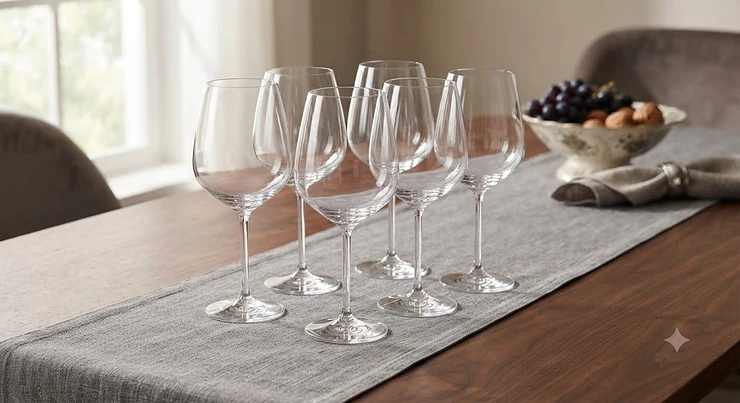
This guide breaks down seven real, purchasable options — from a $40 everyday set to a hand-blown Austrian glass you’ll want to wrap in bubble wrap forever — so you can figure out which one actually fits how you drink. We’ll cover bowl shape, why “varietal-specific” glassware exists at all, what aeration really does to a glass of red, and the lead-safety questions that come up more than you’d think when crystal enters the conversation. Whether you’re upgrading from mismatched pub glasses or building out a proper cellar-to-table setup, there’s a practical pick here for your shelf and your budget.
Quick Comparison Table
| Glass | Capacity | Style | Best For |
|---|---|---|---|
| Riedel Vinum Cabernet/Merlot | ~610-640 ml | Bordeaux bowl | Tannic, full-bodied reds |
| Zalto Denk’Art Bordeaux | 765 ml | Hand-blown Bordeaux | Special-occasion collectors |
| Gabriel-Glas StandArt | 510 ml | Universal | One glass for everything |
| Spiegelau Willsberger Bordeaux | 680 ml (23 oz) | Bordeaux bowl | Everyday entertaining |
| Zwiesel Glas Pure Cabernet | 560 ml (19 oz) | Cabernet bowl | Dishwasher-heavy households |
| Libbey Signature Kentfield Balloon | 710 ml (24 oz) | Balloon bowl | Budget-conscious hosts |
| JoyJolt Layla Red Wine Glass | ~500 ml (17 oz) | Tulip bowl | First-time crystal buyers |
Looking at the spread above, the price and the bowl size climb together, but not in a straight line — the Zwiesel Glas Pure Cabernet and Libbey Signature Kentfield Balloon both punch well above their price bracket for everyday reds. Meanwhile the Zalto Denk’Art Bordeaux and Gabriel-Glas StandArt are aimed squarely at people who already know they care about glassware, not casual sippers. If you’re outfitting a full table for a dinner party, durability and dishwasher tolerance probably matter more than shaving grams off the glass weight.
💬 Just one click — help others make better buying decisions too!😊
Top 7 Crystal Wine Glasses for Red Wine: Expert Analysis
1. Riedel Vinum Cabernet/Merlot — the benchmark Bordeaux shape
The glass most sommeliers reach for first, and for good reason. The Cabernet glass is built for full-bodied, complex red wines high in tannin — its generous size lets the bouquet develop fully and smooths out rough edges, emphasizing fruit while playing down bitterness. That’s not marketing copy; it’s a direct description of what the elongated bowl and tapered rim are mechanically doing — funnelling ethanol vapour away from the tip of your nose while concentrating fruit aromas at the opening.
Riedel recommends this shape for Bordeaux, Brunello di Montalcino, Cabernet Franc, Cabernet Sauvignon, Carménère, Merlot, and a long list of similarly structured reds, which covers most of what fills a Canadian wine fridge. Based on the spec comparison with cheaper machine-made glasses, the thinner rim here is the real differentiator — it’s noticeably less obtrusive on the lip than big-box stemware, which changes how the first mouthful of wine actually contacts your palate.
Reviewers consistently note that these glasses are more fragile at the stem than everyday tumblers, and a few complain about spotting after repeated dishwasher cycles unless a rinse-aid is used. That’s a fair trade for a shape this well-studied.
Pros:
- ✅ Purpose-built bowl for tannic, full-bodied reds
- ✅ Widely available and easy to replace individual glasses
- ✅ Machine-made construction keeps cost reasonable for the brand
Cons:
- ❌ Stems chip more easily than everyday glassware
- ❌ Hand-washing recommended despite dishwasher-safe claims
At around C$50-C$70 for a set of 4, this is a fair entry point into Riedel’s varietal-specific line, and a smart first upgrade if you’re currently drinking Cabernet out of all-purpose glasses.
2. Zalto Denk’Art Bordeaux — hand-blown Austrian craftsmanship
This is the glass wine geeks bring up unprompted. Zalto designed the Bordeaux glass for full-bodied red wines with lots of character and strong tannins, balancing power, density, extract, and tannin, and recommends it for Bordeaux, Rioja, Sangiovese, Cabernet Sauvignon, Merlot, and Shiraz. What the spec sheet won’t tell you, but reviewers note repeatedly, is how the glass feels — it’s absurdly light for its size, a product of mouth-blowing rather than machine casting.
The mouth-blown construction weighs roughly 125 grams, made without added lead oxide so it resists clouding over time, and the collection was conceived by a wine lover for wine lovers, aiming to reproduce a wine’s full complexity. Here’s what to weigh before buying: this is not a glass for a rowdy dinner party. Hand-wash only is the standard recommendation across every retailer we checked, and at this price per stem, breakage stings.
Pros:
- ✅ Feather-light, mouth-blown Austrian crystal
- ✅ Large bowl genuinely opens up aroma on tannic reds
- ✅ Lead-free formulation resists long-term clouding
Cons:
- ❌ Hand-wash only — not dishwasher friendly in practice
- ❌ Premium price per glass, sold mostly as singles or pairs
Expect around C$100-C$140 per glass, which puts a full table setting well into collector territory — this is the glass for your best bottle, not your Tuesday pour.
3. Gabriel-Glas StandArt — the “one glass for everything” option
Created by Swiss-German wine critic René Gabriel, this is a “universal” lead-free crystal wine glass built on the idea that varietal-specific stemware is unnecessary — you use the same glass for red, white, sparkling, and rosé. The broader base of the bowl allows more surface-to-air contact, while the conical top is meant to “drive” the bouquet of the wine upward.
Based on the spec comparison, the appeal here is logistical as much as sensory: weighing only 145 grams, molded as one seamless piece with no stress points, the StandArt is both elegant and durable, and dishwasher safe. For a Canadian condo with limited cupboard space, replacing five varietal-specific sets with one universal shape is a genuinely practical trade-off, even if a dedicated Bordeaux glass will still edge it out for pure tannin-taming performance on a big Cabernet.
Pros:
- ✅ One shape replaces separate red, white and sparkling sets
- ✅ Dishwasher safe despite being genuine lead-free crystal
- ✅ Machine-molded for better durability than hand-blown rivals
Cons:
- ❌ Doesn’t out-perform varietal-specific glasses on any single wine
- ❌ Premium pricing for what is, visually, a simple shape
A set of two runs roughly C$130-C$160, which sounds steep until you calculate what five varietal-specific sets would cost instead.
4. Spiegelau Willsberger Bordeaux — everyday elegance with a designer pedigree
Based on the hand-blown glass designs of Johann Willsberger, this collection reproduces those delicate vessels in machine-made form for greater durability and availability. The tall, broad, tapered bowls are designed to bring out the full depth of Bordeaux wines, and the set is dishwasher safe — a meaningful upgrade path for anyone currently using basic stemware but not ready to commit to hand-wash-only crystal.
What most buyers overlook about this model is the wall thickness. Spiegelau’s lead-free crystal is engineered for flawless, unblemished clarity while staying seamless and refined, which in practice means it looks considerably more expensive than its price suggests, without the fragility premium of thinner glasses like the Zalto.
Pros:
- ✅ Genuinely dishwasher safe, unlike most crystal at this tier
- ✅ Tall Bordeaux bowl designed for depth and structure
- ✅ Made in Germany with reliable brand consistency
Cons:
- ❌ Heavier in hand than mouth-blown alternatives
- ❌ Design leans traditional rather than modern
A set of four typically lands in the C$75-C$95 range, making this one of the strongest everyday-to-special-occasion crossover picks on this list.
5. Zwiesel Glas Pure Cabernet — dishwasher-tough Tritan crystal
If your household treats “hand-wash only” as a polite suggestion, this is the pick. These are graceful wine glasses for red wine made from dishwasher-safe Tritan crystal, manufactured in Germany — Tritan being a titanium-reinforced crystal formulation that resists the etching and clouding that eventually dulls softer glass after hundreds of hot cycles.
Reviewers consistently frame these as the practical choice for people who actually use their good glassware regularly rather than saving it for guests. At 19 oz per glass, the bowl is sized comfortably for a generous pour of Cabernet without looking cartoonish on the table, and the price point makes replacing a broken glass far less painful than doing the same with Riedel or Zalto stems.
Pros:
- ✅ Titanium-reinforced crystal survives real dishwasher use
- ✅ Purpose-shaped for Cabernet and similarly structured reds
- ✅ Made in Germany with consistent quality control
Cons:
- ❌ Less “wow factor” than hand-blown options for gifting
- ❌ Bowl shape is less specialized than dedicated Bordeaux glasses
Set of four generally falls around C$65-C$85, positioning it as the durability champion of the mid-range tier.
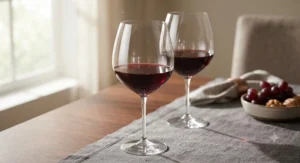
6. Libbey Signature Kentfield Balloon Red Wine Glass — the budget-friendly crowd-pleaser
This set of four 24-ounce balloon red wine glasses is built for Cabernet Sauvignon, Merlot, Shiraz and Zinfandel, with a wide bowl that enhances aromas and flavours. Made with Libbey’s ClearFire glass composition, the walls are thinner than typical mass-market stemware, offering a balance of clarity and strength, with a laser-cut rim for an even, chip-resistant edge.
Here’s what to weigh: this isn’t marketed as true crystal, but the ClearFire formulation gets remarkably close in clarity and ring-tone for a fraction of the price. It’s made BPA-free and lead-free in the USA, and it’s dishwasher safe for quick, easy cleanup — the practicality trifecta for a household that entertains often but doesn’t want to babysit glassware.
Pros:
- ✅ Large balloon bowl genuinely opens up bold reds
- ✅ Made in the USA with consistent laser-cut rims
- ✅ Dishwasher safe and reasonably break-resistant
Cons:
- ❌ Not technically full lead-free crystal like Riedel or Zalto
- ❌ Bowl is generic rather than varietal-specific
At roughly C$45-C$60 for a set of four, this is the glass to buy in bulk for a big Canadian Thanksgiving table without wincing every time someone clinks it too hard.
7. JoyJolt Layla Red Wine Glass — the entry-level crystal starter set
For someone dipping a toe into proper stemware for the first time, this lead-free crystal glass features a tulip bowl designed to reveal hidden flavours and aromas, with a thin, elegant rim for a smooth finish. It won’t out-perform a Riedel or a Zwiesel on a serious tasting night, but it’s a genuine step up from generic stemware at a price that doesn’t require justification to a skeptical partner.
Aggregated buyer sentiment across major retailers skews positive for clarity and rim thinness at this price tier, with the most common complaint being that the stems feel delicate for a household with kids or a lot of foot traffic near the dining table — a fair trade-off for anyone testing whether varietal-specific glassware is worth the fuss before investing further.
Pros:
- ✅ Genuine lead-free crystal at an entry-level price
- ✅ Tulip bowl noticeably improves aroma over basic glasses
- ✅ Low-risk way to test whether crystal is worth the upgrade
Cons:
- ❌ Thinner stems are more prone to tipping and breakage
- ❌ Less refined bowl proportions than premium varietal glasses
A set of four typically runs C$40-C$55, making it the easiest on-ramp on this list for someone who’s never owned a dedicated red wine glass before.
Practical Usage Guide: Setting Up and Caring for Crystal Wine Glasses
Getting a new set of crystal wine glasses for red wine home is only step one — how you handle them in the first month determines whether they last five years or five months. Start by hand-washing before first use, even on glasses marketed as dishwasher safe; manufacturing residue and packaging dust can dull the first few pours otherwise. Warm water with a small drop of unscented dish soap, followed by a thorough rinse, is enough.
For genuinely dishwasher-safe crystal like the Zwiesel Glas Pure Cabernet or Spiegelau Willsberger Bordeaux, load glasses on the top rack only, with stems secured in the rack’s designated slots so they can’t knock against other items mid-cycle. Skip the heated dry setting — it’s the single biggest cause of premature clouding on crystal, since prolonged heat exposure can leave a faint haze that no amount of polishing fully removes.
A common first-30-days mistake is over-polishing with a regular kitchen towel, which can leave lint and micro-scratches on a thin rim. Use a lint-free microfibre cloth, and hold the glass by the bowl, not the stem, while polishing to reduce stress-fracture risk. For the hand-wash-only tier — Zalto Denk’Art Bordeaux and Gabriel-Glas StandArt included — dry immediately rather than air-drying, since water spots etch faster into thinner, more delicate crystal walls. Store stemware upright rather than inverted on the rim, which is actually the more fragile point of contact on most designs despite common advice to the contrary.
Real-World Scenarios: Matching the Glass to How You Actually Drink
Picture three different Canadian households, each shopping for the best glasses for full-bodied red wine but landing on very different answers. First, a young couple in a Toronto condo who host a wine night maybe once a month and don’t own a dishwasher — the JoyJolt Layla or Libbey Signature Kentfield Balloon makes more sense here than an investment piece that demands hand-washing after every single use.
Second, a retired couple in the Okanagan who cellar serious Cabernet and Syrah from local producers and treat a good glass of wine as a nightly ritual. For them, the Riedel Vinum Cabernet/Merlot or Spiegelau Willsberger Bordeaux earns its keep — durable enough for regular rotation, specific enough to actually change how the wine tastes, and replaceable without heartbreak if one breaks.
Third, a collector in Montreal who hosts an annual tasting for a handful of serious wine friends and wants the glass itself to be part of the evening’s conversation. That’s exactly the scenario the Zalto Denk’Art Bordeaux and Gabriel-Glas StandArt were built for — not everyday use, but a deliberate, occasional indulgence where the glass genuinely earns its price tag through the experience it creates.
🔍 Ready to upgrade your table? Click through to check current pricing on any of these picks — your next bottle deserves the right glass.
How to Choose Crystal Wine Glasses for Red Wine
Shopping for crystal wine glasses for red wine comes down to matching bowl size, rim thickness, and care requirements to how you actually drink. Here’s a practical framework:
- Identify your dominant wine style first. Tannic, full-bodied reds like Cabernet Sauvignon and Bordeaux blends want a large, tapered bowl; lighter reds like Pinot Noir prefer something more modest.
- Decide your dishwasher tolerance honestly. If hand-washing every glass, every time, isn’t realistic for your household, rule out mouth-blown options and lean toward Tritan or ClearFire formulations instead.
- Set a per-glass breakage budget. Premium hand-blown crystal is genuinely more fragile — buy accordingly, and consider ordering an extra glass or two upfront.
- Check the rim thickness in photos or reviews. A thinner rim measurably changes mouthfeel; it’s one of the most consistently cited differences between budget and premium stemware.
- Match capacity to your pour size. A 21-24 oz bowl looks dramatic but only needs filling to about a third for proper swirling room.
- Consider storage space before buying a full varietal-specific rotation. A universal glass like the Gabriel-Glas StandArt solves cupboard-space problems that five separate sets create.
- Buy a small set before committing to a full table setting. Testing two glasses from a new line before ordering eight avoids an expensive mismatch.

Red Wine Glass Bowl Shape: Why It Matters
The single biggest misconception in wine glassware is that bowl shape is aesthetic rather than functional. It isn’t. A wider, taller bowl — the kind found on the Riedel Vinum Cabernet/Merlot and Zalto Denk’Art Bordeaux — increases the surface area of wine exposed to air, which accelerates the release of aromatic compounds while giving tannins more room to soften before the wine reaches your palate. A narrower bowl does the opposite: it concentrates aroma and slows oxidation, which suits delicate whites and sparkling wines far better than a big, structured red.
The taper at the top of the bowl is doing separate work from the belly of the glass. That narrowing funnels volatile aromatic compounds toward a smaller opening, which is why a well-designed Bordeaux glass smells noticeably more expressive at the rim than a straight-sided tumbler holding identical wine. Reviewers and sommeliers alike consistently point to this taper — not the overall size — as the detail separating genuinely purpose-built stemware from glassware that merely looks the part.
| Bowl Style | Typical Wines | Effect |
|---|---|---|
| Large Bordeaux taper | Cabernet, Bordeaux blends, Syrah | Softens tannin, opens dark fruit |
| Balloon bowl | Zinfandel, GSM blends | Maximizes aroma release on bold reds |
| Narrower tulip | Pinot Noir, Gamay | Preserves delicate red-fruit aromatics |
| Universal rounded | Mixed cellars | Reasonable compromise across styles |
The pattern here is consistent: bigger isn’t automatically better, it’s about matching the bowl’s aeration behaviour to the wine’s structure. A delicate Pinot Noir loses its subtlety in an oversized Bordeaux glass, while a powerful Cabernet feels tight and closed in a small, narrow one.
Bordeaux Crystal Glass vs Burgundy and Universal Shapes
A Bordeaux crystal glass and a Burgundy glass solve two different structural problems, and confusing them is one of the more common buying mistakes. The Bordeaux shape — tall, with a long, gradual taper — is built for wines with firm tannin structure, funnelling the bouquet toward the back of the palate where tannin perception is highest, which helps balance out astringency. A Burgundy glass, by contrast, is typically wider and rounder in the belly with a shorter taper, built to capture the more delicate, high-toned aromatics of Pinot Noir and similar thin-skinned varieties.
A universal glass, like the Gabriel-Glas StandArt, sits deliberately in between — wide enough at the base for aeration, tapered enough at the top to concentrate aroma, but without fully optimizing for either extreme. Based on the spec comparison, that middle-ground design is genuinely well-suited to someone who drinks a rotating mix of reds and doesn’t want to manage multiple sets, but a dedicated Bordeaux crystal glass like the Riedel Vinum Cabernet/Merlot will still out-perform it specifically on big, structured Cabernet and Bordeaux blends — the difference shows up most in wines with real tannic grip.
Wine Aeration: How Your Glass Changes What’s in the Bottle
Wine aeration isn’t just a decanting concept — it happens continuously inside the glass itself, and the bowl’s geometry controls how fast and how evenly it occurs. Research published in Appetite found that glass shape measurably influences how untrained subjects rated the intensity, hedonic tone, and quality of wine odours, independent of how aesthetically pleasing the glasses appeared — a useful reminder that this isn’t just marketing language from glassware brands, it’s a documented sensory effect.
In practice, a larger surface area exposed to air (the wide belly of a Bordeaux or balloon bowl) speeds up the release of both desirable aromatic compounds and, temporarily, some of the sharper ethanol notes, before the narrower rim funnels the more pleasant aromatics upward. A tighter bowl slows this process considerably, which is exactly why the same bottle can taste noticeably different poured into a Zalto Denk’Art Bordeaux versus a straight-sided tumbler — the wine hasn’t changed, but how much air it’s met and how those aromas are being delivered to your nose absolutely has.
For a practical takeaway: if you’re serving a young, tightly wound Cabernet that hasn’t had time to breathe in the bottle, a wide-bowled glass does real work in softening that initial tightness within the first few minutes in the glass — often more noticeably than a quick decant.
Varietal-Specific Glassware: Do You Really Need a Different Glass for Every Wine?
This is the debate that divides wine drinkers more than almost any other glassware question, and it’s worth answering honestly rather than just selling you a full set. Varietal-specific glassware — a distinct shape for Cabernet, another for Pinot Noir, another for Chardonnay — is built on real sensory science, but the marginal benefit shrinks the less serious the wine and the less trained the palate tasting it. Research institutions like Brock University’s Cool Climate Oenology and Viticulture Institute maintain dedicated sensory evaluation facilities specifically to study how factors like glassware and presentation shape consumer wine perception, which tells you the effect is real enough to justify serious academic study — but it also tells you the differences researchers are measuring are often subtle enough to require controlled conditions to detect reliably.
Reviewers consistently note that for everyday drinking, a good universal or Bordeaux-shaped glass covers 80% of the benefit that a full varietal-specific rotation offers. Where varietal-specific glassware genuinely earns its keep is at the high end — comparing two similarly priced bottles of Cabernet side by side, or hosting a formal tasting where subtle differences matter to the outcome. For most Canadian households working through a rotating mix of LCBO and SAQ purchases on a Tuesday night, one or two well-chosen shapes will outperform an expensive, underused eight-glass varietal set.
Common Mistakes When Buying Crystal Wine Glasses
The most frequent misstep is buying based on price alone without checking bowl proportions — a cheap glass with the wrong taper can genuinely undersell a good bottle of wine, while an appropriately shaped mid-range glass often outperforms an expensive but poorly proportioned one. A close second is ignoring stem length and balance; a top-heavy glass tips more easily on a crowded table, regardless of how nice the bowl looks in photos.
Buyers also frequently overestimate their willingness to hand-wash delicate crystal long-term. It’s easy to commit to careful hand-washing in the excitement of a new purchase, then quietly stop within a few months — better to be honest about your habits upfront and choose accordingly from the dishwasher-safe tier. Finally, many buyers skip capacity checks entirely and end up with glasses too large for their actual pour size, which looks striking in photos but makes swirling and aeration awkward in practice with a standard 5-ounce pour.
Safety, Lead Content & Canadian Regulations
Lead crystal has a long, elegant history, but it’s worth understanding what’s actually regulated in Canada before buying older or imported pieces. Crystalware is made by combining molten quartz with lead compounds, and some lead can be released into food or beverages it contacts — acidic beverages such as wine increase the amount released, while tests show that lead levels in wine consumed from crystal glassware during a normal meal are usually well below the 0.2 parts-per-million limit allowed in food and beverages in Canada. The risk climbs significantly for long-term storage rather than short-term drinking — wine left in crystal decanters for weeks has tested at lead concentrations up to 100 times higher than Canada’s limit.
The practical upside for Canadian shoppers is that all seven glasses featured in this guide are explicitly marketed as lead-free crystal, a formulation that avoids this concern entirely while still achieving the brilliance and ring-tone associated with traditional lead crystal. If you do inherit or buy genuine leaded crystal — common with older heirloom stemware — the safest approach is to use it for short-duration drinking only and avoid storing wine or spirits in it for extended periods, particularly for pregnant individuals or young children.
Frequently Asked Questions
❓ Are crystal wine glasses actually better for red wine, or is it marketing?
❓ What's the difference between crystal and regular glass wine glasses?
❓ Can you put crystal wine glasses in the dishwasher?
❓ How many crystal wine glasses should I buy to start?
❓ Is lead crystal safe to drink red wine from?
Conclusion
There’s no single “best” glass in this category — there’s a best glass for how you actually drink. If you want the textbook Bordeaux performance backed by decades of sommelier trust, the Riedel Vinum Cabernet/Merlot remains the safest recommendation on this list. If space and simplicity matter more than varietal precision, the Gabriel-Glas StandArt solves that problem elegantly. Budget-conscious hosts and first-time crystal buyers will get real, noticeable value from the Libbey Signature Kentfield Balloon or JoyJolt Layla Red Wine Glass, while collectors chasing the full sensory experience should look seriously at the Zalto Denk’Art Bordeaux.
Whichever you choose, the underlying lesson holds across every price point covered here: bowl shape and rim taper aren’t cosmetic details, they’re functional tools that change how a glass of red wine smells, breathes, and tastes before it ever reaches your lips. A C$50 upgrade in the right shape can genuinely outperform an ill-fitting C$150 glass — proportions matter more than price tag alone.
✨ Don’t Miss These Exclusive Deals!
🍷 Take your next wine night to the next level with these carefully selected glasses. Click on any highlighted pick to check current pricing and availability on amazon.ca. The right glass makes every bottle you already own taste better!
Recommended for You
- 7 Best Lead-Free Crystal Wine Glasses In Canada (2026)
- Handblown Crystal Wine Glasses: 7 Best Picks Ranked (2026)
- 7 Best Crystal Wine Glasses Gift Sets in Canada (2026)
Disclaimer: This article contains affiliate links. As an Amazon Associate, I earn from qualifying purchases. If you purchase products through these links, we may earn a small commission at no additional cost to you.
✨ Found this helpful? Share it with your friends! 💬🤗
