
In This Article
Here’s a confession: most of us have been drinking rose wine out of whatever glass happened to be closest to the fridge. A juice tumbler. A chipped all-purpose goblet from a wedding a decade ago. It works, technically, the same way a spoon “works” for eating soup out of a bowl shaped for cereal. But rose wine glasses aren’t a fussy sommelier’s invention designed to make you feel underdressed at your own dinner table — they’re a genuinely useful bit of engineering, and once you understand what the shape is doing, you can’t unsee it.
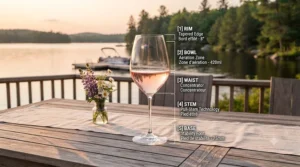
Rose sits in an odd spot between red and white wine in terms of body and aromatics, and the right glass narrows or widens at exactly
the points that keep its delicate strawberry, citrus, and mineral notes from either evaporating too fast or getting muted. This guide walks through seven real, currently available options — from a purpose-built Riedel shape to a shatterproof pool-deck tumbler — and breaks down which one actually earns a spot on your patio table this summer.
Canadians are buying more pink wine than ever, and glassware retailers here have noticed the shift toward dedicated rose wine glasses rather than hand-me-down all-purpose sets. As CBC’s wine coverage of the B.C. scene has noted, warmer weather and patio dining season tend to bring out a wave of rose-coloured glasses on menus and home bars alike, and the glassware follows the wine. We’ll cover budget, mid-range, and premium stemware, plus dedicated sections on provence rose glasses, dry rose stemware, and the pink-tinted pink wine glass set trend that’s popped up on Canadian tables the last couple of summers.
Quick Comparison Table
| Glass | Style | Price Range (CAD) | Best For |
|---|---|---|---|
| Riedel Veloce Rosé | Varietal-specific stem | C$90-C$110 for 2 | Provence-style dry rosé |
| Gabriel-Glas StandArt | Premium universal | C$60-C$80 for 2 | One glass, every wine |
| Zwiesel Glas Pure Sauvignon Blanc | Crisp narrow-bowl stem | C$70-C$90 for 6 | Dry, mineral rosé |
| Schott Zwiesel Tritan Banquet | All-purpose stem | C$55-C$75 for 6 | Everyday reds, whites, rosé |
| JoyJolt Spirits Stemless | Casual stemless | C$25-C$35 for 4 | Casual patio pours |
| Libbey Stemless Blush | Tinted stemless | C$20-C$30 for 4 | Pink wine glass set aesthetics |
| Govino Unbreakable | Shatterproof Tritan | C$15-C$25 for 4 | Pools, picnics, boats |
Looking at the table, the split is pretty clean: if you actually care about how the wine tastes and want something you’ll keep for years, the Riedel Veloce Rosé and Gabriel-Glas StandArt are worth the extra spend. If you mostly drink rose on a patio or by a pool where breakage is a real risk, the Govino Unbreakable and JoyJolt Spirits Stemless make more financial sense than babying crystal outdoors. The Libbey Stemless Blush occupies a fun middle ground — it looks intentional and photographs well, without asking you to treat it like a museum piece.
💬 Just one click — help others make better buying decisions too!😊
Top 7 Rose Wine Glasses: Expert Analysis
1. Riedel Veloce Rosé — purpose-built shape for Provence-style dry rosé
The Riedel Veloce Rosé is the rare glass in this category that was actually engineered around rose specifically, rather than repurposed from a white or red wine shape. Riedel’s own tasting panel developed the Veloce line with a taller bowl and a base diameter around 100mm, which in practice means more surface area to swirl without splashing, and enough headroom above the wine for aromatics to collect before they hit your nose. A 6-glass tasting kit and a 2-glass rose-specific set are both sold under the Veloce name, so it’s worth checking you’re ordering the rose shape and not the cabernet or chardonnay glass by mistake.
Based on the shape comparison against Riedel’s older Extreme line, the Veloce trades a bit of heft for a thinner stem and finer rim, which matters more than it sounds — a thick rim genuinely does mute the sensation of a wine’s first sip, something you notice immediately once you’ve had both side by side. This is the pick for someone who takes their Cotes de Provence or Marsannay seriously and wants a glass matched to it, not a casual patio-party purchase.
Reviewers consistently note the Veloce line feels lighter and more delicate in hand than Riedel’s machine-made Vinum series, though a few mention the thin stem requires more careful handwashing than a dishwasher cycle would suggest is fine.
Pros:
- ✅ Shape developed specifically around rose aromatics
- ✅ Thin rim noticeably improves first-sip sensation
- ✅ Recognizable, gift-worthy premium brand name
Cons:
- ❌ Thin stem is more fragile than sturdier all-purpose stems
- ❌ Priced well above casual everyday glassware
Expect to pay in the C$90-C$110 range for a set of two at the time of research, which puts the value proposition squarely on people who drink rose often enough to justify a dedicated shape.

2. Gabriel-Glas StandArt Crystal — one glass that nails rosé, white, and red
The Gabriel-Glas StandArt takes the opposite philosophy from the Veloce: instead of a rose-specific bowl, it’s a single “universal” shape designed by an Austrian sommelier to handle red, white, and rose equally well, at a 16-ounce capacity with a long stem and lead-free crystal construction. What most buyers overlook about universal glasses is that they’re not a compromise product — the StandArt’s tapered bowl was specifically shaped to concentrate aroma regardless of wine style, so a dry rose actually performs closer to its full potential than it would in a generic goblet.
For a household that drinks a rotating mix of rose, sauvignon blanc, and pinot noir through the week, buying one universal shape instead of three varietal-specific sets is a real space and cost saver, and it removes the “which glass do I use tonight” friction entirely.
A common theme in aggregated buyer feedback is that the StandArt feels closer to hand-blown crystal than its machine-made price point would suggest, though a handful of reviewers note the bowl is large enough that a standard 5-ounce pour looks a little sparse at the bottom.
Pros:
- ✅ One shape replaces three varietal-specific glasses
- ✅ Lead-free crystal feels premium for the price tier
- ✅ Sommelier-designed bowl genuinely lifts aroma
Cons:
- ❌ Large bowl can make small pours look underwhelming
- ❌ Not as visually distinctive as a rose-specific shape
Pricing typically lands around C$60-C$80 for a two-glass gift-boxed set, making this the strongest all-rounder value pick in the premium tier.
3. Zwiesel Glas Pure Sauvignon Blanc — crisp, narrow-bowl stem built for dry rosé’s acidity
Technically marketed as a sauvignon blanc glass, the Zwiesel Glas Pure Sauvignon Blanc set has become a go-to recommendation among sommeliers writing about rose specifically, because its moderate 14-ounce bowl and tapered opening highlight crispness and fruit in exactly the way a dry, Provence-style rose needs. On paper this means the glass is doing double duty in a mixed-wine household, but in practice the narrower opening genuinely does concentrate citrus and red-berry aromatics better than a wider all-purpose bowl.
Made from Zwiesel’s Tritan crystal glass — a titanium- and zirconium-oxide formulation the brand has used since 1872 — these glasses are dishwasher-safe without the fragility concerns that come with traditional lead crystal, which matters if you’re not precious about handwashing every glass after a dinner party.
Reviewers consistently mention the audible “ring” of the Tritan material as a small but genuine point of pride, and several call out the durability through repeated dishwasher cycles as unusually good for a stemmed glass at this price.
Pros:
- ✅ Narrow bowl shape concentrates dry rose aromatics well
- ✅ Dishwasher-safe Tritan crystal resists everyday chipping
- ✅ German manufacturing with a century-plus track record
Cons:
- ❌ Marketed for white wine, so the rose fit isn’t obvious at a glance
- ❌ Six-glass sets mean a bigger upfront commitment
At around C$70-C$90 for a set of six, this works out to a genuinely good per-glass cost for a stem that performs above its price point.
4. Schott Zwiesel Tritan Banquet All Purpose Wine Glass — durable everyday all-rounder for red, white, or rosé
The Schott Zwiesel Tritan Banquet glass is built for the household that just wants a reliable set that survives real life — an abbreviated stem, an 8.6-ounce bowl, and the same shatter-resistant Tritan crystal used across the brand’s premium lines, at a noticeably lower price point than the Pure or Veloce collections. Here’s what to weigh: the shorter stem means less elegance on a formal table, but it also means less breakage risk in a cabinet shared with kids’ cups and everyday dishes.
The rounded bowl profile allows a rose to develop its aromatics through swirling almost as effectively as a taller varietal glass, just without the same headroom for a slow reveal of scent — a fair trade for a glass you’ll actually use on a Tuesday, not just for company.
Aggregated reviews frequently mention this line surviving years of regular dishwasher use without clouding, which is a genuine differentiator from cheaper soda-lime glass sets that fog with repeated washing.
Pros:
- ✅ Shatter-resistant Tritan crystal built for daily use
- ✅ Abbreviated stem is cabinet- and dishwasher-friendly
- ✅ Resists the cloudy fog cheaper glass develops over time
Cons:
- ❌ Shorter stem sacrifices some formal-table elegance
- ❌ Smaller bowl than dedicated varietal rose glasses
Sets of six typically run C$55-C$75, making this one of the best per-glass values for anyone who wants Tritan durability without paying premium-tier prices.
5. JoyJolt Spirits Stemless Wine Glasses — stemless stability built for casual summer pours
The JoyJolt Spirits Stemless set skips the stem entirely, which sounds like a downgrade until you’ve actually used stemware around a pool deck or a picnic blanket. At 19 ounces with a lead-free glass build and a broad, weighted base, these glasses are shatter-resistant rather than fully shatterproof, but the wider footprint genuinely does reduce tip-overs compared to a traditional stemmed glass on an uneven patio table.
What most buyers overlook about stemless glasses is that the bowl shape still matters for aroma even without a stem — JoyJolt’s curved profile is closer to a rounded all-purpose bowl than a wine-specific taper, so it handles rose reasonably well without doing anything special for it. This is squarely a convenience purchase: less elegant than stemware, considerably more stable, and genuinely dishwasher-safe without babying.
A recurring theme in aggregated feedback is that people specifically buy this set to pair with wine coolers or ice sleeves in summer, since the stemless shape fits standard chiller sleeves that a stemmed glass can’t.
Pros:
- ✅ Wide base resists tipping on uneven outdoor surfaces
- ✅ Fits standard wine chiller sleeves for summer use
- ✅ Genuinely dishwasher-safe without special handling
Cons:
- ❌ Rounded bowl doesn’t concentrate aroma like varietal stemware
- ❌ Less formal appearance for a proper dinner table
Priced around C$25-C$35 for a set of four, this is a sensible pickup for anyone whose rose drinking mostly happens outdoors.

6. Libbey Stemless Wine Glass, Blush — pink-tinted glass that matches the wine in the glass
Where most entries on this list are clear glass, the Libbey Stemless Wine Glass, Blush leans into a soft, transparent pink tint that’s become a small but noticeable trend in the pink wine glass set category. It’s a 15-ounce stemless glass, dishwasher-safe, with the tinted color designed to bring personality to a table setting without hiding what’s actually in the glass — you can still judge a rose’s colour depth, just through a rosy lens.
Based on the practical trade-offs here, tinted glassware is a style-first purchase rather than a performance one: a true wine judge would tell you clear crystal is always better for evaluating a wine’s actual hue, and that’s fair. But for a casual summer table where the glass itself is part of the aesthetic — think a blush-toned tablescape or a gift for someone who wants their bar cart to look intentional — this scratches an itch that clear glassware simply doesn’t.
Reviewers frequently describe these as a conversation starter at parties, with a smaller number noting the tint is subtle enough not to distort the wine’s actual colour dramatically.
Pros:
- ✅ Soft pink tint matches rose’s own colour palette
- ✅ Stemless base is stable and easy for casual hosting
- ✅ Dishwasher-safe despite the tinted finish
Cons:
- ❌ Tint slightly obscures true wine colour for judging depth
- ❌ Novelty appeal may not suit a serious tasting setup
At roughly C$20-C$30 for a set of four, this is an affordable way to lean into the blush wine glasses aesthetic without a big commitment.
7. Govino Unbreakable Wine Glasses — shatterproof design built for pool decks and picnics
The Govino Unbreakable line solves a problem none of the crystal options on this list even attempt to: what happens when you actually want rose by the pool, on a boat, or at a park picnic where real glass simply isn’t a sensible idea. Made from a food-safe Tritan polymer rather than glass, these 16-ounce stemless cups are genuinely drop-proof, with a trademarked thumb notch designed for a secure grip while swirling.
The spec sheet won’t tell you this, but reviewers note the material still reflects a wine’s colour and lets you swirl to release aroma almost like real glass does, which is the entire point — a plastic party cup does neither of those things. Because they’re intentionally reusable rather than disposable, hosts who used to buy stacks of single-use cups for outdoor entertaining often report switching to these permanently.
A frequently repeated caveat in aggregated feedback is that Govino’s Tritan line should be hand-washed rather than run through a dishwasher on standard settings, since the polymer can scratch or cloud over repeated hot cycles.
Pros:
- ✅ Genuinely shatterproof for pools, boats, and picnics
- ✅ Thumb notch design supports proper swirling technique
- ✅ Reusable alternative to single-use plastic party cups
Cons:
- ❌ Best hand-washed rather than dishwasher-cycled
- ❌ Feels noticeably lighter than real glass or crystal
Expect to pay around C$15-C$25 for a set of four, making this the most budget-friendly entry built specifically for summer wine glassware use cases.
Practical Usage Guide: Getting the Most from Your Rose Glasses
Getting a new set of rose wine glasses home is only half the job — how you use and maintain them from day one determines whether they last a season or a decade. Start by handwashing crystal stems like the Riedel Veloce Rosé or Gabriel-Glas StandArt for at least the first few uses, even if the manufacturer says dishwasher-safe; thermal shock from a hot dishwasher cycle is the single most common cause of hairline stem cracks in the first month of ownership.
For everyday Tritan sets like the Zwiesel Glas Pure Sauvignon Blanc or Schott Zwiesel Tritan Banquet, load them on the top rack only, stems angled so they don’t rattle against other dishware during the wash cycle. A common first-30-days mistake is nesting stemware bowls inside one another for storage, which is exactly how rims chip; hang stems upside down in a rack instead, or store bowls facing the same direction with a felt or foam divider between them.
Fill to roughly one-third of the bowl’s capacity, not to the brim — this leaves enough headroom for swirling and lets aromatics collect above the wine rather than escaping immediately. Pull rose from the fridge about 15-20 minutes before pouring if it’s been chilled overnight; serving it ice-cold mutes exactly the fruit and floral notes a good glass is trying to showcase.
Real-World Scenarios: Which Rose Glass Fits Your Life
The weekend host in a condo with limited storage: if you’re regularly entertaining friends in a smaller space and don’t want three different varietal glass sets taking up cabinet real estate, the Gabriel-Glas StandArt or Schott Zwiesel Tritan Banquet solve this by handling red, white, and rose from one shape, freeing up shelf space for literally anything else.
The cottage or lake-house owner: breakage around a dock or a pool deck isn’t a matter of if but when, so the Govino Unbreakable set or JoyJolt Spirits Stemless make far more sense than shipping crystal up every weekend. Both are dishwasher-tolerant enough (with Govino preferring a hand wash) to survive a busy summer season of guests.
The dedicated rose enthusiast who drinks it several nights a week: someone buying a bottle of Cotes de Provence or Niagara rose regularly should genuinely notice the difference the Riedel Veloce Rosé or Zwiesel Glas Pure Sauvignon Blanc makes over a generic all-purpose glass, and the cost per use over a year or two of regular drinking works out lower than it first appears.
✨ Ready to Upgrade Your Pour? 🍷
🔍 Whatever your patio, cottage, or dinner table calls for, these picks make it easy to serve rose the way it deserves. Click through on any highlighted glass to check current pricing and availability before your next bottle chills.
Provence Rosé Glasses: What Makes Them Different
Provence, in the south of France, is the benchmark region for pale, dry rose, and glassware brands increasingly design shapes specifically around that style rather than treating rose as an afterthought between red and white glasses. Provence rose glasses typically feature a slightly narrower bowl than a standard all-purpose glass, tapering toward the rim to trap the wine’s delicate strawberry, citrus peel, and mineral notes before they dissipate. As Wikipedia’s overview of rosé wine explains, the pale colour that defines this style ranges from a faint onionskin orange to a more vivid near-purple depending on the grape varieties and winemaking techniques used, which is exactly why glass clarity matters so much for this category — a tinted or heavily cut-crystal glass can visually flatten those subtle colour distinctions that experienced rose drinkers actually look for.
The Riedel Veloce Rosé is the clearest example of a Provence-inspired shape on this list, engineered with the taller bowl and finer rim that Riedel’s tasting panels found best suited to dry, still rose specifically. If your rose collection leans heavily toward Cotes de Provence, Bandol, or similar dry French styles, this is the shape worth prioritizing over a generic varietal glass.
Dry Rosé Stemware vs. All-Purpose Glasses
The debate between dedicated dry rose stemware and a generic all-purpose wine glass comes down to how much of a difference you’re able to perceive, and how often you’re drinking rose specifically versus a rotating mix of wine styles. A dedicated dry rose glass, like the Riedel Veloce Rosé, concentrates the wine’s acidity and red-fruit aromatics through a shape built around that specific profile. An all-purpose glass, like the Gabriel-Glas StandArt or Schott Zwiesel Tritan Banquet, sacrifices a small amount of that precision in exchange for versatility across every wine style you own.
Research out of Brock University’s Cool Climate Oenology and Viticulture Institute, which runs a dedicated sensory evaluation and consumer preference research facility in Ontario’s Niagara region, reflects a broader industry consensus that glass shape measurably affects perceived aroma intensity — the same wine can taste noticeably different depending on the vessel. For a household drinking rose several times a week, dedicated stemware is a defensible investment. For someone who drinks it occasionally alongside reds and whites, a well-designed universal glass captures most of the benefit without a cabinet full of single-purpose stems.
How to Choose Rose Wine Glasses
- Match the glass to your drinking frequency. If rose is an occasional pour, a universal glass like the Gabriel-Glas StandArt covers you; frequent drinkers benefit more from a dedicated shape like the Riedel Veloce Rosé.
- Consider where you’ll actually drink it. Poolside, boating, or picnic use calls for shatterproof options like the Govino Unbreakable, not crystal stemware.
- Check the bowl size against your typical pour. A 5-ounce pour looks lost in an oversized bowl, so match capacity to how generously you actually serve.
- Weigh dishwasher tolerance honestly. If you’re not going to handwash consistently, prioritize Tritan crystal sets like the Zwiesel Glas Pure Sauvignon Blanc over delicate hand-blown crystal.
- Decide if a tinted glass suits your table. The Libbey Stemless Blush brings personality but slightly obscures true wine colour, a fair trade for casual settings.
- Buy in sets that match your entertaining size. A set of two suits a couple’s everyday use; sets of six make more sense for regular hosting.
- Factor in storage space before committing to stemware. Tall varietal glasses need more cabinet clearance than stemless or shorter-stemmed sets.
Common Mistakes When Buying Rose Wine Glasses
A frequent misstep is buying a full 12-piece set of delicate crystal for a household that entertains outdoors most of the summer, only to lose half the set to breakage by August; matching glass fragility to your actual environment matters more than the brand name on the box. Another common error is assuming any clear stemware “works fine” for rose without considering bowl shape, which leaves real flavour and aroma on the table that a properly shaped glass would have delivered.
Buyers also frequently underestimate how much a tinted glass, like the Libbey Stemless Blush, changes the visual experience of judging a wine’s colour — fine for a casual gathering, less ideal if you’re genuinely comparing vintages side by side. Finally, skipping the handwash-versus-dishwasher research before buying is a common regret; a beautiful crystal stem that requires babying isn’t a good fit for a busy household, no matter how well it performs in the glass.

Long-Term Cost & Maintenance
Total cost of ownership for rose wine glasses depends heavily on breakage rate as much as sticker price. A C$100 set of two Riedel Veloce Rosé glasses that survives five years of careful handwashing works out to roughly C$10 per glass per year — genuinely reasonable for daily-use stemware. Compare that to a C$20 budget set replaced twice a year due to dishwasher damage or chipping, which can quietly cost more over time despite the lower upfront price.
Tritan crystal options like the Schott Zwiesel Tritan Banquet and Zwiesel Glas Pure Sauvignon Blanc tend to offer the best long-run value, since their shatter-resistant construction survives regular dishwasher cycles that would eventually chip cheaper soda-lime glass or crack traditional lead crystal stems. When glassware finally does reach end of life, Recycle BC notes that glass can easily break during collection and handling, so broken stemware should generally be wrapped securely before disposal rather than placed loose in a household recycling bin, since drinking glass has a different composition than container glass in most municipal programs.
Features That Actually Matter (And Those That Don’t)
Bowl shape and rim thinness genuinely matter — they measurably affect how aroma concentrates and how a first sip feels on the lip. Material quality matters too: Tritan crystal and lead-free crystal both resist chipping and clouding far better than basic soda-lime glass over years of use. What matters far less than marketing suggests is elaborate cut-crystal patterning or heavily etched designs, which can actually interfere with judging a rose’s colour and clarity, the opposite of what you want from good stemware.
Capacity claims are also often oversold; a 20-ounce glass sounds generous, but rose is rarely poured past a third of the bowl, so a moderate 14-16 ounce capacity like the Zwiesel Glas Pure Sauvignon Blanc offers plenty of headroom without unnecessary bulk in your cabinet.

FAQ
❓ What is the best glass for rose wine?
❓ Do you need a special glass for rosé wine?
❓ Can you put rose wine glasses in the dishwasher?
❓ What size glass is best for rosé?
❓ Are stemless wine glasses good for rosé?
Conclusion
Choosing the right rose wine glasses really comes down to being honest about how and where you actually drink. If Cotes de Provence on a quiet evening is your ritual, the Riedel Veloce Rosé rewards that with a shape built around exactly this style, and the Gabriel-Glas StandArt makes a compelling case if you’d rather one glass handle everything you pour. Everyday households leaning on the dishwasher will get the most consistent mileage from Tritan crystal picks like the Schott Zwiesel Tritan Banquet or Zwiesel Glas Pure Sauvignon Blanc, while anyone drinking rose by a pool, on a boat, or at a summer picnic should skip fragile crystal entirely in favour of the Govino Unbreakable or JoyJolt Spirits Stemless. And if a soft pink aesthetic matters as much as the wine itself, the Libbey Stemless Blush brings personality to the table without a big financial commitment.
None of these seven options is objectively “best” in isolation — the right rose wine glasses are the ones that match your actual pour, your actual dishwasher habits, and your actual patio table, not a magazine photo of a perfect dinner party.
Recommended for You
- Tulip Champagne Glasses: 7 Top Picks for Better Bubbles in 2026
- Large Wine Glasses Red Wine: 7 Bold Picks for 2026
- Stemmed vs Stemless Wine Glasses: 7 Best Picks for 2026
Disclaimer: This article contains affiliate links. As an Amazon Associate, I earn from qualifying purchases. If you purchase products through these links, we may earn a small commission at no additional cost to you.
✨ Found this helpful? Share it with your friends! 💬🤗
