
In This Article
Here’s a confession every wine drinker eventually makes: the glass matters more than you think. Pour the same bottle of Malbec into a juice tumbler and then into a proper bowl, and you’ll swear you opened two different bottles. That’s not magic — it’s surface area, oxygen, and a bit of glassmaking physics working in your favour. If you’ve been searching for large wine glasses red wine enthusiasts actually recommend (not just what shows up first on a shelf), you’re in the right spot.

This guide breaks down seven real, purchasable options for amazon.ca shoppers, ranging from budget-friendly oversized red wine glasses to the kind of stemware sommeliers reach for when a wine deserves a proper introduction. We’ll dig into generous bowl wine glasses that actually earn the “generous” label, explain why big red wine stems change how a Cabernet feels in your hand, and cover the aeration maximizing glasses that transform a “fine” bottle into something memorable. Along the way, we’ll talk honestly about breathing room wine glasses, bold wine serving size considerations for Canadian households, and how to avoid overspending on hype.
Sensory researchers have long noted how little formal documentation exists on the topic — a gap explored in a Brock University viticulture study on glass shape and perceived aroma — which is exactly why we lean on real specs, real review patterns, and honest comparison rather than marketing copy. Let’s get into it.
What Are Large Wine Glasses for Red Wine?
Large wine glasses for red wine are stemmed glasses with bowls typically holding 16 to 27 ounces (475–800 ml), designed with extra surface area to let red wine breathe, release aromatic compounds, and soften harsh tannins before the wine reaches your nose or palate.
Quick Comparison Table
| Product | Capacity | Best For | Price Range (CAD) |
|---|---|---|---|
| BACLIFE Hand Blown Red Wine Glasses | 23 oz | Budget oversized option | Under C$45 (set of 4) |
| JoyJolt Layla Red Wine Glasses | 17 oz | Everyday reinforced stems | C$35-C$50 (set of 4) |
| Schott Zwiesel Cru Classic Bordeaux | 21.7 oz | Durability, restaurant use | C$60-C$90 (set of 6) |
| Spiegelau Definition Bordeaux | 25.4 oz | Precision-cut aeration | C$70-C$100 (set of 4) |
| Gabriel-Glas StandArt | 22.6 oz | Hand-blown all-rounder | C$60-C$90 (set of 2) |
| Riedel Performance Cabernet/Merlot | 28 oz | Optic-impact bowl tech | C$70-C$100 (set of 2) |
| Zalto Denk’Art Bordeaux | 20 oz | Ultra-premium, featherlight | C$150-C$190 (set of 2) |
Looking at the spread above, there’s a clear pattern: capacity climbs steadily from the BACLIFE Hand Blown Red Wine Glasses at the entry point to the Zalto Denk’Art Bordeaux at the top, but price doesn’t scale purely with size — it scales with how the glass is made. Hand-blown glasses like the Zalto and Gabriel-Glas StandArt command a premium because a person, not a machine, shapes each bowl, which affects wall thinness and rim precision. If your budget caps out around C$50, the JoyJolt Layla and BACLIFE options still deliver genuine generous bowl wine glasses performance without the hand-blown markup.
💬 Just one click — help others make better buying decisions too!😊
Top 7 Large Red Wine Glasses: Expert Analysis
1. BACLIFE Hand Blown Red Wine Glasses — best oversized value pick
The standout here is size-for-price: a 23 oz bowl for a fraction of what boutique brands charge. That capacity puts this squarely in the oversized red wine glasses category, and the hand-blown construction means each glass has subtle character rather than assembly-line uniformity. Made from lead-free crystal with a long stem and flat, stable base, these glasses are built for daily rotation rather than a display cabinet — you can run them through the dishwasher without babying them, though hand-washing extends their life. Based on the spec comparison, this is the set to buy if you’re building a collection from scratch and don’t yet know whether you’re a “one glass for everything” person or a varietal-specific collector. Reviewers consistently note that the bowls arrive well-packaged and hold up better than expected for the price point, though a handful mention the stems feel slightly thin under vigorous swirling. Pros:
- ✅ Large 23 oz bowl at an entry-level price
- ✅ Lead-free crystal construction
- ✅ Stable flat base resists tipping
Cons:
- ❌ Stems feel less sturdy than premium alternatives
- ❌ Hand-blown means occasional size variance between glasses
At around C$35-C$45 for a set of four, this is hard to beat on cost-per-glass, making it a smart value pick for anyone testing whether bigger bowls actually change their wine experience.
2. JoyJolt Layla Red Wine Glasses — best reinforced stem for everyday use
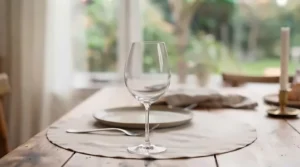
What most buyers overlook about this model is the reinforced stem detail — it’s a small engineering choice that pays off every time you clink glasses at a dinner party without wincing. The 17 oz tulip-shaped bowl is a touch smaller than some rivals here, but the uniform rim is specifically designed to let wine breathe evenly rather than pooling aromas on one side. Crafted from lead-free crystal in the Czech Republic, this set targets the “nice enough for guests, tough enough for Tuesday” niche perfectly. Based on the spec comparison, the flat, reinforced foot makes this one of the more forgiving choices for households with kids or enthusiastic pets underfoot. Aggregated customer feedback frequently praises the balance and light feel in-hand, with some buyers specifically mentioning they bought the matching white wine set after trying these. Pros:
- ✅ Reinforced stem reduces breakage risk
- ✅ Uniform rim promotes even aeration
- ✅ European crystal craftsmanship at accessible pricing
Cons:
- ❌ 17 oz bowl is smaller than most others on this list
- ❌ Limited to sets of four (no larger set option)
Priced in the C$35-C$50 range for a set of four, this is the everyday-use glass for people who want a small step up from big-box basics without committing to boutique pricing.
3. Schott Zwiesel Cru Classic Bordeaux — best durability for regular rotation
Here’s what the spec sheet won’t tell you outright: Schott Zwiesel’s Tritan crystal formula is genuinely tougher than standard crystal, which is why so many Canadian restaurants use this brand for their by-the-glass pours. The Cru Classic Bordeaux glass holds roughly 21.7 oz, generous enough to swirl a full-bodied Syrah without sloshing, and the wider bowl base gives the wine real breathing room before it narrows toward the rim. German-manufactured and machine-blown for consistency, these glasses trade a bit of hand-blown romance for repeatable quality — every glass in the set performs identically, which matters if you’re pouring for guests who’ll compare notes. On wine forums, several long-time collectors specifically credit Schott Zwiesel Bordeaux glasses for surviving years of regular dishwasher cycles without clouding or chipping, a claim consistent with the brand’s reputation among sommeliers. This is the pick for anyone who wants restaurant-grade performance without restaurant-grade fragility. Pros:
- ✅ Tritan crystal resists chipping and clouding
- ✅ Dishwasher-safe without performance loss
- ✅ Consistent machine-made uniformity across sets
Cons:
- ❌ Less “hand-crafted” prestige than boutique brands
- ❌ Heavier feel than ultra-thin hand-blown options
Expect to pay in the C$60-C$90 range for a set of six, which works out to some of the best cost-per-glass value among mid-tier options — especially if breakage is a real concern in your household.
4. Spiegelau Definition Bordeaux — best precision-cut rim for aeration
The laser-cut rim is the headline feature, and it’s not just a marketing flourish — a precisely cut edge changes how wine flows onto your tongue, directing it to specific taste zones rather than dumping it in one spot. At 25.4 oz, this is one of the larger bowls on our list, firmly in aeration maximizing glasses territory, giving tannic reds like Cabernet Sauvignon or Nebbiolo ample room to soften before that first sip. Owned by the same parent company as Riedel, Spiegelau applies similar design philosophy at a more approachable price, which is exactly why wine forums frequently mention it in the same breath as much pricier options. What most buyers overlook about this model is how well it performs with everyday mid-range reds — you don’t need a C$300 bottle to notice the difference a bigger bowl makes. Reviewers commonly describe the glasses as “surprisingly elegant for the price,” with a recurring theme that they feel more premium than their cost suggests. Pros:
- ✅ Laser-cut rim improves flow and taste distribution
- ✅ Large 25.4 oz bowl ideal for bold reds
- ✅ Backed by Riedel-adjacent design expertise
Cons:
- ❌ Large size makes it awkward for cabinet storage
- ❌ Some buyers find the bowl too big for lighter reds
At C$70-C$100 for a set of four, this sits in the sweet spot between mass-market and boutique — genuinely giving buyers premium-adjacent performance.
5. Gabriel-Glas StandArt — best hand-blown all-rounder alternative
Here’s the honest analytical take: Gabriel-Glas built its reputation as the “US sommelier’s answer to Zalto,” and the 22.6 oz StandArt earns that comparison through a slightly plumper bowl that pools aromas a touch better than its straighter-sided rival, according to comparative tastings. This is a genuine one-glass-for-everything design — you could serve a bold Malbec and a bright Pinot Noir from the same glass without either feeling mismatched. Hand-blown from lead-free crystal, it’s noticeably lighter than machine-made alternatives, though that lightness comes with the fragility trade-off common to all hand-blown stemware. Based on the spec comparison against Zalto, comparative tastings have found the Gabriel’s plumper bowl shape edges out the straight-sided competitor for pooling and channeling aromas, even though Zalto remains the more recognized name among UK sommeliers specifically. If you want boutique-level performance without buying into the most hyped name in the category, this is the pragmatic premium pick. Pros:
- ✅ Genuine all-rounder shape for red and white wine
- ✅ Hand-blown lightness improves swirling feel
- ✅ Favoured by professional sommeliers in blind tastings
Cons:
- ❌ Fragile — not ideal for households with young kids
- ❌ Hand-wash strongly recommended over dishwasher
Priced around C$60-C$90 for a set of two, this occupies genuine premium territory, best suited to buyers who already know they care about glassware nuance.
6. Riedel Performance Cabernet/Merlot — best optic-impact bowl technology
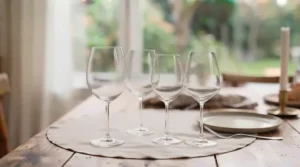
Riedel’s Performance series introduced what the brand calls “optic impact” — subtle ridges inside the bowl that increase inner surface area by 20 to 30%, according to design analysis, accelerating aeration without requiring an even bigger glass. That’s a genuinely clever engineering solution to the classic large-glass storage problem. Despite the “Cabernet/Merlot” branding, the balanced 28 oz bowl performs well across both red and white styles, making it one of the more versatile choices on this list for households that don’t want a cabinet full of single-purpose stemware. What most buyers overlook is that Riedel’s century-plus history in varietal-specific glassware means this “budget” line within their catalogue still reflects genuine R&D, not just a name slapped on generic glass. Aggregated reviews frequently describe noticeably enhanced aroma development compared to no-name large glasses, particularly with mid-range Cabernet Sauvignon and Merlot bottles. Pros:
- ✅ Optic-impact ridges accelerate aroma development
- ✅ Versatile enough for reds and whites alike
- ✅ Backed by 300+ years of Austrian glassmaking heritage
Cons:
- ❌ Large capacity requires generous cabinet clearance
- ❌ Machine-made construction lacks hand-blown thinness
Set pricing typically runs C$70-C$100 for two glasses — solid value considering the brand pedigree and genuine functional innovation packed in.
7. Zalto Denk’Art Bordeaux — best ultra-premium featherlight glass
If there’s a glass on this list that wine collectors talk about with genuine reverence, it’s this one. Hand-blown in Austria using precise 24°, 48°, and 72° angles that the brand describes as mirroring Earth’s tilt, the Zalto Denk’Art Bordeaux is prized above all for how astonishingly light it feels — many describe forgetting they’re holding a full glass at all. At roughly 20 oz, it’s not the biggest bowl on this list, but its design maximizes bold wine serving size perception through shape rather than sheer volume, concentrating aroma while dispersing harsh alcohol notes toward the rim’s edge. This is a glass built for people who’ve already decided glassware genuinely changes how wine tastes and are ready to pay for the difference. Comparative tastings have repeatedly found Zalto glasses excel with structured Bordeaux-style reds specifically, though the brand’s stems are famously delicate — snapping at the stem during dishwasher cycles is a recurring complaint in user reviews, not a fabricated concern. Pros:
- ✅ Exceptionally lightweight, hand-blown Austrian crystal
- ✅ Favoured by top sommeliers for structured reds
- ✅ Precision angle design concentrates aroma effectively
Cons:
- ❌ Very fragile — stem breakage is a known issue
- ❌ Premium price puts it out of reach for casual buyers
Expect to pay C$150-C$190 for a set of two — a genuine investment, but one that regular Bordeaux and Cabernet drinkers often say is worth the splurge for special-occasion bottles.
Top 7 Products: Full Comparison
| Product | Capacity | Material | Best For |
|---|---|---|---|
| BACLIFE Hand Blown Red Wine Glasses | 23 oz | Lead-free crystal | Budget oversized starter set |
| JoyJolt Layla | 17 oz | Lead-free crystal | Everyday dinner-party use |
| Schott Zwiesel Cru Classic Bordeaux | 21.7 oz | Tritan crystal | Durability-focused households |
| Spiegelau Definition Bordeaux | 25.4 oz | Crystal glass | Aeration-focused red drinkers |
| Gabriel-Glas StandArt | 22.6 oz | Hand-blown crystal | One-glass-for-everything buyers |
| Riedel Performance Cabernet/Merlot | 28 oz | Crystal glass | Versatile red/white households |
| Zalto Denk’Art Bordeaux | 20 oz | Hand-blown crystal | Collectors and special occasions |
This table makes the trade-off obvious: bigger capacity doesn’t always mean better performance, since the Riedel Performance Cabernet/Merlot and Spiegelau Definition Bordeaux rely on engineered bowl shapes rather than raw volume to maximize aeration. Meanwhile, the Zalto Denk’Art Bordeaux proves that a smaller, precisely angled bowl can outperform bigger glasses through geometry alone. If durability tops your priority list, the Schott Zwiesel Cru Classic Bordeaux is the clear standout in this comparison.
Benefits vs Traditional Standard Wine Glasses
| Factor | Large Red Wine Glasses | Standard Wine Glasses |
|---|---|---|
| Aeration | Faster, more thorough | Slower, limited surface area |
| Aroma concentration | Stronger, more complex | Milder, less nuanced |
| Tannin softening | Noticeable with bold reds | Minimal |
| Storage footprint | Larger, needs taller shelving | Compact |
| Best For | Cabernet, Malbec, Syrah, Bordeaux blends | Casual, space-limited setups |
The core trade-off here isn’t subtle: large glasses genuinely change how tannic reds taste by giving wine more contact with oxygen before it reaches your palate, but that benefit comes with a real storage cost if your cabinet space is tight. Reviewers who switch from standard 12 oz glasses to anything in the 20+ oz range consistently report noticing softer tannins and more pronounced fruit aromas within their first few pours. If you mostly drink lighter reds like Pinot Noir, the upgrade matters less — but for structured reds, it’s one of the more noticeable improvements you can make without spending on better wine itself.
✨ Don’t Miss These Exclusive Deals!
🔍 Take your red wine collection to the next level with these carefully selected glasses. Click on any highlighted item to check current pricing and availability. These picks will help you pour authentic restaurant-quality experiences your guests will love!
Setting Up and Caring for Your Large Red Wine Glasses
New stemware needs a little onboarding before it earns a permanent spot in your cabinet. Start by hand-washing every glass before first use, even dishwasher-safe models — manufacturing residue and packaging dust can subtly affect aroma on the first pour. Store large glasses upright rather than upside-down on stemware racks when possible, since inverted storage can trap moisture near the rim and encourage that faint musty smell nobody wants near their Merlot.
A common first-30-days mistake is overcrowding the dishwasher’s top rack, which causes glasses to knock together and chip during the wash cycle — space them generously or hand-wash your premium pieces like the Zalto Denk’Art Bordeaux and Gabriel-Glas StandArt entirely. For maintenance, avoid stacking glasses inside one another; the friction can cause micro-scratches that dull clarity over time. If cloudiness develops despite careful washing, it’s often mineral buildup from hard water rather than glass degradation — a brief soak in diluted white vinegar typically restores shine. Set a simple habit: wipe the rim with a lint-free cloth immediately after drying to prevent water spots, especially on the wider-mouthed Spiegelau Definition Bordeaux and Riedel Performance Cabernet/Merlot, where evaporation leaves visible rings if left to air-dry alone.
Which Large Wine Glass Fits Your Lifestyle?
Picture Sarah, a condo-dwelling grad student in Toronto who hosts small dinners twice a month on a tight budget — the JoyJolt Layla or BACLIFE Hand Blown Red Wine Glasses make sense here, since both deliver genuine oversized red wine glasses performance without risking her budget on something that might get chipped in a shared kitchen.
Now consider Marc, a home cook in Ottawa who drinks a bottle of Cabernet most weekends and has started noticing flavour differences between glass shapes — the Spiegelau Definition Bordeaux or Riedel Performance Cabernet/Merlot hit his sweet spot, offering real aeration gains without collector-level pricing.
Finally, there’s Priya, a Vancouver-based wine club member who hosts quarterly tastings featuring structured Bordeaux blends and Nebbiolo — she’s the exact profile the Zalto Denk’Art Bordeaux and Gabriel-Glas StandArt were designed for, where the incremental aroma and tannin benefits justify premium pricing because her guests genuinely notice and discuss the difference.
How to Choose Large Wine Glasses for Red Wine
- Match bowl size to your typical reds — bold, tannic wines like Cabernet Sauvignon benefit most from 22+ oz bowls; lighter reds need less generous bowl wine glasses volume.
- Decide between hand-blown and machine-made — hand-blown glasses like Zalto feel lighter but demand more careful handling; machine-made options like Schott Zwiesel prioritize durability.
- Check stem construction — reinforced or thicker stems reduce breakage risk for households with kids or pets.
- Consider dishwasher compatibility honestly — even “dishwasher-safe” premium glass benefits from occasional hand-washing to preserve clarity.
- Account for cabinet and shelf height — big red wine stems and tall bowls need more vertical clearance than standard glassware.
- Set a realistic budget band — decide whether you want an everyday set or a special-occasion investment piece before browsing.
- Read aggregated review themes, not star ratings alone — recurring complaints (like stem fragility) matter more than a single five-star review.
Common Mistakes When Buying Large Wine Glasses
A frequent misstep is assuming bigger is automatically better — an oversized bowl on a delicate Pinot Noir can actually mute its subtler notes by over-exposing it to air. Another common mistake: buying a single glass style for every wine type, when a distinctly different shape (like a tulip-shaped white wine glass) genuinely serves whites better. Shoppers also tend to underestimate storage needs, ordering tall-stemmed sets that don’t fit existing cabinet shelving — always check glass height against your available clearance before ordering. Finally, many buyers skip reading aggregated review themes around stem durability, later discovering their beautiful new set doesn’t survive more than a few dishwasher cycles.
What to Expect: Real-World Performance
On paper, a bigger bowl means more surface area, which means faster evaporation of alcohol vapours and quicker aromatic development — but what does that actually feel like at the table? Expect a noticeably softer first impression with tannic reds; a Cabernet that felt gripping and astringent in a standard glass often reads as smoother and more fruit-forward in an aeration maximizing glasses design. You’ll also notice you can swirl more vigorously without spilling, since the wider bowl gives the liquid room to move without reaching the rim. That said, don’t expect miracles from a mediocre bottle — glassware amplifies what’s already there, for better or worse, rather than fixing flaws in a poorly made wine.
Long-Term Cost & Maintenance
Thinking in cost-per-use terms changes the calculus considerably. A C$40 set of four budget glasses that lasts two years works out to roughly C$5 per glass per year, while a C$170 Zalto set that lasts five years with careful hand-washing comes out closer to C$17 per glass annually — a real cost, but one many collectors consider justified given the daily sensory payoff. Breakage is the biggest hidden cost across every price tier; hand-blown glasses like Gabriel-Glas StandArt and Zalto Denk’Art Bordeaux carry higher replacement risk, while machine-made options like Schott Zwiesel Cru Classic Bordeaux trade some prestige for meaningfully lower total cost of ownership over several years of regular use.
A Buyer’s Decision Framework
If you’re building your first proper glassware set on a tight budget, choose the BACLIFE Hand Blown Red Wine Glasses or JoyJolt Layla, because both deliver real oversized performance without a steep financial commitment. If you drink bold reds regularly and want a noticeable upgrade without collector pricing, choose the Spiegelau Definition Bordeaux or Riedel Performance Cabernet/Merlot, because their engineered bowls deliver measurable aeration gains at accessible mid-tier cost. If you’re a dedicated collector who hosts tastings and wants the best sensory experience money can buy, choose the Zalto Denk’Art Bordeaux or Gabriel-Glas StandArt, because their hand-blown precision genuinely changes how structured reds present themselves — provided you’re prepared to hand-wash carefully.
Bold Wine Serving Size: What Canadian Guidelines Say
A bigger glass doesn’t have to mean a bigger pour, and it’s worth separating “generous bowl” from “generous serving.” Health Canada defines a standard drink as containing a fixed amount of pure alcohol, and its guidance notes that a standard glass of wine works out to about 142 ml at 12% alcohol — considerably less than what a large bowl can visually hold. That distinction matters because a 25+ oz glass filled to a third capacity still looks modest compared to the glass’s total volume, which can make it easy to lose track of how much you’re actually pouring. Using a large glass responsibly means treating the bowl size as a tool for aroma and swirling room, not an invitation to fill it to the brim — a habit worth building early, especially when entertaining guests who may be pouring their own glasses.

Frequently Asked Questions
❓ What size glass is best for red wine?
❓ Do large wine glasses actually make a difference?
❓ Are oversized wine glasses dishwasher safe?
❓ How much wine should you pour in a large glass?
❓ What's the difference between a Bordeaux glass and a Burgundy glass?
Conclusion
Choosing among large wine glasses red wine drinkers actually recommend comes down to matching bowl size and construction to how you really drink — not chasing the priciest name on the shelf. Budget-conscious buyers get genuine performance from the BACLIFE Hand Blown Red Wine Glasses and JoyJolt Layla, while regular red wine drinkers looking for a meaningful upgrade should look hard at the Spiegelau Definition Bordeaux or Riedel Performance Cabernet/Merlot. For dedicated collectors and special-occasion pours, the Zalto Denk’Art Bordeaux and Gabriel-Glas StandArt deliver a genuinely different sensory experience worth the investment. Whichever you choose, remember that the glass amplifies what’s already in the bottle — pair it with a wine you actually enjoy, and let the bigger bowl do its quiet work. For further reading on how Canadian wine researchers study glassware and sensory perception, Brock University’s Cool Climate Oenology and Viticulture Institute publishes ongoing research into wine perception and quality.
Recommended for You
- Stemmed vs Stemless Wine Glasses: 7 Best Picks for 2026
- 7 Affordable Wine Glasses That Still Feel Fancy in 2026
- Outdoor Wine Glasses: 7 Unbreakable Picks That Survive Summer 2026
Disclaimer: This article contains affiliate links. As an Amazon Associate, I earn from qualifying purchases. If you purchase products through these links, we may earn a small commission at no additional cost to you.
✨ Found this helpful? Share it with your friends! 💬🤗
