

In This Article
You pour yourself a generous glass of chardonnay after a long day, but something feels off. The buttery notes don’t seem as pronounced, the aroma isn’t as captivating as you remember from that wine bar in Niagara, and you’re left wondering if you bought the wrong bottle. Plot twist: it might not be the wine at all—it could be your glass.
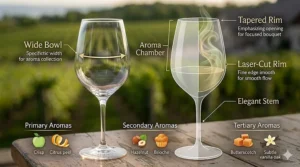
I’ve spent years experimenting with wine glasses across Canadian climates, from Vancouver’s damp winters to Toronto’s humid summers, and here’s what most people overlook: chardonnay wine glasses aren’t just fancy tableware. The shape of your glass directly affects how aromatic molecules reach your nose, how the wine hits your palate, and whether you’re tasting those vanilla-oak notes or missing them entirely. Research from the University of California at Davis found that glass shape significantly impacts aroma concentration, with the ratio between bowl diameter and rim opening playing the starring role in what you actually smell and taste.
For Canadian wine lovers, choosing the right chardonnay wine glasses matters even more than you’d think. Our climate demands glasses that can handle both crisp, unoaked Niagara Rieslings and full-bodied, buttery California imports. Whether you’re serving a $25 CAD bottle at a casual Friday dinner or a $80 Burgundy for a special occasion, the glass you use determines whether your guests experience complexity or just cold liquid. This guide covers seven exceptional options available on Amazon.ca, from budget-friendly sets under $40 CAD to premium crystal that’ll last a decade, with practical advice for Canadian buyers navigating shipping, winter storage, and value per pour.
Quick Comparison: Top Chardonnay Wine Glasses Available in Canada
| Product | Material | Capacity | Price Range (CAD) | Best For | Prime Eligible |
|---|---|---|---|---|---|
| Riedel Veritas Oaked Chardonnay | Lead-free crystal | 780 ml (26 oz) | $90-$120 | Full-bodied, oaked styles | Yes |
| Schott Zwiesel Tritan Forte | Tritan crystal | 510 ml (17.3 oz) | $85-$110 | Everyday use, durability | Yes |
| Riedel Vinum Viognier/Chardonnay | Lead crystal | 370 ml (12.5 oz) | $70-$95 | Mid-range quality | Yes |
| Libbey Stemless Wine Set | Soda-lime glass | 500 ml (16.75 oz) | $35-$50 | Budget buyers, casual entertaining | Yes |
| Riedel Winewings Chardonnay | Lead-free crystal | 742 ml (25 oz) | $110-$140 | Wine collectors, special occasions | Yes |
| Schott Zwiesel MioVino White | Tritan crystal | 380 ml (12.9 oz) | $60-$80 | Modern aesthetics | Yes |
| Riedel O Stemless Tumbler | Lead-free crystal | 580 ml (19.6 oz) | $75-$100 | Casual elegance, dishwasher-friendly | Yes |
The table above reveals an interesting pattern: you’re essentially choosing between lead crystal (Riedel’s traditional approach offering that premium weight and clarity), Tritan crystal technology (Schott Zwiesel’s shatter-resistant innovation), and basic soda-lime glass (Libbey’s affordable workhorse). What this means for Canadian buyers is that budget options under $60 CAD work brilliantly for everyday sipping and won’t devastate you when your teenager drops one during dishwasher duty. Mid-range picks in the $70-$100 bracket balance quality and practicality—they’re nice enough to impress guests but won’t trigger panic when someone swirls too enthusiastically. Premium options above $100 CAD deliver that restaurant-quality experience but demand careful handling, which might be challenging if you’re entertaining regularly or have kids around. The material choice also affects winter storage in Canadian homes: Tritan crystal handles temperature fluctuations better than delicate lead crystal, making it ideal if you’re storing glasses in basement wine cellars where temperatures swing between 10-18°C during our harsh winters.
💬 Just one click — help others make better buying decisions too! 😊
Top 7 Chardonnay Wine Glasses: Expert Analysis for Canadian Wine Lovers
1. Riedel Veritas Oaked Chardonnay Wine Glass (Set of 2)
The Riedel Veritas Oaked Chardonnay stands out with its dramatically wide bowl that looks almost like a miniature fishbowl—and that’s exactly the point. This glass is engineered specifically for full-bodied, oak-aged chardonnays with high alcohol content, the kind that typically clock in around 13.5-14.5% ABV. The generous 780 ml capacity (26 oz) means you can pour a proper 5-6 oz serving while still having massive headspace for swirling, which is critical for releasing those buttery diacetyl compounds that make oaked chardonnay taste, well, buttery.
Here’s what matters for Canadian buyers: this glass works brilliantly with both California butter bombs and white Burgundies, but it’s overkill for crisp, unoaked styles. If your go-to bottle is Chablis or a steel-aged Niagara chardonnay, this wide opening will actually work against you by dissipating delicate mineral notes before they reach your nose. The lead-free crystal construction means dishwasher-safe convenience, though I’d still recommend hand-washing to preserve the ultra-thin rim that makes the wine flow seamlessly onto your palate. Canadian reviewers consistently note the glasses arrive well-packaged even during winter shipping, with Riedel’s tube packaging protecting against our postal system’s rough handling.
Price point in CAD: Around $90-$120 for a set of 2. That’s roughly $45-$60 per glass, which positions this in the premium-but-not-absurd category. For context, a single glass replacement at a restaurant supply store runs about $50-$70 CAD, so you’re getting reasonable value if one breaks.
Customer feedback: Canadian buyers on Amazon.ca praise the weight and balance, noting the glass feels substantial without being heavy. A few Toronto reviewers mention the wide bowl makes them nervous when washing by hand—valid concern given the 9.25-inch height means it won’t fit in every dish rack.
Pros:
✅ Perfect for full-bodied, oaked chardonnays—unlocks complexity you didn’t know existed
✅ Lead-free and dishwasher-safe despite premium feel
✅ Generous bowl allows proper aeration without needing a decanter
Cons:
❌ Overkill for unoaked/crisp styles—too much air exposure
❌ Height makes storage tricky in standard Canadian kitchen cabinets

2. Schott Zwiesel Tritan Crystal Forte Collection (Set of 6)
The Schott Zwiesel Forte is the glass I recommend most often to Canadian buyers who actually use their glassware rather than display it. Schott Zwiesel’s patented Tritan crystal technology replaces lead with titanium and zirconium, creating a glass that’s simultaneously dishwasher-safe, chip-resistant, and maintains crystal clarity for years. I’ve had my set for five years—through countless dinner parties, aggressive dishwasher cycles, and that time my nephew used them for science experiments—and they still look pristine.
The 510 ml (17.3 oz) capacity hits the sweet spot for versatility: large enough to properly serve both oaked and unoaked chardonnays, but not so massive that lighter-bodied wines feel lost. The bowl tapers gently toward a medium-width rim, which works beautifully for most white wine styles. What makes this particularly relevant for Canadian homes is the durability during our extreme temperature swings. If you’re storing wine glasses in an unheated cottage or basement, regular crystal can develop stress fractures from temperature changes. Tritan crystal handles these fluctuations without complaint—I’ve transported mine to a Muskoka cabin in January (stupid decision, I know) and they survived.
Price in CAD: Around $85-$110 for a set of 6, which breaks down to about $14-$18 per glass. That’s exceptional value when you consider these will likely outlast cheaper alternatives by 3-4 years. For Canadian buyers on Amazon.ca, watch for occasional sales that drop the price to around $75 CAD per set—absolute steal at that point.
Real-world feedback: Canadian reviewers consistently mention these survive daily use better than expected. Several Calgary buyers note the glasses handle hard water spots better than their previous Riedels, though they still recommend using rinse aid in the dishwasher. A handful of Montreal reviewers mention slight mould lines on the stem (visible upon close inspection), which is typical for machine-made glass but doesn’t affect function.
Pros:
✅ Virtually indestructible compared to standard crystal—perfect for families
✅ Set of 6 means you can actually host dinner parties without mismatched glasses
✅ Handles Canadian temperature extremes without cracking
Cons:
❌ Slightly heavier than hand-blown alternatives—some find it less elegant
❌ Machine-made means very subtle mould lines (purists notice, guests don’t)
3. Riedel Vinum Viognier/Chardonnay Glasses (Set of 4)
The Riedel Vinum series represents Riedel’s middle ground: varietal-specific shaping without the premium price tag of their hand-blown lines. This particular model features a 370 ml (12.5 oz) bowl that’s narrower than the Veritas but still offers decent surface area for aeration. The shape was designed specifically to highlight chardonnay’s moderate acidity while softening the alcohol heat that can be prominent in higher-ABV bottles.
For Canadian wine drinkers navigating both domestic and imported chardonnays, this glass handles the range admirably. It brings out the best in Ontario’s fruit-forward chardonnays (think Tawse, Flat Rock) while also managing California’s richer styles without overwhelming your palate. The stem length feels balanced—tall enough to prevent hand-warming but short enough to fit in most Canadian kitchen cabinets, which tend to be more compact than American designs. Canadian buyers should note this is lead crystal (24% lead content), which gives it that classic ring when you tap it but means you should hand-wash to prevent cloudiness over time.
Canadian pricing: Around $70-$95 CAD for a set of 4. Individual replacements run about $25-$30 CAD if you can find them, making this a reasonable investment if you’re careful.
Customer experience: Amazon.ca reviewers from Vancouver and Victoria particularly appreciate this glass for BC wines, noting it highlights the mineral characteristics of Okanagan chardonnays. A few buyers mention the glasses arrived with very minor imperfections (tiny bubbles in the crystal), which is relatively common in machine-made lead crystal and doesn’t affect performance. Toronto-area buyers report consistent Prime shipping, usually arriving within 2-3 days.
Pros:
✅ Classic Riedel design at more accessible price point
✅ Versatile enough for both oaked and unoaked styles
✅ Lead crystal provides that satisfying ring and weight
Cons:
❌ Lead crystal means hand-washing recommended despite dishwasher-safe claim
❌ Set of 4 might feel limiting if you entertain frequently
4. Libbey Stemless Wine Glasses (Set of 12)
Let’s be honest: not everyone needs $50 CAD crystal glasses. The Libbey Stemless Set is the workhorse option for Canadian buyers who want functional glassware without the stress of breakage anxiety. These are basic soda-lime glass—the same material as your everyday drinking glasses—formed into a stemless design that’s nearly impossible to tip over. The 500 ml (16.75 oz) capacity is generous, though in practice you’ll pour less since there’s no stem to guide portion control.
Here’s where this set excels: casual entertaining, outdoor patios (yes, even on those brief Canadian summer evenings), and households with kids or pets where broken stems are a recurring tragedy. The stemless design also solves a uniquely Canadian problem: limited cabinet space in older homes and condos. These stack semi-efficiently, taking up maybe 60% less vertical space than traditional stemmed glasses. That said, stemless glasses will warm wine faster since your hand contacts the bowl directly—fine for a quick weeknight pour, less ideal if you’re savoring a special bottle over an hour-long conversation.
The shape isn’t specifically optimized for chardonnay. The bowl is essentially a truncated cone, which means aromatics don’t concentrate as efficiently as in a proper wine glass. But for everyday drinking, especially with affordable bottles in the $15-$25 CAD range, you honestly won’t notice a dramatic difference. Save your fancy glasses for special occasions; use these for Tuesday night pasta.
Budget-friendly pricing: Around $35-$50 CAD for a set of 12 (6 red, 6 white). That’s roughly $3-$4 per glass. Even if you break three per year, you’re still ahead financially compared to replacing a single Riedel.
Canadian buyer reviews: Amazon.ca reviewers love these for cottage weekends and deck parties. Several Calgary and Edmonton buyers mention they survive dishwasher cycles beautifully, with no cloudiness even after a year. A few reviewers note the glasses feel lighter than expected, which is accurate—they’re designed for volume sales, not heirloom quality.
Pros:
✅ Incredibly affordable—less guilt when one inevitably breaks
✅ Set of 12 means you can host larger gatherings
✅ Stemless design prevents the most common breakage point
Cons:
❌ Hand-warming affects wine temperature faster than stemmed glasses
❌ Generic bowl shape doesn’t optimize chardonnay specifically
5. Riedel Winewings Chardonnay Glass (Pay 3 Get 4)
The Riedel Winewings is Riedel’s newest design innovation, featuring a flat bottom that looks like… well, like an aircraft wing. The stretched, horizontal base increases the wine’s surface area contact with air, theoretically releasing more aromatic compounds faster than traditional rounded bowls. Whether this actually delivers a noticeable improvement is debatable (I’ve done blind comparisons and results vary), but the glass certainly looks striking on a table.
The 742 ml (25 oz) capacity is massive—easily Riedel’s largest white wine glass—which means you need serious cabinet space. This is a glass for serious wine collectors who want every last nuance from premium bottles. If you’re opening a $60-$100 CAD white Burgundy or a top-tier Niagara reserve chardonnay, this glass will reveal layers you’d miss in a standard glass. For everyday $20-$30 CAD bottles? Honestly, you’re gilding the lily.
Canadian buyers should note the “Pay 3 Get 4” packaging on Amazon.ca, which is Riedel’s volume pricing strategy. You’re essentially getting a 25% discount, bringing the per-glass cost down to around $27-$35 CAD instead of the usual $40+ for individual Winewings stems. The flat bottom makes these slightly more stable than traditional stems, though they still require careful placement—don’t serve these at a party where people are standing and mingling.
Premium pricing: Around $110-$140 CAD for a set of 4. This positions Winewings in Riedel’s upper-mid tier, below their hand-blown Sommelier series but above the standard Vinum line.
User feedback: Canadian reviewers on Amazon.ca are divided. Wine enthusiasts praise the aeration effect, particularly with full-bodied, complex chardonnays. Skeptics argue the difference is marginal compared to the Veritas line at similar pricing. Several Toronto-area buyers mention the flat bottom makes these easier to hand-wash without nervously balancing them in the sink.
Pros:
✅ Innovative design genuinely enhances complex, premium wines
✅ Flat bottom reduces breakage risk compared to traditional stems
✅ “Pay 3 Get 4” deal makes pricing reasonable for the quality
Cons:
❌ Massive size might be intimidating for casual drinkers
❌ Height (9+ inches) won’t fit in standard Canadian dishwasher racks

6. Schott Zwiesel MioVino White Wine Glasses (Set of 4)
The Schott Zwiesel MioVino line targets younger buyers and modern aesthetics with its clean, straight-sided design that looks more like contemporary glassware than traditional wine stems. The 380 ml (12.9 oz) capacity is relatively modest, making these ideal for controlled pours and lighter-bodied chardonnays. What sets MioVino apart is the integrated effervescence point at the bowl’s bottom—a tiny etched point that nucleates bubbles, which is lovely for sparkling wines but irrelevant for still chardonnay (it’s a design feature that carries across the line).
For Canadian buyers navigating smaller urban apartments in Toronto, Montreal, or Vancouver, these glasses offer modern elegance without the bulk of traditional wine stems. The rectilinear design means they stack more efficiently in cabinets, though you still shouldn’t stack them directly (slip a paper towel between if you must). The Tritan crystal construction means these handle the same abuse as the Forte collection above—dishwasher-safe, chip-resistant, and temperature-stable for Canadian climate extremes.
Mid-range pricing: Around $60-$80 CAD for a set of 4, or about $15-$20 per glass. This slots between budget options and premium crystal, making it accessible for buyers who want quality without the Riedel premium.
Canadian reviews: Amazon.ca buyers appreciate the modern aesthetic, particularly those who’ve moved away from traditional table settings. Several Vancouver buyers note these pair beautifully with minimalist Scandinavian-influenced dinnerware popular in Canadian coastal cities. A handful mention the narrow bowl concentrates aromas almost too effectively for bold, oaked chardonnays—they work best with crisp, unoaked styles or light Burgundies.
Pros:
✅ Modern design appeals to contemporary tastes
✅ Space-efficient for smaller Canadian homes
✅ Tritan crystal durability at accessible price
Cons:
❌ Narrow bowl not ideal for full-bodied, oaked styles
❌ Smaller capacity might frustrate generous pourers
7. Riedel O Stemless Wine Tumbler Viognier/Chardonnay (Set of 2)
The Riedel O series revolutionized wine glasses when it launched in 2004 by ditching stems entirely while maintaining Riedel’s varietal-specific bowl shaping. This particular tumbler features a 580 ml (19.6 oz) capacity and a bowl designed to highlight chardonnay’s freshness and spiciness while directing the wine to specific areas of your palate. Without a stem, these are inherently more casual—perfect for cottages, outdoor gatherings, or households where broken stems are a recurring financial drain.
What makes the O series compelling for Canadian buyers is the elimination of the stem’s weak point. If you’ve ever watched helplessly as a wine glass topples during dinner party cleanup, you know the specific horror of stems snapping. These tumblers are substantially more stable, though you sacrifice the traditional elegance of a stemmed glass. The lead-free crystal construction is genuinely dishwasher-safe, and Amazon.ca reviewers confirm they withstand years of weekly machine washing without cloudiness.
Practical pricing: Around $75-$100 CAD for a set of 2, which is roughly $37-$50 per glass. This is premium pricing for stemless glasses, reflecting Riedel’s brand and the varietal-specific shaping that distinguishes O from cheaper stemless options.
Canadian customer notes: Amazon.ca buyers from across Canada praise these for cottage and outdoor use, particularly BC and Ontario buyers who want quality glasses for deck entertaining. Several mention the tumblers feel substantial in hand—they’re not delicate crystal that requires tiptoeing around. A few reviewers note the lack of stem means chilled wines warm faster, which is accurate physics: your hand transfers heat directly to the bowl.
Pros:
✅ Eliminates stem breakage entirely—near-indestructible design
✅ Casual elegance works for relaxed Canadian entertaining
✅ Genuinely dishwasher-safe despite Riedel quality
Cons:
❌ Premium pricing for stemless format
❌ Hand-warming affects wine temperature—not ideal for slow sipping
How to Choose Chardonnay Wine Glasses for Canadian Homes
Selecting chardonnay wine glasses isn’t about finding the single “best” option—it’s about matching glass characteristics to your specific wines, lifestyle, and budget. Here’s the framework I use when advising Canadian buyers, organized by the factors that actually matter in real-world use.
Start with your wine preferences, not price. If you primarily drink unoaked, crisp chardonnays (Chablis, unoaked Niagara whites), you need a narrower bowl with moderate volume—around 350-450 ml capacity. This concentrates delicate mineral and citrus notes without over-aerating. The Riedel Vinum or Schott Zwiesel MioVino excel here. If full-bodied, oaked California or Burgundian styles dominate your collection, invest in wider bowls with 500+ ml capacity like the Riedel Veritas or Winewings. The extra surface area lets those buttery diacetyl compounds and vanilla-oak aromatics develop properly.
Factor in your household reality. Have kids? Pets? Clumsy friends? Acknowledge that breakage will happen and choose accordingly. Tritan crystal (Schott Zwiesel) offers the best durability-to-quality ratio for active households. If you’re a couple without children in a condo, delicate lead crystal becomes viable. Canadian buyers should also consider dishwasher compatibility: hand-washing sounds romantic until you’re doing it after a dinner party at 11 pm on a Tuesday. Tritan crystal and lead-free Riedel options genuinely survive dishwashers; traditional lead crystal degrades faster despite “dishwasher-safe” claims.
Climate and storage matter more than you think. Canadian temperature extremes affect glass longevity. If you’re storing glasses in an unheated basement, attached garage, or cottage, temperature swings from -20°C to +25°C create stress on crystal. Tritan technology handles this better than traditional crystal. Also consider vertical space: older Canadian homes and condos have shorter cabinets than modern construction. Glasses taller than 9 inches often won’t fit standard shelving without awkward tilting.
Budget realistically for replacement. Plan on losing 1-2 glasses per year to breakage, no matter how careful you are. If you’re buying $50 CAD individual stems, budget for $100-$150 CAD annual replacement costs. Budget glasses at $3-$5 CAD each make replacement a non-issue. Mid-range options ($15-$25 CAD per glass) offer the sweet spot: good enough to enhance wine, cheap enough to replace without tears. For Canadian buyers, also factor in Amazon.ca Prime eligibility—free shipping and fast replacement matters when you break a glass mid-dinner party.
Provincial considerations shouldn’t be ignored. Quebec buyers might prioritize French crystal brands (Schott Zwiesel’s Germanic heritage versus Riedel’s Austrian roots) for cultural alignment, though both are widely available. BC buyers often need glasses that handle both local Okanagan wines and international imports—versatility matters. Ontario wine drinkers benefit from proximity to Niagara, where local wineries often sell quality glassware at competitive prices compared to Amazon.ca, though selection is narrower. Prairie buyers should prioritize shatter-resistant options since replacement shipping takes longer to remote areas.
Test before committing to a full set. Many Amazon.ca sellers offer “Pay 3 Get 4” or “Set of 2” options. Start small, especially with premium glasses. Buy a pair, test with your favourite bottles over two weeks, and see if you notice meaningful improvement. If the difference is marginal, save your money. If the wine genuinely tastes better, invest in additional stems. Canadian buyers have the advantage of Amazon’s return policy—if glasses arrive damaged or don’t meet expectations, returns are straightforward within 30 days.
What Most Canadian Buyers Get Wrong About Chardonnay Glassware
After years of helping people select wine glasses, I’ve noticed the same costly mistakes repeatedly. Here’s what catches Canadian buyers off guard, along with fixes that actually work.
Mistake #1: Buying too large for actual pour sizes. Those gorgeous 750+ ml glasses look impressive, but if you pour a standard 5 oz (150 ml) serving, the wine sits in a tiny puddle at the bottom looking sad and lost. Oversized bowls work only if you’re pouring 6-8 oz at a time, which most Canadian dinner parties don’t. Solution: for typical home use, stick with 350-500 ml capacity. Save the massive bowls for special bottles where you’ll actually pour generously.
Mistake #2: Trusting “dishwasher-safe” without qualifications. Lead crystal is technically dishwasher-safe in the sense that it won’t shatter, but hard water and harsh detergents will cloud it within 6-12 months of regular machine washing. This particularly affects Canadian regions with hard water (Calgary, Regina, Winnipeg, much of Ontario outside Toronto). If your tap water leaves spots on everything, assume lead crystal will require hand-washing regardless of manufacturer claims. Tritan crystal genuinely tolerates dishwashers; soda-lime glass is basically indestructible.
Mistake #3: Ignoring stem versus stemless implications. Stemless glasses warm wine significantly faster—your hand transfers heat directly to the bowl, raising temperature by 2-3°C within 10 minutes of holding. For white wines meant to be served at 7-10°C, this shifts the flavour profile noticeably. Stemless works for quick drinking or casual sipping; stemmed glasses maintain temperature control for slower, more contemplative wine experiences. Canadian buyers often choose stemless for outdoor summer entertaining without realizing they’re fighting against warming in hot weather.
Mistake #4: Buying varietal-specific glasses when you drink varied styles. Riedel’s marketing convinced everyone they need different glasses for every grape, but most Canadian wine drinkers would be better served by one quality all-purpose white wine glass. Unless you’re consistently drinking single-varietal bottles and can articulate the difference a specific glass makes, you’re overcomplicating things. Start with a versatile mid-sized white wine glass (400-500 ml) that handles everything from Riesling to oaked chardonnay reasonably well.
Mistake #5: Not accounting for replacement difficulty. You buy a lovely set of 4 glasses, break one 18 months later, and discover that specific model is discontinued or now $45 CAD for a single replacement. Canadian Amazon sellers rotate inventory faster than European retailers, making matching replacements challenging. Either buy extras upfront (store them carefully) or choose from established product lines that have been available for 5+ years and likely will remain so.
Mistake #6: Forgetting winter shipping risks. Canadian buyers ordering crystal in December through February face genuine breakage risk during shipping. Extreme cold makes glass more brittle, and our postal system’s handling doesn’t gentle up for winter. If possible, order during shoulder seasons (April-May, September-October) when temperatures are moderate. If you must order in winter, inspect packages immediately upon delivery—damage claims need prompt filing, and sitting in a frozen postal facility doesn’t help fragile items.
The Science Behind Chardonnay Glass Design: Why Shape Actually Matters
You might wonder if wine glass shape is just marketing nonsense designed to sell more glassware. Turns out, there’s legitimate science behind why chardonnay wine glasses work the way they do, and understanding it helps you make smarter buying decisions.
Aroma concentration and ethanol management. Japanese researchers at Tokyo Medical and Dental University used specialized cameras in 2015 to visualize ethanol vapour escaping from wine glasses. They discovered that traditional wine glass shapes create a ring-shaped vapour pattern where ethanol concentrates around the rim while wine aromatics concentrate in the centre of the glass opening. This separation is critical: ethanol (the alcohol in wine) has a sharp, slightly unpleasant smell that can overwhelm delicate wine aromatics. The tapered bowl directs ethanol vapors to the periphery of your nostrils while channeling fruit and oak aromatics toward the centre, allowing you to smell chardonnay’s complexity without the burn of 13-14% alcohol.
For full-bodied, oaked chardonnays, this matters enormously. Those buttery diacetyl compounds and vanilla notes from oak aging are easily masked by ethanol if the glass doesn’t manage vapour separation properly. This explains why drinking oaked chardonnay from a straight-sided tumbler or martini glass tastes “hot” and less interesting—the glass isn’t performing the ethanol-management trick that wine glasses are designed for.
Surface area and oxidation control. According to research cited by SevenFifty Daily, the ratio between maximum bowl diameter and rim opening determines how quickly wine oxidizes and develops aroma. Chardonnay sits in an interesting middle ground: too much air exposure (wide bowl, wide opening) dissipates delicate fruit esters and makes the wine taste flat. Too little exposure (narrow flute-style glass) prevents the wine from opening up and releasing complexity. The ideal chardonnay glass balances these factors with a moderately wide bowl for surface area but a slightly tapered rim to retain aromatics.
This scientific reality explains why the same chardonnay can taste dramatically different from two glass shapes. I’ve tested this repeatedly: pour the same wine into a Bordeaux glass (designed for reds, with very wide opening) and a proper white wine glass. The Bordeaux glass makes chardonnay taste simpler and more alcoholic; the white wine glass reveals layers of flavour. It’s not subtle, and it’s not placebo—it’s physics and chemistry working together.
Temperature management through design. The stem on traditional wine glasses serves a specific function: it keeps your hand away from the wine, preventing heat transfer. White wines are meant to be served at 7-10°C (45-50°F), and your hand’s 37°C (98.6°F) temperature will raise that quickly through conduction. Stemless glasses sacrifice temperature control for stability and casual aesthetics. For chardonnay specifically, temperature dramatically affects what you taste: too cold (below 6°C) and you lose aroma and flavour complexity; too warm (above 13°C) and alcohol becomes more prominent while acidity feels flabby.
Canadian buyers dealing with our climate extremes should consider seasonal glass choices. In summer, stemmed glasses help maintain temperature during outdoor entertaining when ambient temperatures hit 25-30°C. In winter, stemless glasses work fine since room temperatures run cooler and wine won’t warm as quickly.
The tongue-coating theory. Traditional wine wisdom claims glass shape directs wine to specific areas of your tongue, hitting sweet receptors or acid receptors preferentially. Modern neuroscience has largely debunked the simplistic “tongue map” this relies on—your entire tongue senses all basic tastes. However, the speed and volume of wine delivery does affect perception. A wide-rimmed glass delivers a larger volume faster, which can feel more “smooth” and less acidic. A narrow rim delivers wine more slowly, emphasizing structure and acidity. This isn’t about targeting specific taste buds, but about how quickly flavour compounds hit your palate and how much saliva mixes with the wine before you swallow.
Real-World Chardonnay Serving Guide for Canadian Wine Lovers
Understanding your glasses is one thing; using them effectively in Canadian context is another. Here’s practical advice for getting the most from your chardonnay glassware across our diverse climate and wine culture.
Temperature control for Canadian seasons. Summer entertaining at 25°C ambient means your chardonnay will warm rapidly. Start serving at 6-7°C (slightly cooler than optimal) knowing it’ll warm to perfect drinking temperature within 10 minutes. Use stemmed glasses exclusively during summer months—stemless will warm the wine too quickly. Winter poses the opposite problem: if your dining room runs at 18-19°C and you’re pulling wine from a cold cellar (10°C), the wine needs time to warm up. Pour into glasses and let them sit for 5-7 minutes before serving, or you’ll miss half the aromatics.
Glassware rotation strategy. You don’t need identical glasses for every occasion. I keep three types: premium Riedel stems for special bottles ($50+ CAD wines), mid-range Schott Zwiesel for regular dinner parties, and Libbey stemless for casual evenings and outdoor use. This three-tier approach lets you enjoy quality glass when it matters without stressing about breakage during casual use. Canadian buyers can assemble this setup for around $250-$300 CAD total, which sounds expensive until you realize it’s less than six bottles of good wine and the glasses last 5-10 years.
Proper washing and storage. Despite dishwasher-safe claims, hand-washing extends glass life significantly. Use hot water, a drop of unscented dish soap, and a dedicated glass-cleaning brush that reaches inside the bowl. Rinse thoroughly—soap residue affects wine taste noticeably. Dry immediately with a lint-free cloth; air-drying leaves water spots, especially in Canadian regions with hard water. Store glasses upright, not inverted, to prevent rim damage and allow air circulation that prevents musty odors from developing. In humid Canadian summers (especially Ontario and Quebec), cabinet storage can promote mildew on rarely-used glasses—inspect quarterly and re-wash before use.
Pairing glasses to wine origin and style. Ontario Chardonnay (Niagara, Prince Edward County) tends toward fruit-forward styles with moderate oak. These work beautifully in mid-sized glasses (400-500 ml) like the Riedel Vinum. British Columbia Chardonnay (Okanagan Valley) often shows more mineral character and restraint—slightly narrower glasses preserve those delicate characteristics. Imported California Chardonnay skews richer and oakier, demanding larger bowls (650+ ml) to manage alcohol and release complexity. White Burgundy from France needs similar treatment to California, though the best Burgundies benefit from even wider bowls than domestic equivalents.
Practical tips for entertaining. When hosting a mixed group, default to all-purpose white wine glasses rather than mixing varietal-specific shapes—visual consistency looks better on the table than technically-optimal but mismatched glassware. Have one backup glass per two guests; breakage is statistically inevitable. Pour 4-5 oz (120-150 ml) servings for seated dinners, slightly less for standing receptions where people move around. Pre-chill glasses for 10 minutes in the fridge before serving—this keeps wine cooler longer and impresses guests without requiring additional effort.
Adapting to Canadian wine availability. Our market includes domestic wines, US imports, and European selections, each with different price points and styles. Match your glassware investment to your typical spending pattern. If you primarily drink $15-$25 CAD bottles, budget glasses work fine—you won’t taste meaningful improvement from premium stems. If you regularly buy $40+ CAD bottles, better glassware genuinely unlocks value you’re already paying for. For Canadian buyers navigating the LCBO, SAQ, or private wine shops, this means a mid-range Schott Zwiesel set offers the best balance: good enough to enhance quality wines, practical enough to use without anxiety.
Chardonnay Glass Maintenance in Canadian Climate
Canadian weather extremes affect glassware longevity in ways that don’t apply to wine lovers in temperate climates. Here’s how to protect your investment through harsh winters, humid summers, and everything in between.
Winter storage challenges. If you’re storing glasses in a basement, unheated cottage, or attached garage during Canadian winters, temperature swings create stress fractures in delicate crystal over time. Lead crystal is particularly vulnerable—repeated freeze-thaw cycles (even mild ones from 0°C to 10°C) cause microscopic cracking that eventually leads to catastrophic failure. Tritan crystal handles temperature extremes significantly better thanks to its titanium-zirconium composition. If winter storage is unavoidable, wrap glasses individually in bubble wrap or cloth to prevent contact damage and provide minor insulation.
Hard water countermeasures. Calgary, Regina, Winnipeg, and much of rural Ontario have notoriously hard water that leaves calcium deposits on glassware. Even “dishwasher-safe” crystal clouds over time with hard water exposure. Solutions: use rinse aid religiously in your dishwasher (it helps water sheet off rather than beading); hand-wash premium glasses with distilled water for the final rinse; or install a water softener if you’re serious about glassware longevity. White vinegar removes existing mineral deposits—soak clouded glasses in 50/50 vinegar-water solution for 30 minutes, then scrub gently and rinse thoroughly.
Humidity and mildew prevention. Ontario and Quebec summers bring high humidity that can promote mildew in closed cabinets, especially in older homes without air conditioning. Glasses stored long-term (more than 2-3 weeks unused) can develop musty odors that transfer to wine. Store glasses upright rather than inverted to allow air circulation. Use silica gel packets or small containers of baking soda in cabinets to absorb moisture. Inspect and re-wash rarely-used glasses before serving—a quick rinse won’t remove mildew smell; you need soap and hot water.
Dishwasher positioning matters. Top rack only, always. Position glasses between dishwasher tines rather than directly over them to prevent pressure points. Ensure glasses don’t touch each other or other dishes during the cycle—vibration causes chipping. Use “crystal” or “delicate” cycle if available; standard cycles are too aggressive. Skip “heated dry” function for crystal and lead-free glass; let them air dry or hand-dry immediately after the rinse cycle. Canadian dishwashers often have more aggressive cycles than European models (we like our dishes sterilized), so be conservative with heat and pressure settings.
Long-term storage for seasonal glassware. Many Canadian wine lovers have separate cottage/cabin glassware for summer entertaining. When closing the cottage for winter, wash glasses thoroughly, dry completely, and store in sealed plastic bins with packing material between stems. Do not store glasses in original cardboard boxes if the cottage is unheated—rodents love cardboard for nesting material and will destroy it. Similarly, never store glasses in buildings where mice are common without sealed containers; mouse urine and droppings are health hazards that require disposing of contaminated glassware.
Breakage minimization strategies. Stems break at the bowl-stem junction almost exclusively—this is the mechanical weak point in traditional glass design. When washing, support the bowl with one hand while cleaning with the other; never twist or apply torque to the stem. When drying, hold the bowl and dry the stem, not vice versa. When placing in cabinets, ensure glasses aren’t packed so tightly that removing one risks knocking others. Canadian buyers should also consider earthquake-safe storage if you’re in BC—adhesive museum wax or cabinet latches prevent damage during seismic events.

Frequently Asked Questions About Chardonnay Wine Glasses in Canada
❓ Are expensive chardonnay wine glasses worth it for Canadian buyers, or is cheaper fine?
❓ Can you use regular white wine glasses for chardonnay, or do you need chardonnay-specific glasses?
❓ Should Canadian buyers choose stemmed or stemless chardonnay glasses?
❓ How many chardonnay wine glasses should you own if you entertain regularly in Canada?
❓ Do chardonnay glasses need to be crystal, or is regular glass acceptable?
Conclusion
Choosing chardonnay wine glasses for Canadian homes comes down to balancing quality, practicality, and your actual wine-drinking habits rather than pursuing some mythical “perfect” glass that works for everything. If you’re drinking $50+ CAD bottles regularly, the Riedel Veritas or Winewings delivers genuine enhancement that justifies the premium pricing. For everyday sipping with $20-$30 CAD wines, the Schott Zwiesel Forte offers exceptional durability and quality without the anxiety of handling delicate crystal. Budget-conscious Canadian buyers shouldn’t hesitate with the Libbey Stemless set—saving money on glassware means more budget for better wine, which arguably matters more.
What surprised me most researching this guide is how many Canadian buyers overlook climate considerations when selecting glassware. Our temperature extremes, hard water in prairie regions, and storage challenges in older homes genuinely affect glass longevity in ways that don’t apply to wine lovers in California or France. Tritan crystal technology specifically addresses these challenges, which explains why Schott Zwiesel repeatedly appears in my recommendations despite Riedel’s market dominance.
The single most valuable advice I can offer: start with one quality mid-range set rather than buying cheap glasses now and upgrading later. The Schott Zwiesel Forte or Riedel Vinum collection provides excellent service for 5-10 years, whereas budget glasses often need replacement annually. Over time, you’ll spend less and enjoy better wine experiences with the upfront investment. Canadian Amazon.ca shoppers benefit from Prime eligibility on most quality glassware—take advantage of free shipping and fast replacement when breakage inevitably occurs.
✨ Don’t Miss These Exclusive Deals!
🍷 Ready to elevate your chardonnay experience? Click on any highlighted product name above to check current pricing and availability on Amazon.ca. These carefully selected glasses will transform how you experience both domestic Canadian wines and international imports. Your next bottle deserves better than whatever random glass is in your cabinet!
Recommended for You
- Best Syrah Shiraz Wine Glasses: 7 Expert Canadian Picks 2026
- 7 Best Merlot Wine Glasses Canada 2026
- Bordeaux vs Burgundy Glass Difference: 7 Key Facts for Canada 2026
Disclaimer: This article contains affiliate links. As an Amazon Associate, I earn from qualifying purchases. If you purchase products through these links, we may earn a small commission at no additional cost to you.
✨ Found this helpful? Share it with your friends! 💬🤗
