

In This Article
Picture this: you’ve just popped a bottle of Veuve Clicquot to celebrate a promotion, a birthday, or simply surviving a Canadian January. You reach for a glass — and suddenly realize you have no idea whether the tall, slender flute or the wide, shallow coupe is going to do justice to those precious bubbles. Sound familiar?

The champagne flute vs coupe debate is one of those genuinely delicious arguments that sits right at the crossroads of science, aesthetics, and personal taste. And in 2026, with the rise of natural and complex pétillant wines, vintage Champagnes, and the home entertaining renaissance that swept Canada post-pandemic, the stakes for getting your glassware right have never been higher.
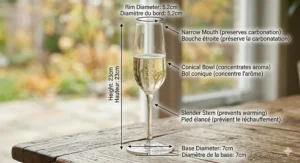
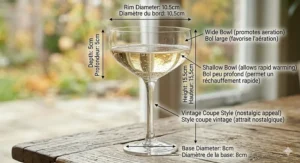
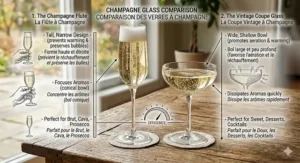
So here’s the short answer for the snippet-seekers: a champagne flute is a tall, narrow glass that preserves bubbles and keeps your sparkling wine cooler longer, while a coupe is a wide, shallow, saucer-shaped glass that sacrifices carbonation retention in favour of vintage glamour and wider aroma release. Neither is universally “better” — it depends entirely on what you’re drinking, why you’re drinking it, and what kind of experience you want.
In this guide, I’ll break down the glassware science, walk you through seven outstanding options available right now on Amazon.ca, and help you figure out exactly which style belongs in your cabinet — whether you’re a minimalist Toronto condo dweller, an entertaining-obsessed Vancouver host, or a Québécois wine enthusiast chasing every aromatic nuance of your grower-producer Blanc de Blancs.
All prices are in Canadian dollars (CAD). Let’s pop the cork.
Quick Comparison: Champagne Flute vs Coupe vs Tulip
| Feature | Champagne Flute | Coupe | Tulip Glass |
|---|---|---|---|
| Bubble Retention | ⭐⭐⭐⭐⭐ Excellent | ⭐⭐ Poor | ⭐⭐⭐⭐ Very Good |
| Aroma Concentration | ⭐⭐⭐ Moderate | ⭐⭐⭐⭐ Good | ⭐⭐⭐⭐⭐ Best |
| Temperature Hold | ⭐⭐⭐⭐⭐ Excellent | ⭐⭐ Poor | ⭐⭐⭐⭐ Very Good |
| Visual Elegance | ⭐⭐⭐⭐ Modern classic | ⭐⭐⭐⭐⭐ Vintage glam | ⭐⭐⭐⭐ Contemporary |
| Cocktail Versatility | ⭐⭐ Limited | ⭐⭐⭐⭐⭐ Excellent | ⭐⭐⭐ Good |
| Sommeliers’ Choice | ❌ Rarely | ❌ Rarely | ✅ Yes |
| Best For | Parties, toasting | Cocktails, events | Serious tasting |
What the table tells us: The flute wins on pure effervescence, the coupe wins on aesthetics and cocktail flexibility, and the tulip — often ignored in the champagne flute vs coupe conversation — quietly outperforms both for serious enjoyment. If you’re buying your first set of sparkling wine glasses in Canada and can only choose one style, the tulip is the smartest investment. But if you entertain regularly, having both a flute and a coupe collection covers every occasion beautifully.
💬 Just one click — help others make better buying decisions too! 😊
✨ Don’t Miss These Exclusive Deals!
🔍 Take your at-home champagne experience to the next level with these carefully selected glasses. Click any highlighted product name to check current pricing and availability on Amazon.ca. Your bubbles deserve better!
Top 7 Champagne Glasses Available on Amazon.ca: Expert Analysis
Researched, compared, and curated for Canadian buyers across every budget — from under $40 CAD to the serious splurge tier.
1. Riedel Veritas Champagne Wine Glass (Tulip-Style, Set of 4)
The Riedel Veritas is the go-to recommendation from practically every sommelier in Canada, and for good reason — this is one of the most intelligently engineered sparkling wine glasses on the market.
The egg-shaped bowl (roughly 16 oz capacity) is significantly wider than a traditional flute, and that extra volume is not accidental. It allows aromatic compounds — the esters, terpenes, and yeast-derived brioche notes that make Champagne so complex — to volatilise and collect near the rim before they reach your nose. The narrow taper at the top then concentrates those aromatics rather than letting them scatter into the room. Each glass also features Riedel’s precision-engineered sparkling point etched into the base of the bowl, which acts as a nucleation site, generating that steady, elegant column of fine bubbles without requiring any tricks or special cleaning.
For Canadian buyers specifically, this glass is ideal if you’re purchasing premium bottles — anything with extended lees aging, like Blanc de Blancs or vintage Champagne — because the bowl gives the wine room to express its full complexity. You won’t experience that same nuance through a standard flute. Machine-made from brilliant lead-free crystal and dishwasher-safe, this is also a practical choice for busy households.
Customer feedback on Amazon.ca consistently praises the thinness of the glass walls (it feels luxurious) and the noticeable improvement in aroma compared to cheaper alternatives. A few reviewers noted they received them as gifts and immediately retired their old flutes.
✅ Wider bowl unlocks aromatic complexity of vintage Champagne
✅ Machine-made for durability; dishwasher-safe
✅ Elegant, contemporary design suits modern Canadian tables
❌ Wide bowl means your Champagne warms faster — pour smaller amounts
❌ Sits in the mid-to-premium price range ($50–$80 CAD for a set of 4)
Value verdict: At around $50–$80 CAD for four glasses, this is an outstanding value-per-sip investment if you regularly drink quality sparkling wine.
2. Riedel Ouverture Champagne Glass (Set of 4)
Think of the Ouverture as the Riedel Veritas’s friendlier, more affordable sibling — delivering the same varietal-specific philosophy at a more accessible Canadian price point in the $35–$55 CAD range for four.
The Ouverture uses a slightly more compact tulip-adjacent shape with a capacity around 9.75 oz. It doesn’t have the drama of the full Veritas bowl, but it still widens enough from the base to allow some aroma development, and the gentle taper keeps bubbles on the lively side. What most Canadian buyers overlook about this glass is that it bridges the gap between a party flute and a serious tasting glass — making it the smartest choice for people who want one versatile set that works for New Year’s Eve toasting and a quiet Saturday evening with a Crémant d’Alsace.
Machine-made from crystal glass and dishwasher-safe, the Ouverture is durable enough for regular use without requiring anxious hand-washing. Amazon.ca reviewers particularly love this set as a gift — it photographs beautifully and feels more premium than its price suggests.
✅ Budget-friendly entry into Riedel quality
✅ Versatile enough for both casual and semi-serious drinking occasions
✅ Widely available on Amazon.ca with Prime shipping
❌ Not as aromatic as the full Veritas bowl
❌ Some reviews note the stem feels thinner than expected
Value verdict: The best bang-for-buck Riedel on Amazon.ca — a genuine upgrade from generic supermarket flutes.
3. Spiegelau Salute Champagne Wine Glass (Set of 4, 7.4 oz)
Spiegelau is the brand that serious wine people recommend when someone asks for “good quality without the Riedel price,” and the Salute line is a perfect example of that reputation at work.
These glasses feature a sleek, angular update to the traditional flute shape — straighter sides than a tulip but with slightly more width than a classic flute — holding a 7.4 oz (about 220 ml) capacity. The real engineering story here is Spiegelau’s 500-year German glassmaking tradition applied to lead-free crystal that has been tested for over 1,500 dishwasher cycles without losing brilliance or developing micro-scratches. That matters a great deal for Canadian buyers who want glasses that survive regular entertaining without looking cloudy or etched after a year.
The Salute excels at preserving effervescence — the narrower bowl keeps CO₂ from escaping too rapidly — while the slightly wider rim compared to a classic flute allows a little more aroma to reach the nose. It’s not going to reveal every nuance of a prestige cuvée, but for prosecco brunches, mimosa bars at Canadian cottage weekends, or New Year’s Eve toasting with a crowd, these are perfect. They look genuinely elegant and feel substantial in the hand.
Verified Canadian Amazon.ca reviewers praise the clarity and how they photograph at parties. Some note the narrow design means less spillage during gatherings — not a trivial detail.
✅ Exceptional dishwasher durability (1,500+ cycles in testing)
✅ Lead-free crystal with brilliant clarity
✅ Ideal for high-volume entertaining occasions
❌ Less aromatic development than tulip-shaped glasses
❌ Smaller 7.4 oz capacity limits pour size
Value verdict: In the $40–$60 CAD range for a set of four, this is the workhorse of quality champagne flutes — built to last and consistently impressive.
4. Riedel Veritas Coupe/Cocktail Glass (Set of 2)
Available on Amazon.ca, the Riedel Veritas Coupe is the gold standard if you’re committed to the wide, shallow aesthetic — and if you’re using your coupe as much for cocktails as for sparkling wine, this is the one to own.
At 8.5 oz capacity and roughly 17 cm (6.7 inches) tall, this coupe has the sensuous, curved silhouette that makes the format so visually compelling. The lead-free crystal construction is noticeably thinner than cheaper coupes, which gives it a premium tactile quality — you feel the difference between this and a $20 set immediately. Machine-made and dishwasher-safe, it’s more practical than you’d expect from something this elegant.
Here’s the honest truth about using a coupe for Champagne: the wide surface area means your bubbles will dissipate faster — we’re talking roughly 3 minutes before a coupe starts resembling still wine, compared to 8–10 minutes in a flute. But Riedel’s coupe geometry is slightly deeper than budget alternatives, which slows that CO₂ loss compared to ultra-shallow coupes. Where this glass truly shines is in cocktail service: a Lillet spritz, a French 75, an Aperol coupe, or even a daiquiri poured into this glass is a genuinely elevated experience. For Canadian hosts who entertain across drink styles, this coupe earns its place every time.
✅ Riedel quality at a reasonable $35–$55 CAD range (set of 2)
✅ Outstanding for cocktails and mixed drinks — extremely versatile
✅ Elegant design that photographs beautifully for entertaining
❌ Bubbles dissipate quickly — not ideal for extended Champagne sipping
❌ Set of 2 only — you’ll need multiple sets for larger gatherings
Value verdict: Worth every dollar if you love the coupe aesthetic and use your glasses for more than just Champagne.
5. Riedel Performance Champagne Glass (Set of 2)
The Riedel Performance is the science project that became a product — and for serious Canadian Champagne drinkers, it’s the most technically impressive glass on this list.
The defining feature is the optic relief pattern — a series of fine ridges etched into the interior of the bowl — which creates multiple nucleation points simultaneously, generating a richer, more complex bubble display than a single sparkling point. The wide, airy bowl shape is closer to a white wine glass than a traditional flute, which dramatically increases aromatic surface area. Combine that with the optical ridges and you have a glass that actively performs with your wine rather than simply containing it.
The capacity runs around 20 oz (590 ml), which sounds like a lot until you realise that extra space is entirely intentional — it allows volatile aromatics to collect and swirl before reaching your nose in a concentrated burst. This is the glass that wine educators in Canada bring to masterclasses to demonstrate how much glassware affects perception. For everyday use, it’s a bit much (pour no more than 4 oz / 120 ml); but for special occasions — an anniversary dinner, a prestige cuvée from a Quebec or BC sparkling producer — it’s revelatory.
✅ Optic impact bowl creates exceptional nucleation and aroma release
✅ Dramatically improves the tasting experience of complex Champagnes
✅ Dishwasher-safe crystal glass
❌ Premium price point ($80–$120 CAD for a set of 2) — a considered purchase
❌ Large format — not suited to casual or high-volume serving
Value verdict: The best glass on this list if budget isn’t a constraint and you take your sparkling wine seriously.
6. Schott Zwiesel Finesse Champagne Flute (Set of 6, 10 oz)
The Schott Zwiesel Finesse is the smart choice for Canadian buyers who need a complete set of six — think holiday dinner parties, cottage weekends with friends, or a New Year’s Eve gathering where you want real crystal without the anxiety of breakage.
Schott Zwiesel’s Tritan Crystal is a proprietary German crystal formula that incorporates titanium and zirconium oxides into the glass structure, making it significantly more resistant to chips and breakage than standard crystal. This is not a minor detail: in a country where entertaining often involves multiple pours, toasting, and the occasional bump against a granite countertop, breakage-resistant crystal is genuinely practical. The Finesse features effervescence points etched into the base for consistent bubble columns, holds a generous 10 oz capacity, and is fully dishwasher-safe without the Tritan clarity degrading over time.
The shape is a classic, elongated flute with a slight outward taper near the rim — not quite a tulip, but not a perfectly straight tube either. That subtle opening helps release slightly more aroma than a completely closed flute while maintaining excellent carbonation retention. For Canadian buyers stocking a complete set, this is the most practical premium option: one order, six beautiful glasses, and a durability guarantee that justifies the investment.
✅ Set of 6 — perfect for dinner parties and Canadian holiday entertaining
✅ Tritan Crystal is substantially more chip and break resistant
✅ Effervescence points for consistent bubble display
❌ Classic flute shape limits aromatic complexity compared to tulips
❌ Sits in the $70–$100 CAD range for the set — worth it, but plan accordingly
Value verdict: The most practical premium purchase on this list for regular entertainers — six quality glasses that will outlast cheaper sets many times over.
7. JoyJolt Layla Crystal Champagne Flute (Set of 4, 6.7 oz)
The JoyJolt Layla is the budget-conscious entry on this list — and it punches well above its weight class on Amazon.ca.
At a $25–$40 CAD price range for four glasses, the Layla delivers crystal-clear, lead-free glass with a classic elongated flute silhouette and a graceful twisted stem that adds visual interest. The 6.7 oz capacity is on the smaller side, which actually helps maintain carbonation by reducing surface area, and the lightweight construction (each glass feels refined, not plasticky) belies the price point. The stem design is genuinely pretty — this is a glass you’d be comfortable placing on a table for guests without any apology.
What most budget buyers overlook is that the JoyJolt Layla’s compact size makes it particularly well-suited to toasting rather than extended sipping — and that’s fine, because most flute use IS toasting. At Canadian celebrations — birthdays, engagements, wine-pairing dinners — having a set of attractive flutes that didn’t cost a fortune is enormously practical. They’re hand-wash recommended, so they require more care than the Spiegelau or Schott Zwiesel options, but for occasional use, this is the most accessible quality option on Amazon.ca.
✅ Best value for money on Amazon.ca — quality crystal look at an accessible price
✅ Elegant twisted stem elevates the aesthetic beyond the price point
✅ Classic flute shape for efficient carbonation retention
❌ Hand-wash only — less practical for frequent use
❌ Smaller capacity limits pour and drinking experience
Value verdict: At $25–$40 CAD, this is the ideal first quality champagne flute set or a thoughtful, budget-friendly gift.
Top 7 Glasses: At-a-Glance Comparison
| Glass | Type | Capacity | Price Range (CAD) | Best For |
|---|---|---|---|---|
| Riedel Veritas Wine Glass | Tulip | 16 oz | $50–$80 / set of 4 | Premium Champagne tasting |
| Riedel Ouverture Champagne | Tulip-adjacent | 9.75 oz | $35–$55 / set of 4 | Everyday versatile use |
| Spiegelau Salute | Flute (angular) | 7.4 oz | $40–$60 / set of 4 | Entertaining, high-volume |
| Riedel Veritas Coupe | Coupe | 8.5 oz | $35–$55 / set of 2 | Cocktails & events |
| Riedel Performance | Tulip/Wine | 20 oz | $80–$120 / set of 2 | Serious tasting occasions |
| Schott Zwiesel Finesse | Classic Flute | 10 oz | $70–$100 / set of 6 | Dinner parties, gifting |
| JoyJolt Layla | Classic Flute | 6.7 oz | $25–$40 / set of 4 | Budget-conscious buyers |
Analysis: The pattern here is clear: spending more generally buys you either a more scientifically optimised bowl shape (Riedel Performance, Veritas) or superior material durability (Schott Zwiesel Tritan). For most Canadian households, the sweet spot is the $40–$80 CAD tier — Riedel Ouverture or Spiegelau Salute — where you get genuine quality without the premium price. Note that Canadian pricing on German crystal brands typically runs 15–25% higher than equivalent US pricing due to exchange rates and import costs, but you avoid cross-border shipping fees, customs delays, and any warranty complications that come from buying through Amazon.com.
How to Actually Use These Glasses: A Practical Guide for Canadian Hosts
Science is one thing; pouring champagne in your kitchen at 11pm on New Year’s Eve is another. Here’s what the Amazon listing won’t tell you.
Temperature first, always. Champagne and sparkling wine should be served between 7°C and 13°C (45°F–55°F). In Canadian winters, your garage will naturally maintain that temperature, but in summer, factor in 30 minutes of refrigeration time from room temperature. Pouring into a warm glass accelerates both CO₂ loss and temperature rise — especially devastating in a coupe. If you’re serving on a hot July afternoon at a backyard gathering in Ontario or BC, pre-chill your glasses for 10 minutes in the fridge or a bucket of ice water.
Rinse with hot water, never soap. This is the detail that makes a measurable difference: residual dish soap suppresses the nucleation sites that generate bubbles. Any surfactant residue — even microscopic amounts — will result in a dramatically flatter pour. Hot water rinse, air dry, serve. This applies to all seven glasses on this list, including the dishwasher-safe ones if you want optimal bubble performance on a special occasion.
Pour technique matters differently by glass shape. For flutes, pour slowly down the side at a 45-degree angle to preserve the mousse (the creamy head of fine bubbles). For coupes, pour directly and gently into the centre — the wide bowl disperses the flow naturally. Fill flutes to about two-thirds capacity; fill coupes to no more than half to reduce the risk of spillage (particularly relevant at Canadian social gatherings where hand gestures are, shall we say, expressive).
Coupe maintenance tip for Canadian winters: Wide, shallow glasses are more susceptible to thermal shock. Never pour cold Champagne directly from the bottle into a glass that’s been sitting in a cold room — bring glasses to room temperature first, then chill in the refrigerator. In practice, this mostly applies to glasses stored in cold garages or near exterior walls during winter months, which is a genuinely Canadian problem.
Storage: Crystal glasses should be stored upright, not inverted. Inverting stores odours from cabinets and can damage the delicate rim over time. Both flutes and coupes are susceptible to rim chips from storage contact — a single layer of soft felt or foam matting in your glassware cabinet makes a real difference over years of use.
Champagne Flute vs Coupe: The Science Explained (Without the Lab Coat)
This is the section where we dig into what’s actually happening in your glass — because once you understand the physics, the choice becomes obvious for your specific situation.
When Champagne is poured, dissolved CO₂ begins escaping through nucleation sites — tiny imperfections or scratches on the glass surface that act as launch points for bubble formation. Research published in scientific journals studying Champagne effervescence has shown that glass geometry fundamentally changes the fluid dynamics of this process. In a flute, the narrow, elongated shape creates a single, unified vortex that circulates throughout the entire liquid volume, uniformly mixing and aerating the wine. The bubbles travel a longer path to the surface, which means more CO₂ stays dissolved longer, and more aromatic compounds are released in a controlled, extended way.
In a coupe, researchers imaging the fluid dynamics with laser and polymer particles found that the wider bowl generates a single central vortex but leaves the outer periphery of the liquid essentially stagnant. Only about half the liquid participates in the mixing process. This means the outer portions of your wine are neither being aerated nor releasing aromatics efficiently — and the shorter bubble travel path means CO₂ escapes roughly three times faster than in a flute.
What about aroma? This is where the coupe partially redeems itself. The wide opening allows volatile aroma compounds to disperse freely — which means a coupe actually delivers aromatics more quickly to your nose than a flute. The flute concentrates aromatics beautifully, but research has shown that flutes preserve up to 37% more key aroma molecules over five minutes compared to coupes — meaning that while the coupe releases aromatics fast, the flute keeps more of them in the glass for longer, delivering them in a sustained way rather than all at once.
The tulip glass thread the needle between both: the wider bowl and tapered opening balance aroma development and carbonation retention, which is why professional tasters and sommeliers almost universally favour them for serious Champagne evaluation.
And the Marie Antoinette myth? The popular story that the coupe was modelled after Marie Antoinette’s breast is, to put it kindly, complete fiction. The coupe actually evolved from 17th-century English glassmaking traditions — the myth first appeared in American advertising copy in the 1930s and has been debunked by every serious drinks historian since.
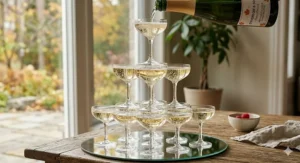
Which Champagne Glass Is Better for You? A Canadian Buyer’s Decision Framework
The champagne flute vs coupe question has a genuinely different answer depending on who you are. Let me walk you through four Canadian buyer profiles.
If you’re a Toronto condo owner who entertains 4–8 people a few times a year: The Spiegelau Salute or Riedel Ouverture set makes the most sense. Both are compact enough for city-sized storage, dishwasher-safe (no small consideration in a galley kitchen), and versatile enough for prosecco, Crémant, and Canadian sparkling wines from the Okanagan or Niagara Peninsula. Budget: $40–$60 CAD.
If you’re a serious wine enthusiast in Calgary or Ottawa who buys by the case: Go straight to the Riedel Performance or Riedel Veritas. You’re already spending significant money on the wine itself — the glass is where perception is made or lost. The wide bowl of the Performance glass reveals layers of complexity in aged Champagnes that a flute will simply suppress. Think of it as the last 10% of the wine experience that most Canadians never access. Budget: $80–$120 CAD.
If you host large gatherings (cottage, holiday parties, weddings): The Schott Zwiesel Finesse set of 6 is your answer. The Tritan Crystal durability means you’re not going to lose half your set to chips and breakage by season three, and the effervescence points ensure every glass in the set delivers a consistent bubble display. For events where you’re serving 10+ people, having six matching quality glasses beats having two exceptional ones. Budget: $70–$100 CAD.
If you love the coupe aesthetic and primarily make champagne cocktails: The Riedel Veritas Coupe is the smartest buy. A French 75, a Kir Royale, an elderflower spritz — all of these are genuinely better in a coupe than a flute because the wide bowl allows the complexity of liqueurs and garnishes to open up. You’re not using the glass for extended Champagne sipping anyway, so the carbonation loss is irrelevant. Budget: $35–$55 CAD for a set of 2.
The bottom line decision framework:
- “I want the best bubble retention and value” → Spiegelau Salute or Schott Zwiesel Finesse (flute)
- “I want the best overall tasting experience” → Riedel Veritas or Performance (tulip)
- “I want the most stylish glass for events and cocktails” → Riedel Veritas Coupe
- “I want a quality starter set under $40 CAD” → JoyJolt Layla
Common Mistakes When Buying Champagne Glasses in Canada
1. Prioritising looks over science on premium bottles. Coupes are undeniably gorgeous — but if you’re spending $80–$150+ CAD on a bottle of Champagne, serving it in a coupe means you’re experiencing roughly half of what the winemaker intended. The wide, shallow bowl simply cannot preserve the complexity of fine sparkling wine long enough to appreciate it. Save the coupes for affordable prosecco and cocktails.
2. Ignoring Canada-to-US pricing differences. Many Canadian buyers find a glass on Amazon.com, see the USD price, and assume Amazon.ca will match it after conversion. In reality, German crystal brands like Schott Zwiesel and Riedel often run 15–25% higher on Amazon.ca due to import duties and currency exchange. Factor this into your budget, and don’t be alarmed by the gap — buying domestically still beats cross-border shipping costs, potential customs fees, and warranty headaches.
3. Not checking Prime eligibility before purchasing. Amazon.ca offers free shipping on eligible orders over $35 for regular customers, and Prime members get free shipping on most items regardless. For glass sets (which are heavy), shipping costs can meaningfully affect the total price. Always check Prime eligibility and confirm the seller ships from Canadian fulfilment centres — remote and northern communities in Canada may face extended delivery times regardless.
4. Buying coupes for a full champagne service. A set of coupes looks spectacular in photos, but the reality of serving eight people Champagne in coupes at a Canadian holiday gathering is chaos — they warm quickly, bubbles disappear in minutes, and the wide rim makes toasting a spillage hazard. Flutes or tulips are the practical choice for any group-serving scenario.
5. Overlooking glass cleaning as part of the purchase decision. Premium crystal glasses that are hand-wash only are genuinely inconvenient for regular Canadian entertaining. If you’re hosting frequently, prioritise dishwasher-safe options (Riedel Veritas, Spiegelau Salute, Schott Zwiesel Finesse) and accept a modest quality trade-off in exchange for real-world usability.
Sparkling Wine Serving Glasses: Beyond Champagne
The champagne flute vs coupe debate becomes even more interesting when you consider that Champagne is just one of many sparkling wines you might serve in Canada — and the same glass principles apply very differently across styles.
Crémant d’Alsace, Crémant de Bourgogne, and other French sparklings: These wines are made by the same traditional method as Champagne (méthode traditionnelle) and benefit from the same glassware logic — tulip or quality flute for the best experience. Canada imports significant quantities of Crémant, and it represents outstanding value compared to Champagne at similar quality levels.
Canadian sparkling wines: The Okanagan Valley in BC and the Niagara Peninsula in Ontario are producing world-class traditional-method sparkling wines that deserve to be served properly. Henry of Pelham’s Cuvée Catharine, Road 13’s Spark Sparkling, and Cave Spring’s Blanc de Blancs are all wines that will genuinely disappoint in a coupe. Use a tulip or quality flute.
Prosecco (DOC or DOCG): Prosecco is tank-fermented, with larger, more exuberant bubbles and fruitier, less complex aromatics than Champagne. It’s perfectly acceptable — some would say ideal — in a coupe because the quick effervescence release matches the wine’s brighter, less nuanced profile. This is one genuinely legitimate use case for the coupe with sparkling wine.
Pétillant Naturel (Pét-Nat): These cloudy, gently sparkling natural wines are best in a white wine glass or wide tulip — their low carbonation and complex, funky aromas are completely wasted in a flute, and the wide opening of a coupe handles them beautifully.
Cava: Spanish Cava, especially the long-aged Reserva or Gran Reserva categories, benefits from tulip-style glasses for the same reasons as Champagne — lees-derived complexity needs room to express.
✨ Exclusive Champagne Glass Deals on Amazon.ca
🔍 Ready to upgrade your sparkling wine experience? Click any highlighted glass name throughout this guide to check current pricing and availability on Amazon.ca. Whether you’re a flute loyalist or a coupe convert, the perfect glass is just a click away. Check pricing before your next celebration — and don’t forget, Prime members enjoy free shipping on most glass sets!
FAQ: Champagne Flute vs Coupe in Canada
❓ Which is better for drinking Champagne — a flute or a coupe?
❓ Can I use champagne flutes for prosecco and sparkling wine, or do I need a different glass?
❓ Are the champagne glasses on Amazon.ca the same as on Amazon.com?
❓ What champagne glass is best for a Canadian holiday party with 8+ people?
❓ How should I store champagne glasses to prevent chips and breakage?
Conclusion: The Glass That’s Right for You
After spending time with the science and the options, here’s the honest answer to the champagne flute vs coupe question: both have a legitimate role in a Canadian home bar or entertaining cabinet — they’re just optimised for different things.
The flute is not going anywhere. It preserves effervescence brilliantly, keeps your wine cooler, and looks elegant in every formal setting from a Quebec dinner party to a BC wedding reception. If you’re buying one set for all occasions, quality flutes from Spiegelau or Schott Zwiesel deliver outstanding performance at a fair Canadian price.
The coupe, meanwhile, is not just a retro affectation. Its wide bowl and versatile form factor make it genuinely superior for cocktail service, visually spectacular for entertaining, and a glass you’ll actually reach for beyond Champagne occasions. Just temper your expectations around carbonation retention and serve coupe-poured wine promptly.
And the tulip? It’s quietly the best glass you can own for serious sparkling wine, and I’d argue every Canadian who cares about the experience of drinking well should have at least two tulip-style glasses in the cabinet. Riedel’s Veritas or Performance glasses will change the way you experience premium Champagne.
Whatever you choose, the most important thing is this: good glassware doesn’t have to be expensive to make a difference. Even the JoyJolt Layla at $25–$40 CAD delivers a meaningfully better experience than the generic supermarket flutes that ship with cheap prosecco kits. Invest wisely, wash carefully, and pour generously.
Santé — or as they say in French Canada, À votre santé.
✨ Find Your Perfect Glass
🔍 Check current prices on all seven recommended glasses at Amazon.ca. Every highlighted product name in this article links directly to the Amazon.ca listing — click through, check Prime availability, and have your next set of glasses delivered to your door. Pour decisions await.
Recommended for You
- Best Vintage Champagne Coupe Glasses in Canada 2026
- Best Lead Free Crystal Champagne Glasses Canada 2026 – 7 Top Picks
- 7 Best Champagne Flutes in Canada 2026 – Crystal & Elegant
Disclaimer: This article contains affiliate links. As an Amazon Associate, I earn from qualifying purchases. If you purchase products through these links, we may earn a small commission at no additional cost to you.
✨ Found this helpful? Share it with your friends! 💬🤗
