
In This Article
Machine-made wine glasses vs handblown is really a question about how a glass is formed: a mould and compressed air in a factory, or a glassmaker’s breath and hands, one piece at a time. Machine-made glasses are consistent, sturdy and affordable. Handblown glasses are usually lighter and finer, and they cost more because of the labour.
That’s the textbook answer. The real answer lives in your hand, at your dining table, and, let’s be honest, in your dishwasher.
Here’s the twist that surprises most Canadian buyers: the gap has narrowed. A decade ago, machine-made stemware meant thick rims and seams you could feel with a thumbnail. Today, premium machine-made wine glasses vs handblown pieces can sit side by side and fool a casual observer. Meanwhile, some handblown glasses are priced closer to a good bottle of Okanagan Pinot Noir than a weekend splurge.
This guide sorts out what actually differs. We’ll look at the manufacturing process, the consistency of machine-made glassware, how handblown glass wine glasses compare in the hand and on the shelf, and when the craftsmanship premium is worth paying. We’ll also look at seven real products, from heirloom-grade mouth-blown crystal to dishwasher-proof workhorses. Machine production itself isn’t new. The automatic glass-blowing machine arrived in the early 1900s and changed glassmaking for good. Stemware just took a lot longer to catch up.
One note on method. Everything below comes from product specifications, manufacturer statements and published reviews, not hands-on testing by me. Where review evidence is thin, I’ll say so.
Quick Comparison Table: Handblown vs Machine-Made at a Glance
| Feature | Handblown | Machine-Made | Best For |
|---|---|---|---|
| Typical weight | Often noticeably lighter | Slightly heavier, though premium lines are very light | Handblown for feel; machine-made for balanced everyday use |
| Rim | Can be extremely fine | Thicker on budget lines, laser-cut and fine on premium | Premium of either type for tasting |
| Consistency | Small variations glass to glass | Near-identical stem to stem | Machine-made for sets and hosting |
| Durability | More delicate | Generally tougher, often dishwasher safe | Machine-made for busy households |
| Price per glass | Premium to mid-premium | Budget to mid-range | Machine-made for value |
| Top examples | Zalto Denk’Art Universal, Josephine N° 2 Universal, GLASVIN | Gabriel-Glas StandArt, Riedel Vinum, Riedel Veloce, Schott Zwiesel Tritan Forte | Depends on use case |
Read the table as a spectrum rather than a verdict. The biggest practical split is durability against delicacy. Choose Gabriel-Glas StandArt or Schott Zwiesel Tritan Forte if your glasses go through the dishwasher weekly. Choose Zalto Denk’Art Universal if you want the airy, almost weightless feel and don’t mind washing by hand. And remember that “machine-made” now covers everything from supermarket stemware to precision crystal, so the label alone tells you very little.
💬 Just one click — help others make better buying decisions too!😊
Top 7 Machine-Made Wine Glasses vs Handblown: Expert Analysis
I picked these seven to cover the whole range: three handblown options (premium, near-premium and accessible) and four machine-made ones from entry-premium to workhorse. Availability on amazon.ca changes often, so check each listing. Prices below are rough ranges in Canadian dollars at the time of research and may vary.
1. Zalto Denk’Art Universal — the benchmark for feather-light handblown crystal
The Zalto Denk’Art Universal is the glass most people picture when someone says “handblown wine glass.” It’s mouth-blown, lead-free and made in Austria.
Its appeal is mostly about how little glass you feel. The wide, angular bowl gives wine plenty of surface for aroma, and the maker recommends the Universal for full-bodied, expressive wines. On paper, that means a Canadian Cabernet Franc from Niagara or a robust Okanagan red has room to open up in the glass.
Based on the specs, this is a glass for people who value tactile pleasure and ritual. It is also a glass for careful handlers, since handblown crystal is generally less resilient than machine-made. In a published taste comparison, Wine Folly’s team said Zalto lived up to its reputation, particularly with red wines. Retail reviews often mention that the glasses feel fragile, so expect to hand wash and store carefully.
Pros:
- ✅ Extremely light, thin and elegant in hand
- ✅ Bowl shape flatters full-bodied reds
- ✅ Lead-free crystal with a respected reputation
Cons:
- ❌ Fragile, so breakage costs add up
- ❌ Hand washing is the safer routine
Price check: roughly C$85-C$130 per glass at the time of research. It’s a luxury buy that makes sense only if you’ll actually use it.

2. Josephine N° 2 Universal — a mouth-blown alternative designed by a Zalto family member
The Josephine N° 2 Universal comes from Josephinenhütte, and it’s designed by Kurt Josef Zalto, a sixth-generation glass designer. The brand notes it has no business affiliation with Zalto Glas GmbH, which is worth knowing before you shop.
The N° 2 is pitched as a hybrid between a Bordeaux and a Burgundy shape. In practice, that’s useful when you want one glass that handles Pinot Noir on Tuesday and a Merlot blend on Saturday. The brand also points to a distinctive kink in the bowl that exposes the wine to more oxygen, an idea that makes sense in theory but is hard for a casual drinker to confirm.
My read: this is for the buyer who likes the handblown look but wants a different pedigree. It’s mouth-blown, so care routines match any fine handblown glass. The maker recommends hand washing and polishing with a soft linen cloth.
Independent review coverage is thinner than for Zalto Denk’Art Universal, so I can’t summarize consistent customer sentiment here. Check current reviews on the amazon.ca listing, and confirm that it’s sold there.
Pros:
- ✅ Mouth-blown with a versatile universal shape
- ✅ Designed by a long-time glass designer
- ✅ Suits both Bordeaux-style and Burgundy-style wines
Cons:
- ❌ Fewer independent reviews to lean on
- ❌ Hand washing recommended
Price check: expect a premium handblown range, roughly C$90-C$140 per glass; confirm on the current listing. Good value only if the shape appeals to you.
3. Gabriel-Glas StandArt — the precision machine-blown glass that punches above its price
The Gabriel-Glas StandArt is the favourite exhibit in any machine-made wine glasses vs handblown debate, because it’s machine-blown and still feels remarkably refined. It weighs around 145-150 g, and the maker says the crystal is lead-free, harder and more break-resistant than lead glass.
That durability matters. The StandArt is dishwasher safe, though the maker advises powder detergent over harsh chlorinated tabs. The wide base and softly flared bowl suit a single glass for everything, which was René Gabriel’s idea behind the “one for all” concept.
In Wine Folly’s comparison, the Gabriel-Glas StandArt delivered fruit roughly on par with Zalto Denk’Art Universal but with a fresher feel, at about half the price. Roundup reviews also credit its robustness. One said it left them less nervous about washing. Note that the Gold Edition is the mouth-blown version; the StandArt is the machine-made line.
Pros:
- ✅ Strong value for premium-feeling stemware
- ✅ Dishwasher safe with sensible care
- ✅ One shape works for most wines
Cons:
- ❌ Not mouth-blown, so no handmade bragging rights
- ❌ Less specialized than varietal-specific shapes
Price check: roughly C$40-C$60 per glass, with sets of two near C$80-C$120. A very smart buy for most households.
4. Riedel Vinum — the machine-made classic that put varietal glasses within reach
Riedel Vinum launched in 1986 and was the first machine-made varietal-specific glassware series. That’s a historic detail with a practical payoff: shapes designed for Pinot Noir, Chardonnay or Cabernet at a price regular people could afford.
It remains Riedel’s best-selling collection, per the company’s own account, and the glasses are machine-blown crystal that’s safe for the dishwasher. The rims are thin and polished, so wine flows smoothly rather than hitting a rolled lip. That’s a spec worth understanding: a smoother rim lets wine reach your palate in a more controlled stream.
For buyers weighing machine-made wine glasses vs handblown, Riedel Vinum is the honest middle road. It isn’t weightless, and it won’t hush a room the way fine mouth-blown glass can. But it’s reliable, widely available in Canada, and easy to replace, which matters if you’re building a set over time.
Review sentiment around machine-made Riedel lines tends to praise consistency and replaceability, though I couldn’t verify a precise rating figure for the specific amazon.ca listing.
Pros:
- ✅ Varietal-specific shapes at a friendly price
- ✅ Dishwasher safe and consistent
- ✅ Easy to replace or expand
Cons:
- ❌ Heavier feel than top handblown glasses
- ❌ Stem durability varies with how you handle it
Price check: sets of two often fall around C$100-C$140. Solid mid-range value.
5. Riedel Veloce — machine-made glass designed to look and feel handmade
The Riedel Veloce is the glass that blurs the line most. Launched in 2022, it’s machine-made, but Riedel says it both looks and feels handmade. It carries a diamond-shaped bowl, similar to the earlier Extreme line.
That angular geometry does real work: it widens the surface area of the wine and gives the glass a modern profile that hides its machine origins. Premium machine production also lets Riedel hold bowl and rim diameter to tight tolerances, which the company calls the core advantage over handmade.
Here’s the practical insight: the Riedel Veloce suits someone who loves the look of artisan stemware but entertains often and can’t afford tears over breakage. It’s dishwasher safe, so post-dinner cleanup is easy. If you pour tasting flights, the consistency also helps, because every guest’s glass behaves the same way.
I found no consistent independent review summaries for this line, so I’d read recent amazon.ca reviews before buying.
Pros:
- ✅ Handmade look from a machine-made process
- ✅ Dishwasher safe for easy hosting
- ✅ Uniform dimensions across the set
Cons:
- ❌ Diamond shape can be awkward in cramped cabinets
- ❌ Not truly handblown
Price check: sets of four roughly C$150-C$210. Good value if you like the design.
6. Schott Zwiesel Tritan Forte — the lead-free workhorse built for real life
Schott Zwiesel Tritan Forte is the glass for people who break things. The Tritan formula replaces lead with zirconium for brilliance and titanium for strength, and the maker positions it as resistant to scratching and breakage.
It is machine-made and dishwasher safe, which is why you’ll see this family in restaurants and bars. Retailer listings highlight that it’s built for repeated washing. That durability is the real story here. A glass that survives several hundred dishwasher cycles doesn’t need to be delicate.
For Canadian homes with big hosting calendars, hockey-night get-togethers, or long, cold winters of indoor entertaining, the Schott Zwiesel Tritan Forte is the rational choice. Is the feel as ethereal as handblown? No. But the glass is sturdy, clear, and free of lead, which links nicely to the Health Canada guidance covered later.
I couldn’t find independent aggregated review data for this exact line, so check current amazon.ca feedback.
Pros:
- ✅ Lead-free Tritan crystal with strong durability
- ✅ Dishwasher safe for daily use
- ✅ Great for sets of six or eight
Cons:
- ❌ Less delicate and airy than handblown
- ❌ Basic styling compared with designer glasses
Price check: sets of six commonly land in the mid-C$100s; verify the current range. Excellent value for hosts.
7. GLASVIN — handblown glass priced for everyday drinking
GLASVIN is the handblown option aimed at people who can’t justify luxury prices. The New York-based company started in 2019 and makes handmade, hand-blown wine glasses. Food & Wine named it one of the best products of 2020.
Its founder has said that a great restaurant-style glass should be light and thin, and that handblown pieces tend to weigh roughly half as much as comparable machine-made ones. If that sounds like a marketing line, it also echoes what forum users describe when comparing handmade and machine-made versions of the same shape.
The practical benefit of GLASVIN is that you get the handblown feel without the heirloom price tag. The trade-off is that cheaper handblown glass can show small differences from piece to piece. That’s the nature of the process.
Check amazon.ca availability, since I couldn’t confirm a Canadian listing. Reviews for newer, direct-to-consumer brands can also be thin, so read recent buyer comments carefully.
Pros:
- ✅ Handblown feel at a more accessible price
- ✅ Light, thin and elegant
- ✅ Designed for everyday use
Cons:
- ❌ Canadian availability may be limited
- ❌ Small variations from glass to glass
Price check: likely well under premium handblown, perhaps C$40-C$70 per glass; verify first. Good value if you can find it.
Top 7 Compared Side by Side
| Product | Process | Washing | Price Range (per glass, CAD) | Best For |
|---|---|---|---|---|
| Zalto Denk’Art Universal | Mouth-blown | Hand wash advised | C$85-C$130 | Serious red-wine fans |
| Josephine N° 2 Universal | Mouth-blown | Hand wash advised | C$90-C$140 | Hybrid Bordeaux/Burgundy lovers |
| Gabriel-Glas StandArt | Machine-blown | Dishwasher safe (powder detergent) | C$40-C$60 | One-glass-for-everything buyers |
| Riedel Vinum | Machine-made | Dishwasher safe | C$50-C$70 | Varietal-specific starter sets |
| Riedel Veloce | Machine-made | Dishwasher safe | C$35-C$55 | Hosts who want modern style |
| Schott Zwiesel Tritan Forte | Machine-made | Dishwasher safe | C$15-C$30 | Busy households |
| GLASVIN | Handblown | Gentle wash | C$40-C$70 | Budget-minded handblown fans |
The table makes the central trade-off plain. The two top-tier handblown picks cost two to four times more than the sturdy machine-made options, yet the Gabriel-Glas StandArt closes much of the sensory gap for far less. If you’re torn, a combo works well: Schott Zwiesel Tritan Forte for daily use and Zalto Denk’Art Universal for special bottles. Treat every price here as indicative, and check current listings before you buy.
Practical Usage Guide: Setting Up, Washing and Storing Both Types
Buying the glass is half the story. How you handle it decides whether it lasts one winter or a decade.
First-use setup. Rinse new glasses in warm water and polish with a lint-free cloth to remove packing dust. Hold the bowl rather than twisting the stem against the foot. Handblown stems are thin and can snap under torsion, so hold the bowl in one hand and the base in the other when polishing.
Washing machine-made glasses. If the maker says dishwasher safe, use the top rack, space glasses so they don’t touch, and skip the heated dry cycle if you can. For Gabriel-Glas StandArt, the maker advises powder over aggressive tabs. Hard water in many Canadian cities can leave cloudiness, so a splash of white vinegar in the rinse helps.
Washing handblown glasses. Use warm, not hot, water and a soft sponge. Support the bowl, not the stem. Dry with a microfibre cloth and avoid sudden temperature changes, which can stress thin glass. The Wine Enthusiast guide notes handblown glasses are less resilient, so a gentle routine isn’t fussiness; it’s maintenance.
Storage. Store upright, not hung by the bowl, and keep a little space between glasses. A shelf liner reduces rattling during winter-boot-season door slams.
Common first-30-days mistakes: gripping the stem too hard, stacking bowls, rinsing a chilled glass in hot water, and washing with a rough scrubber.
Real-World Scenarios: Which Glass Fits Which Household
Specs get clearer when you attach them to people.
Scenario 1: The weekend host in Toronto. Four to eight guests, a dishwasher at the ready, and a budget of roughly C$250 for a full set. The best fit is Schott Zwiesel Tritan Forte or Riedel Vinum. Consistency means every guest gets the same experience, and breakage doesn’t become a financial event.
Scenario 2: The wine-club member in Vancouver. Pours small, tastes carefully, and values aroma detail. Budget is flexible, roughly C$400-C$600 for six glasses. Consider Zalto Denk’Art Universal for special bottles, supported by Gabriel-Glas StandArt for everyday evenings. This keeps the luxury glass out of the dishwasher.
Scenario 3: The new couple in Calgary. Wants good glasses without fragility anxiety. Budget around C$150-C$200 for two to four glasses. Gabriel-Glas StandArt is the logical pick, since it offers refined feel at a modest price. If you’d like to experiment with handblown, add a pair of GLASVIN later.
Scenario 4: The gift buyer. Choosing for a wine lover. A pair of Josephine N° 2 Universal or Zalto Denk’Art Universal in a box tends to feel special, but include a note about hand washing so the recipient doesn’t lose them in a dishwasher.
✨ Ready to find your match!
🔍 Compare current listings for these glasses on amazon.ca, check recent buyer feedback, and match the care routine to your own kitchen habits. The right glass is the one you’ll actually use every week.
What Is the Manufacturing Process Behind Each Type?
The manufacturing process is where the whole debate begins.
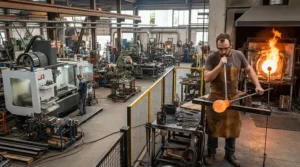
Handblown: A glassmaker gathers molten glass on a blowpipe, shapes it with breath and tools, and forms each bowl and stem by hand or, for mouth-blown pieces, by mouth. The technique goes back roughly 2,000 years, per the Wine Enthusiast overview. Because one person makes each piece, tiny differences in wall thickness are normal. Often the bowl is blown separately and joined to a stem, and some “combined” glasses pair a handblown bowl with a machine-made stem.
Machine-made: In machine blowing, molten glass drops into moulds on a revolving machine, and compressed air forms the bowl and neck. The idea is old. The Owens automatic bottle machine, introduced around 1903, famously made bottles at a rate of 240 per minute and cut labour costs sharply, according to the National Inventors Hall of Fame. Stemware followed the same industrial logic, though thinner walls and finer rims took decades of refinement.
Why this matters to you: machines excel at repeatability, and humans excel at refinement. Premium machine production now adds cold cutting and fire-polished finishes, which make the rim smoother and the glass more durable. That’s why Riedel Veloce and Gabriel-Glas StandArt feel so unlike cheap supermarket stemware.
Consistency of Machine-Made Glassware and Glassware Uniformity
The consistency of machine-made glassware is its quiet superpower. It’s also the thing handblown fans tend to under-appreciate.
Riedel puts it bluntly: the advantage of premium machine-made glass is precision in bowl and rim diameter, with no variance from glass to glass. That’s a real, specific claim, and it explains why Riedel Vinum and Schott Zwiesel Tritan Forte show up in tasting rooms and restaurants.
Think about what glassware uniformity buys you. If you’re comparing two wines side by side, identical glasses remove one variable. If you host eight guests, no one gets the “odd” glass. If one breaks, a replacement matches. Handblown sets, by contrast, can vary a little in weight and wall thickness. Forum discussions of one brand’s handmade and machine-made versions show how this plays out: some users reported the handmade glass felt lighter and thinner, while another reported the opposite, which suggests batch variation is a real possibility.
Is that variation a flaw? Not necessarily. Some buyers love it. But if you want glassware uniformity, machine-made wins on consistency, and the best machine-made glasses are no longer crude.
Handblown Glass Wine Glasses Comparison: Does the Craftsmanship Premium Pay Off?
Time for an honest handblown glass wine glasses comparison. What are you paying for when you pay the craftsmanship premium?
Lightness and rim. Handblown glasses tend to be lighter and thinner, with finer rims. A thin rim can feel almost invisible on the lip, and that’s the sensation people describe when they say they can’t go back.
Aroma and perception. Vinissimus describes handcrafted glasses as strengthening the connection with the wine, and machine-made ones as reliable for everyday use. That framing is useful, but taste perception is personal. Wine Folly’s test found a clear preference for Zalto Denk’Art Universal among its picks, yet it also praised Gabriel-Glas StandArt for value, and their write-up is worth reading before you spend.
Craftsmanship premium: when it’s worth it. Pay it if you drink slowly, pour special bottles, enjoy rituals, or give gifts. Skip it if you host crowds, wash everything in a dishwasher, or have kids and pets creating chaos. The craftsmanship premium is about experience, not necessity.
Benefits vs Traditional Alternatives: Handblown, Premium Machine-Made and Budget Glass
| Factor | Budget Machine-Made | Premium Machine-Made | Handblown |
|---|---|---|---|
| Weight and feel | Heavier, thick rim | Light, fine rim | Lightest, finest |
| Durability | Good | Very good | Delicate |
| Seams | May be visible | Mostly invisible | None |
| Dishwasher | Usually fine | Often safe | Usually avoid |
| Best For | Parties, patios | Daily use, hosting | Special occasions |
Machine-made glasses at the low end can have seams and thicker rims, as the Wine Enthusiast guide notes, but the premium tier closes the gap. The sweet spot for most households sits in the middle column. A Gabriel-Glas StandArt or Riedel Veloce gives you most of the refinement without the fragility. Handblown is the right pick when feel matters more than convenience, as with Zalto Denk’Art Universal.
How to Choose: Machine-Made Wine Glasses vs Handblown
- Decide how you’ll wash them. If a dishwasher is non-negotiable, pick machine-made such as Schott Zwiesel Tritan Forte or Gabriel-Glas StandArt.
- Set a per-glass budget. Handblown premiums can double or triple the price, so know your ceiling.
- Match the shape to your wines. A universal shape like Josephine N° 2 Universal suits mixed cellars; varietal shapes like Riedel Vinum suit specialists.
- Check weight and rim. Lighter and thinner usually signals better refinement, regardless of process.
- Think about replacements. Machine-made lines are easy to replenish; handblown sets may take longer to restock.
- Confirm lead-free. Look for lead-free crystal, such as the Tritan formula in Schott Zwiesel Tritan Forte.
- Read recent reviews. Check amazon.ca feedback for breakage and shipping damage.
Long-Term Cost and Maintenance: What Each Glass Really Costs You
Sticker price misleads. The real number is cost per year of use.
Suppose a set of two Zalto Denk’Art Universal glasses costs about C$200 and you break one a year. That’s a cost of roughly C$100 per glass-year in replacement alone. A set of six Schott Zwiesel Tritan Forte glasses at about C$120 that survives years of dishwasher cycles may cost pennies per use.
The honest framing: handblown glasses can still be economical if you handle them carefully and use them often. Careless use destroys the value. Meanwhile, machine-made glasses lower risk and cost of ownership, particularly for hosts. Also factor in time. Hand washing takes minutes per session, and if you won’t do it, don’t buy glasses that require it.
A middle path works well. Own a few handblown glasses for special bottles, and equip the rest of your cupboard with sturdy machine-made stemware.
Safety and Regulations: Lead, Crystal and Canadian Standards
Crystal sounds fancy, but lead crystal deserves attention. Health Canada explains that lead crystalware is made with lead compounds and can release lead into acidic drinks such as wine, with the risk growing when drinks are stored for long periods. Health Canada’s lead crystalware page is the clearest guide.
The practical advice: use lead-free glassware where possible, and never store wine, port or spirits in lead crystal decanters. Health Canada’s older guidance noted that wines kept for weeks in crystal decanters have shown lead levels far above Canada’s food limit, whereas drinking from a glass during a meal usually stays well below it.
The good news for buyers: many modern products, including Zalto Denk’Art Universal, Gabriel-Glas StandArt and Schott Zwiesel Tritan Forte, are marketed as lead-free. If you inherit vintage crystal, enjoy it for display or short use, and keep it away from long storage. Imported glasses with decorative rim patterns also fall under Canadian glassware regulations, so be cautious with unfamiliar overseas pieces.
Features That Actually Matter (And Those That Don’t)
What matters: rim thickness, balanced weight, bowl size, clear glass, and cleaning practicality. A thin rim and a bowl that lets you swirl without spilling will change your experience more than any logo.
What doesn’t (as much): brand prestige, an elaborate gift box, and extreme varietal specificity. Gabriel’s own philosophy holds that varietal-specific glasses are largely unnecessary, which is why the Gabriel-Glas StandArt works as a universal glass.
Worth a second thought: stem length and foot width. A tall, wide Riedel Veloce looks lovely but demands cabinet space. A shorter-stemmed Schott Zwiesel Tritan Forte tucks away easily.
Finally, ignore any claim that machine-made glass can’t be good. The best machine-blown pieces are precise, thin and beautiful, and handblown glasses can be thick or uneven if poorly made. Judge the glass, not the label.

FAQ
❓ Is handblown glass better than machine-made for wine?
❓ Are machine-made wine glasses dishwasher safe?
❓ Why are handblown wine glasses so expensive?
❓ Can you tell the difference between handblown and machine-made glasses?
❓ Is lead crystal safe for wine glasses in Canada?
Conclusion
So, machine-made wine glasses vs handblown: who wins? Neither, and both. Handblown glass gives you lightness, thin rims and a tactile pleasure that’s hard to fake. Machine-made glass gives you consistency, durability and honest value, and the best of it has moved far beyond the clunky stemware of the past.
If you want one purchase that covers most households, start with Gabriel-Glas StandArt or Schott Zwiesel Tritan Forte. If you crave the airy, almost weightless experience and will care for it, step up to Zalto Denk’Art Universal or Josephine N° 2 Universal. If you want style plus strength, Riedel Veloce and Riedel Vinum sit in the sensible middle, and GLASVIN offers a more affordable way into handblown, subject to availability.
Remember the practical rules: confirm lead-free construction, match your glassware to how you wash, and verify current prices and reviews on amazon.ca. The best glass is the one that makes you want to pour a second glass.
Recommended for You
- Tempered Glass Wine Glasses: 7 Best Picks For Canada 2026
- Heat-Resistant Glass Wine Glasses: 7 Best Picks For Canada (2026)
- Wine Glasses For Everyday Use: 7 Best Picks In Canada (2026)
Disclaimer: This article contains affiliate links. As an Amazon Associate, I earn from qualifying purchases. If you purchase products through these links, we may earn a small commission at no additional cost to you.
✨ Found this helpful? Share it with your friends! 💬🤗
